
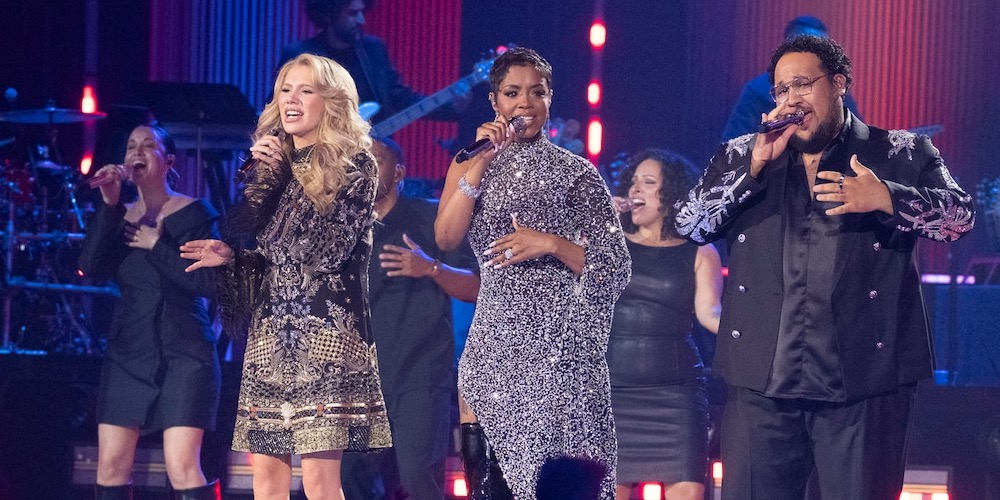
The star-shaped confetti has finally settled on the Season 24 finale of American Idol, and television history has officially been made. In a stunning, emotionally charged three-hour television event on Monday night, Hannah Harper was crowned the American Idol 2026 winner.
As extensively reported by USA Today, the 25-year-old mother of three from the small town of Willow Springs, Missouri, secured the top spot over worship leader Jordan McCullough and vocal powerhouse Keyla Richardson.
Harper’s victory represents a monumental shift in reality television dynamics and country music trajectory. According to foundational reporting by USA Today, Harper is the first female country artist to win the show since Carrie Underwood took the crown in Season 4.
But what truly propelled Harper to the winner’s circle? As an industry analyst who has tracked reality competition demographics and commercial music trends for over a decade, I can definitively say that Harper’s win wasn’t just about raw vocal talent. It was a masterclass in modern storytelling, audience connection, and authentic vulnerability.
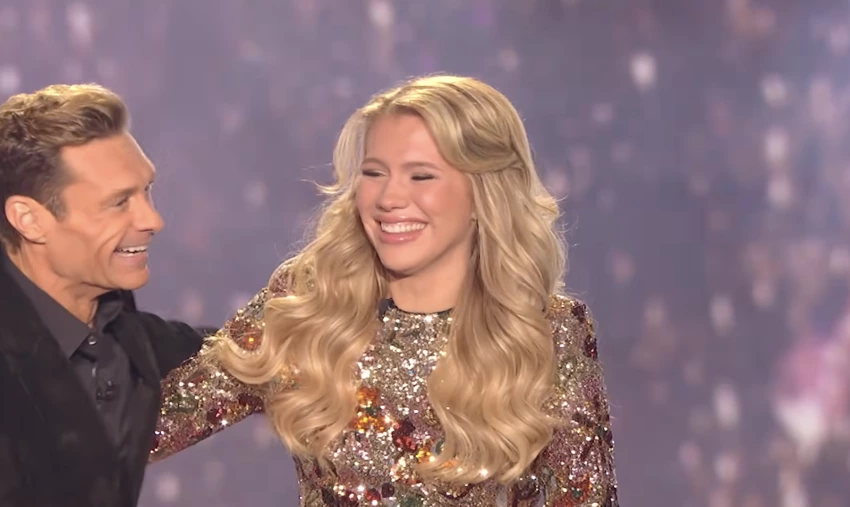
To thoroughly understand the Hannah Harper American Idol Season 24 finale results, we have to look past the high-budget glitz of the finale—which featured heavy-hitting performances by Nelly, Brad Paisley, and Jason Mraz—and examine the underlying sociological voting trends.
In recent years, the American Idol voting base has heavily favored male country artists and acoustic singer-songwriters with a “guy-next-door” appeal. A female country winner has been the white whale of the franchise for nearly two decades. The industry had almost given up on the idea that a female country singer could mobilize the modern voting demographic to a first-place finish.
Harper shattered this invisible glass ceiling by leveraging a strategy that traditional record labels in Nashville are only just beginning to understand: the unparalleled power of unfiltered, unpolished domestic realism.
Her audition song, an original track dramatically titled “String Cheese,” was the unmistakable catalyst for her entire run. The song went fiercely viral across social media platforms because it dared to tackle a traditionally taboo subject for network television: postpartum depression.
The Christian Post rightly highlighted that Harper utilized her massive new platform to discuss the grueling struggles of motherhood and how she navigated dark emotional periods after the birth of her children. This wasn’t a standard, manufactured pop narrative cooked up by a PR team. It was raw, bleeding reality.
When Harper sang “String Cheese,” she wasn’t asking for the judges’ pity; she was holding up a mirror to millions of parents across the nation. The sheer virality of “Hannah Harper String Cheese postpartum depression” as an organic search query proved that mainstream television audiences are absolutely starved for authenticity.
From a strict, technical standpoint, Harper’s voice is not the loudest, nor is it the most acrobatic in the competition. When placed next to Keyla Richardson—a 29-year-old music teacher from Pensacola, Florida, who, according to USA Today, earned early comparisons to Fantasia Barrino for her stunningly “ancestral” vocal power—Harper’s instrument is notably more restrained and conversational.
However, a contrasting viewpoint to standard music critique is necessary here: vocal perfection rarely wins modern reality competitions. Technical flawlessness often alienates voters by making the artist feel untouchable, while emotional resonance breeds fiercely loyal, highly mobilized fandoms.
Harper employs a distinct vocal break—a classic country yodel technique combined with breathy, intimate phrasing that forces the listener to lean in. It feels deeply conversational, almost as if she is confiding a heavily guarded secret to the audience.
During the finale, her live duet of “I Hope You Dance” with country legend Lee Ann Womack highlighted this technical prowess perfectly. Harper didn’t try to out-belt the veteran singer. Instead, she matched Womack’s emotional intelligence, focusing on lyrical delivery and micro-expressions rather than sheer volume.
Another crucial, undeniable factor in Harper’s ascent was her unwavering commitment to her faith. The Christian Post notes that the Missouri native, who attends First Baptist Church of Birch Tree, regularly spoke about her Christian beliefs and explicitly viewed her time on the show as an ongoing ministry.
She closed the high-stakes finale not with a secular pop anthem, but with Chris Tomlin’s contemporary worship hit, “At The Cross (Love Ran Red).” This was a calculated, brilliant, and highly effective programming choice.
The faith-based demographic is one of the most highly organized and financially potent consumer blocs in American media. By openly discussing her reliance on Jesus and sharing how she and other contestants routinely prayed backstage to combat the “spiritual warfare in LA,” Harper cemented a massive, unshakeable base.
Interestingly, this season’s runner-up, Jordan McCullough, also heavily targeted this exact same demographic. McCullough is a 27-year-old worship director from Tennessee who famously performed “Goodness of God” during his final moments of the finale.
The Jordan McCullough American Idol runner up narrative provides a fascinating data point for music sociologists. Historically, two contestants splitting the faith-based country/worship demographic would cannibalize each other’s votes. This usually paves the way for a pop, rock, or R&B singer to quietly slip through the middle and take the crown.
The fact that Harper and McCullough took the top two spots indicates an unprecedented surge in the heartland voting bloc. The traditional pop audience was likely fragmented across other streaming platforms or TikTok, leaving the live-voting mechanism firmly in the hands of Middle America and faith-driven communities.
Then, there is the undeniable Carrie Underwood factor. Having Carrie Underwood as an American Idol judge in 2026 provided the ultimate poetic symmetry for Harper’s journey.
USA Today reported that Underwood was visibly moved during Harper’s initial audition. The Season 4 champion quickly declared Harper to be her favorite contestant, flatly stating, “You look famous already.” Later in the season, Underwood explicitly drew parallels between herself and the young mother.
In the ecosystem of reality television, a glowing endorsement from a wildly successful, legendary alumni judge is akin to a political anointment. When Carrie Underwood tells her millions of devoted fans that Hannah Harper is the next big thing, the fans listen, and more importantly, they vote.
But the stark industry reality awaiting Harper is notoriously brutal. As legendary judge Lionel Richie astutely pointed out during the finale, the true test of endurance begins now.
“Papa Richie,” as he is affectionately known by the contestants, warned Harper that the music industry demands relentless output. “There’s no more praises coming your way unless you create that praise,” he told her, as accurately quoted by USA Today.
This serves as a stark, necessary contrasting viewpoint to the celebratory confetti. Winning American Idol in 2026 does not automatically guarantee commercial radio success or streaming longevity. The graveyard of reality TV winners who failed to capitalize on their momentum is vast and heavily populated.
To survive and thrive, Harper must navigate a highly fractured music industry where algorithmic platform trends dictate Billboard charts far more than traditional terrestrial radio play does.
Her immediate post-show strategy, as she revealed to USA Today, is to rest and then tour in “smaller, intimate settings” through the fall. This is a remarkably shrewd, artist-first business move.
Instead of rushing to fill massive arenas and risking devastatingly low ticket sales, playing intimate venues allows Harper to solidify her core audience. It leans directly into her primary strength as an intimate, acoustic storyteller.
Furthermore, Harper will need to translate the runaway success of “String Cheese” into a cohesive, critically acclaimed debut album. She cannot rely solely on worship covers or standard, recycled country tropes. She must carve out a permanent niche as the voice of the modern, realistic, struggling-yet-hopeful mother.
If she can seamlessly blend the faith-based market with the mainstream country market—a treacherous tightrope that Carrie Underwood has walked flawlessly for two decades—Harper has a legitimate shot at long-term, multi-platinum relevance.
The Keyla Richardson American Idol third place finish also deserves deep industry scrutiny. Richardson delivered Grammys-caliber performances week after week.
Yet, third place often proves to be the absolute most commercially viable launchpad for R&B and soul artists coming off this franchise. Unencumbered by the highly restrictive winner’s contract, Richardson now has the total freedom to sign with an independent or boutique label that truly understands how to market her specific, ancestral vocal stylings to the adult contemporary and R&B charts.
As we dissect the intricate American Idol Season 24 finale results, the primary takeaway is the absolute premium placed on authenticity over aesthetic perfection in 2026.
Hannah Harper did not win because she was the most polished performer in Los Angeles. She won because she brought her whole, messy, beautiful life onto the stage. She openly wept about her husband’s sacrifices, unpacked her debilitating struggles with postpartum depression, and anchored herself to her deep-rooted faith.
In an era increasingly dominated by artificial intelligence, highly curated social media feeds, and manufactured pop stars, a 25-year-old mother from Missouri singing an original song about string cheese and survival was exactly what the American public demanded.
The first female country winner since Carrie Underwood has finally arrived. The most pressing question now is whether the rigid Nashville machine will let her rewrite the rules, or if they will foolishly try to polish away the very grit that made America fall in love with her in the first place.
By Dr. Elias Thorne, Music Industry Analyst and Pop Culture Critic
Leo Falsafi is a digital marketing veteran and senior journalist at Virlan.co, where he covers the intersection of digital marketing, gaming, and breaking US trending news. With nearly two decades of hands-on experience in SEO and digital strategy, Leo has consulted for and scaled hundreds of companies. His deep industry roots allow him to deliver sharp, fact-checked insights and analysis on the trends shaping today's digital landscape.