
The numbers do not lie. The digital betting floor is expanding at a breakneck pace, and with it comes a massive, insatiable demand for words.
According to Mordor Intelligence, the global online gambling market size in 2026 is estimated at an astronomical $121.93 billion. Statista’s projections run even higher, placing total digital gambling revenue on track to clear $123 billion by the end of the year. This isn’t just a quiet industry sub-niche; it is a sprawling digital empire. Sports betting currently commands over 52% of all online wagering revenue worldwide, while mobile devices now handle a staggering 80.13% of all bets in the United States alone.
Behind every mobile sportsbook, live dealer lobby, and newly launched slot machine is an ecosystem that relies entirely on text. Landing pages, deep-dive reviews, player guides, and localization notes are the lifeblood of player acquisition. For specialized freelance writers, the iGaming sector represents one of the most lucrative and consistent revenue streams available today.
But breaking in requires more than just a passing interest in blackjack. You need strategy, industry-specific expertise, and an understanding of exactly where the money is flowing.
The Shift in iGaming Content: Quality Over Formula
For years, the iGaming industry was notorious for generating vast amounts of low-tier, keyword-stuffed content designed strictly to game search engine algorithms. That era is definitively over.
Today, Google and emerging AI search engines penalize robotic, translation-heavy text. Experts at Language Bear, a specialized copywriting agency, explicitly warn that “Casino SEO is about quality, not formula.” They note that content must be written for the reader first, and not strictly for rankings. When writers are handed 20 keywords and strict density instructions for a 500-word article, it forces awkward, unnatural phrasing. Instead of forcing rigid, nonsensical introductory questions like, “How can I win at blackjack, you might have asked yourself…”, top-tier iGaming writers are expected to understand industry regulations, payment options, and the nuances of casino security.
To land premium freelance writing jobs in iGaming, you must position yourself as an authority, not a content mill. You must write to be read.
Where to Find Lucrative iGaming Writing Jobs
Securing your first high-paying contract requires looking beyond generic job boards. The modern iGaming ecosystem relies on specialized agencies, direct outreach to digital publishers, and elite freelance marketplaces.
1. Target Specialized Agencies and Outsourcing Studios
Many of the largest online casinos and game developers do not hire in-house writing teams; instead, they outsource their localization and content needs.
- Agencies like Language Bear and Topcontent regularly hire native writers who are experienced gambling experts.
- Video Game Outsourcing Companies: If you lean toward the narrative and development side of gaming, approaching companies like MoGi Group, the Linx Agency, or Talespinners can yield excellent contract work.
2. Direct Pitching to Enthusiast Networks
Major entertainment networks require constant coverage of the gaming industry. IGN Entertainment, for example, maintains a robust freelance budget for writers who can execute high-level reporting. Their base rates are highly competitive:
- Quick-turnaround news: Starting at $30 for a 20- to 30-minute turnaround.
- Deep-dive features: Typically starting at $300 for write-ups supported by interviews and extended research.
- Game Reviews: Beginning at $450 (often ranging from 1,500 to 3,000 words).
- Prestige Video Scripts: Reaching $500 to $1,000+ for comprehensive, investigative storytelling.
3. Advanced Freelance Marketplaces
Job boards like Upwork and Remotive remain highly viable, provided you know how to filter the noise. Recent 2026 postings for long-term iGaming SEO Content Writers showcase contracts offering 30+ hours a week for up to 6 months. These clients are actively seeking writers who understand how to optimize content not just for traditional Google SEO, but for “AI search visibility”—ensuring brands are cited by ChatGPT, Perplexity, and Google AI Overviews.
The Playbook: How to Write Winning iGaming Content
If you want to survive the trial assignments and build a lasting reputation, you must treat your writing like an investigative process. The experts at Topcontent outline several non-negotiable practices for crafting superior casino and betting copy:
- Go to the Source: Never rely purely on secondary information. Visit the original site you are reviewing. Play the free demo versions of slot machines. Cross-reference your findings with customer service FAQs to ensure your data is entirely accurate.
- Master the Terminology: The iGaming sector has its own language. You must understand the difference between RTP (Return to Player), wagering requirements, and accumulator bets. Use comprehensive glossaries to ensure you speak fluently to veteran bettors.
- Maintain Objective Authority: Casino writing is fundamentally an informed critique. Keep your tone objective but informative. You must be willing to point out negative aspects alongside the positive to build trust with your readers.
What do iGaming content writers actually write?
Freelance iGaming writers are responsible for a wide variety of assets. This includes writing SEO-optimized landing pages, comprehensive online casino reviews, deep-dive game guides, promotional pages, FAQs, and localization notes for translating game dialogue into multiple languages.
Do I need gambling experience to write about iGaming?
Yes, firsthand experience is highly preferred. Agencies and high-end clients explicitly look for native writers who are gambling experts. At minimum, writers must be willing to research proper terminology, test free demo games, and thoroughly understand complex promotional structures to write accurate, engaging content.
- Market Scale: The global online gambling market is valued between $121.93 billion (Mordor Intelligence) and $123 billion (Statista) in 2026.
- Sector Dominance: Sports betting is the dominant vertical, accounting for over 52% of all online gambling revenue.
- Mobile Supremacy: Mobile devices drive the vast majority of engagement, generating 80.13% of online gambling revenue in the U.S.
- SEO Evolution: The industry has shifted away from keyword-stuffing stop-words; top agencies prioritize organic readability and deep industry expertise.
- Emerging Skillsets: Modern iGaming freelance roles require writers to optimize copy for AI-driven platforms like ChatGPT and Perplexity alongside traditional Google search.
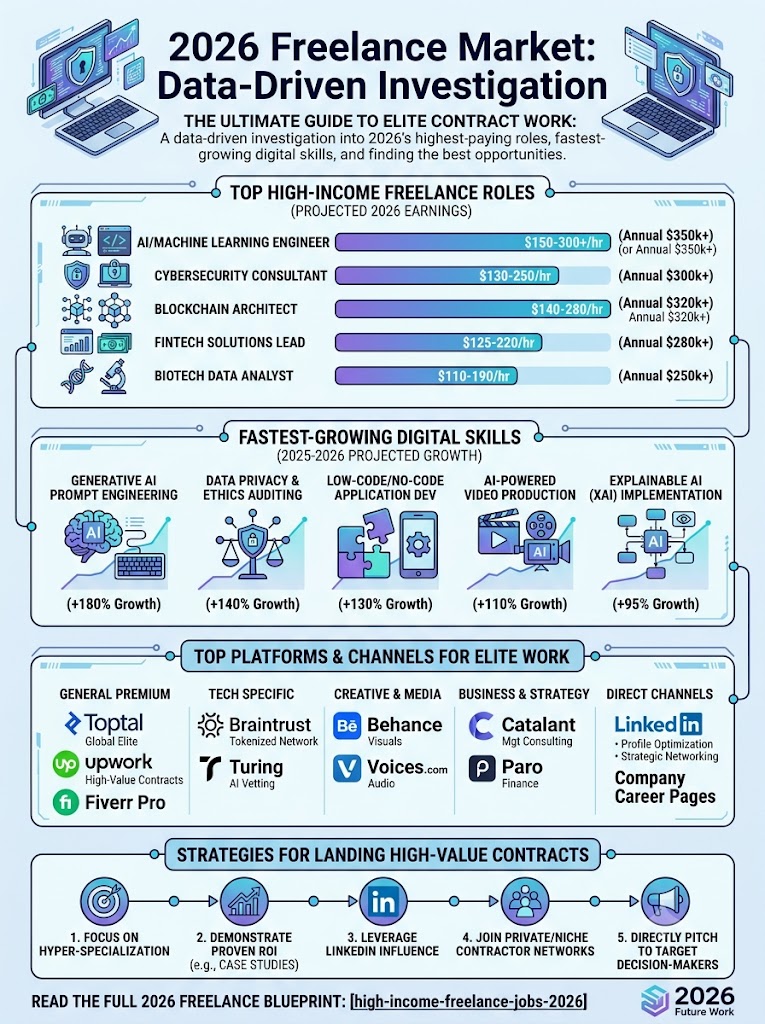
While the iGaming sector represents a highly specialized and lucrative niche, it is ultimately just one pillar of a much larger macroeconomic shift. To truly capitalize on the digital economy in 2026, you must understand the broader mechanics of independent contracting. Whether you are spinning up SEO copy for a sports betting syndicate or stepping in front of a camera for a digital fashion campaign, the fundamental rules of independent business remain the same.
Also read: Highest-Paying Freelance Jobs (2026): Trending Skills & Markets
What Does “Freelance” Actually Mean in 2026?
If you find yourself asking, what is freelance work?, you are not alone. The definition has evolved drastically over the last five years.
At its core, freelance meaning refers to a professional who operates as an independent contractor rather than an official employee of a company. Freelancers are self-employed individuals who offer their services to multiple clients simultaneously, typically negotiating their own rates, setting their own hours, and managing their own tax liabilities.
But what is freelance in the modern context? It is no longer a stopgap measure between full-time jobs. According to the 2026 Future Workforce Index by Upwork, a staggering 39% of the U.S. workforce now freelances. Furthermore, iHire’s 2026 workforce report notes that the number of independent workers in the U.S. has skyrocketed to nearly 73 million. For these professionals, freelance work means unprecedented autonomy. Survey data from iHire reveals that 73.2% of independent workers chose this path specifically for the flexibility to set their own hours, while 71.3% were driven by the desire to work remotely.
In high-skill sectors, this autonomy comes with a significant financial premium. Upwork’s 2026 data shows that AI-enabled freelancers currently earn approximately 40% more per hour than their peers who do not utilize artificial intelligence tools, proving that the modern definition of a freelancer is heavily tied to technological adaptability.
How to Find Remote Freelance Work
Finding remote freelance work requires a strategic transition away from traditional job boards and toward specialized digital networking. While iGaming freelance jobs are heavily concentrated within boutique localization agencies and specialized content studios, the blueprint for securing remote work applies across almost every industry.
If you want to know how to find remote freelance work, you must adopt a multi-channel approach:
- Leverage Niche Marketplaces: General platforms like Upwork and Fiverr are excellent starting points, but competition is fierce. To stand out, you must hyper-specialize. A recent 2026 report by FlexJobs highlighted that remote freelance postings in fields like bilingual customer service, medical health writing, and technical engineering are currently experiencing massive growth.
- Build an Inbound Portfolio: The most successful remote workers do not chase clients; they attract them. Build a robust portfolio on a personal website or platform like LinkedIn. Highlight concrete metrics—such as the organic traffic growth of your past articles or the conversion rate of your copywriting.
- Embrace AI Workflows: Job postings requiring AI skills grew by 300% year-over-year leading into 2026. If you can demonstrate proficiency in prompt engineering, AI editing, or automated data analysis, you instantly elevate your market value.
Expanding Beyond the Keyboard: What is Freelance Modeling?
The freelance revolution is not restricted to digital knowledge workers; it has radically transformed physical and visual industries as well.
So, what is freelance modeling? Unlike traditional agency models who are bound by exclusive representation contracts (where the agency typically takes a standard 20% commission), freelance models operate entirely independently. They book their own photoshoots, negotiate their own day rates, manage their own branding, and retain 100% of their earnings.
According to Gitnux market data, freelance models now make up an estimated 55% of the total modeling workforce. This shift has been entirely fueled by social media and e-commerce. You no longer need an elite New York agency to secure commercial work; brands are increasingly hiring independent creators for direct-to-consumer digital campaigns.
How to become a freelance model:
Breaking into the industry without an agency requires you to act as your own manager, publicist, and talent scout.
- Develop a Versatile Digital Comp Card: You need a high-quality portfolio that showcases your range. This should include clean digital polaroids (headshots and full-body shots with minimal makeup) alongside stylized commercial or editorial tearsheets.
- Target the Right Verticals: While high-fashion runway work is often gatekept by major agencies, commercial modeling (which accounts for roughly 60% of mid-sized agency revenue) is highly accessible to freelancers. This includes e-commerce catalog shoots, fitness modeling, and lifestyle brand photography.
- Understand Your Market Value: According to the Bureau of Labor Statistics, the average hourly wage for a model in the U.S. is roughly $26.74, but niche specialists command much more. High-fashion fit models, for instance, routinely earn $200 to $300 per hour due to steady demand and highly specific sizing requirements.
What is the difference between an agency model and a freelance model?
An agency model signs a contract giving an agency the exclusive right to submit them for jobs in exchange for a commission (usually 20%). A freelance model operates independently, sources their own clients through social media or direct outreach, negotiates their own contracts, and keeps their full rate.
Are iGaming freelance jobs limited to writing?
No. While content writing is a massive sector, the iGaming industry relies heavily on freelance web developers, UX/UI designers, compliance consultants, and technical data analysts.
- Workforce Expansion: In 2026, 39% of the U.S. workforce engages in freelance work, totaling nearly 73 million independent professionals (Upwork / iHire).
- The AI Premium: Freelancers utilizing advanced AI workflows command a 40% higher hourly rate than those who do not.
- Modeling Industry Shift: Freelance models now account for 55% of the modeling workforce, moving away from traditional agency representation.
- Remote Work Priorities: 73.2% of freelancers prioritize schedule flexibility, while 71.3% are driven by the ability to work entirely remotely.
Sources Quoted:
Data and insights were extracted from Mordor Intelligence (Online Gambling Market Analysis 2026), Statista, Language Bear (copywriting and SEO strategies), Topcontent (freelance writing tips), IGN Entertainment (freelance rates and pitching guidelines), Upwork, and Remotive (job market listings), as well as John Yorke Story (video game narrative insights).
Data and insights were extracted from Upwork (2026 Future Workforce Index), iHire (2026 U.S. Workforce Survey), FlexJobs (State of Remote Freelance Jobs Report), Gitnux (Modeling Industry Statistics), and the U.S. Bureau of Labor Statistics (OES May 2023 Wage Estimates for Models).
Leo Falsafi is a digital marketing veteran and senior journalist at Virlan.co, where he covers the intersection of digital marketing, gaming, and breaking US trending news. With nearly two decades of hands-on experience in SEO and digital strategy, Leo has consulted for and scaled hundreds of companies. His deep industry roots allow him to deliver sharp, fact-checked insights and analysis on the trends shaping today's digital landscape.