
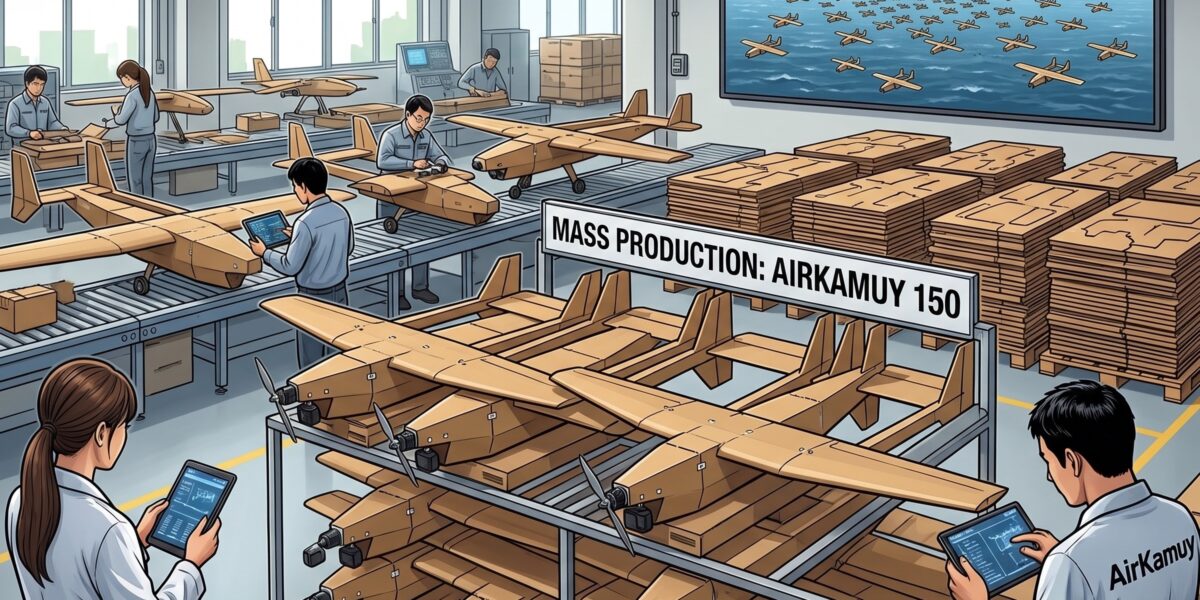
A new era of warfare is taking flight, and it arrives flat-packed.
Japan’s Ministry of Defense recently signaled a monumental shift in its procurement and tactical doctrine. Foundational reporting from outlets like Futurism, Tom’s Hardware, and TechRadar reveals that Japan is actively deploying the AirKamuy 150.
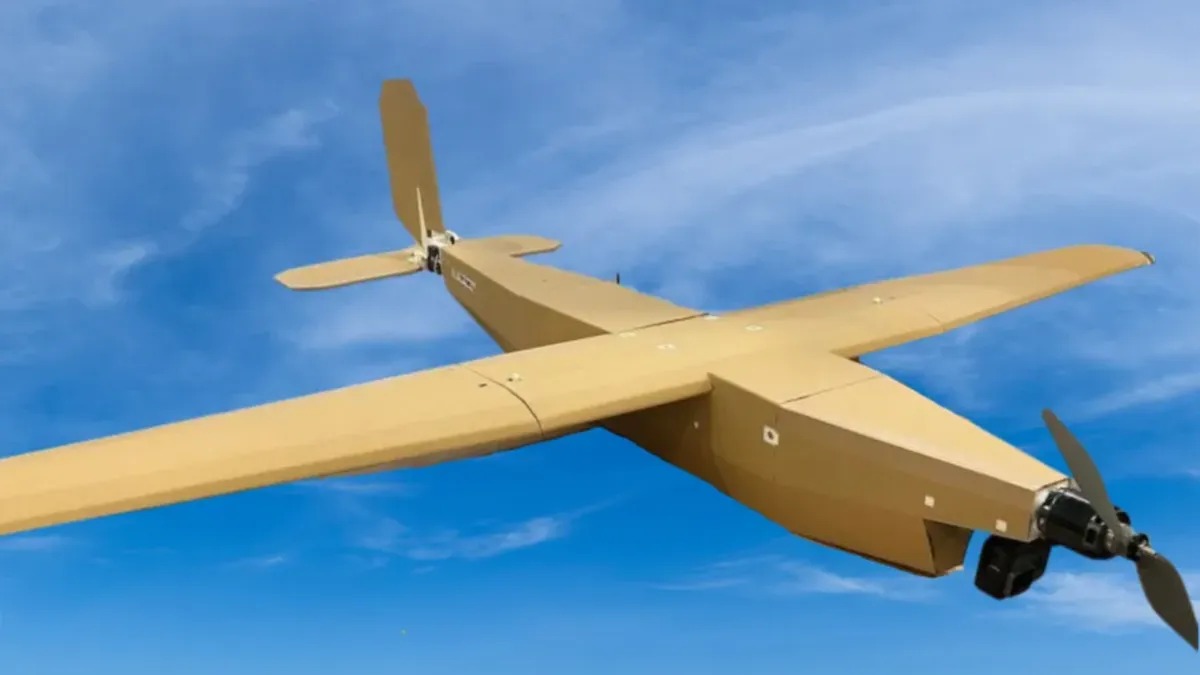
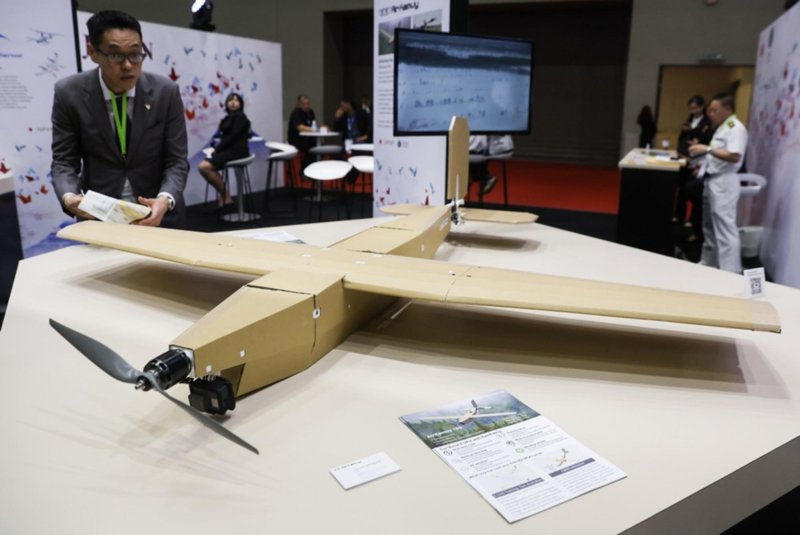
This is an uncrewed aerial system built almost entirely out of corrugated cardboard.
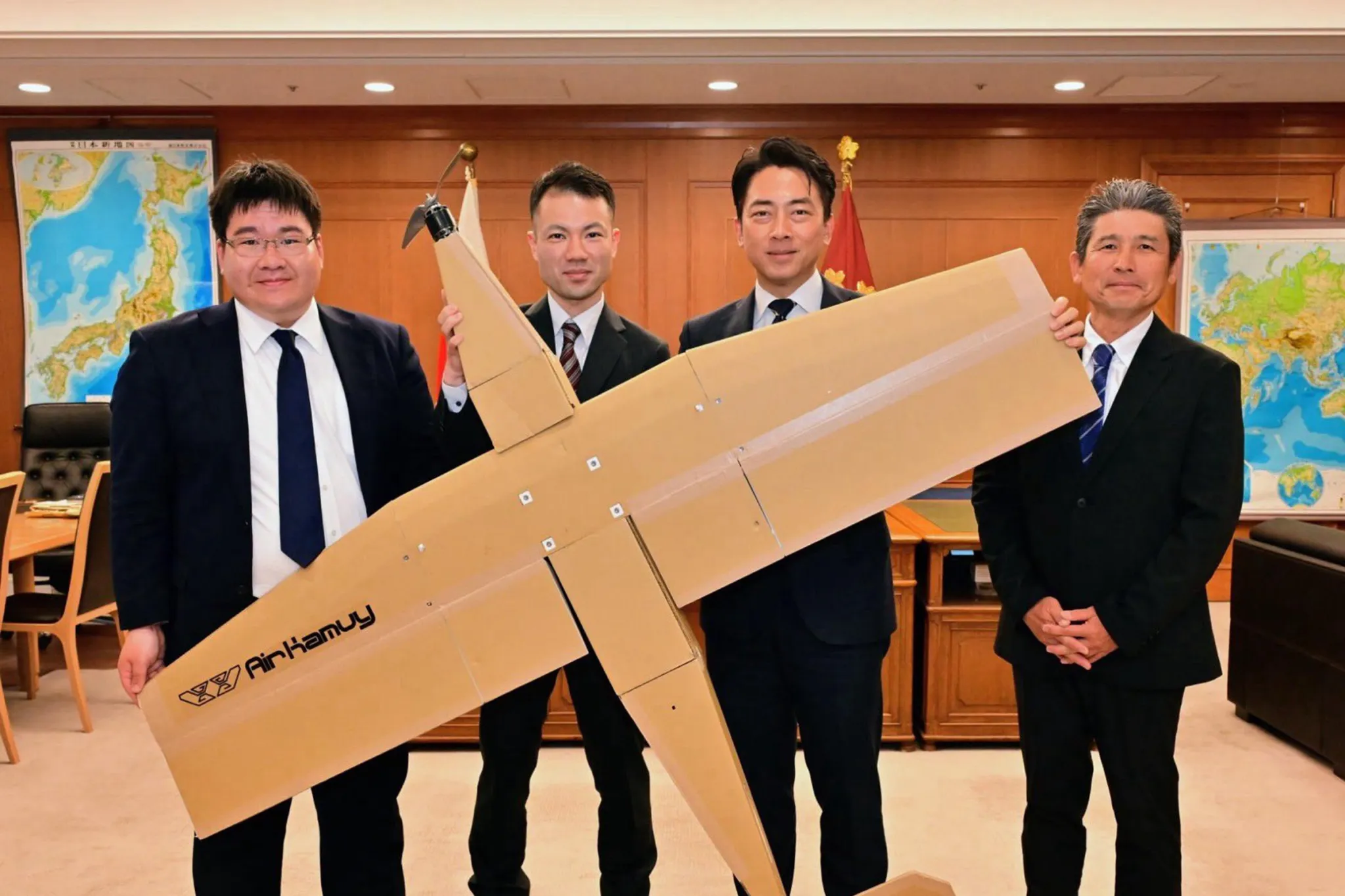
Japan’s Minister of Defense, Shinjirō Koizumi, recently confirmed on social media that the Japan Maritime Self-Defense Force is already utilizing these unique systems as aerial targets. However, as an analyst observing the defense startup sector, it is abundantly clear that the implications stretch far beyond mere target practice.
Priced between $2,000 and $2,500—less than the cost of a high-end consumer gaming PC—these cardboard drones are redefining the fundamental economics of aerial combat. They represent a philosophical departure from exquisite, expensive machinery in favor of sheer volume.
The Anatomy of a $2,000 Warbird: AirKamuy 150 Specifications
At first glance, a military drone constructed from the same material as an Amazon delivery box might seem like a novelty. Some might view it as an act of desperate resourcefulness.
However, a deeper technical analysis of the AirKamuy 150 reveals a highly calculated engineering endeavor.
The AirKamuy 150 utilizes a conventional fixed-wing design. While it might lack the futuristic aesthetic of modern stealth fighters, this tried-and-tested aerodynamic shape is heavily optimized for endurance and efficiency.
Despite its rudimentary, water-resistant cardboard exterior, it is equipped with a highly capable electric propulsion system. The performance metrics are surprisingly robust for a platform operating at this extreme low-cost price point.
The drone boasts a top flight speed of roughly 62 miles per hour. It can remain airborne for an impressive 80 minutes, providing an operational range of approximately 50 miles.
For payload capacity, the AirKamuy 150 can carry up to three pounds. While three pounds may not seem like a massive yield compared to conventional bombers, it is more than sufficient for modern, miniaturized warfare. This capacity can easily accommodate localized reconnaissance sensors, electronic warfare (EW) jamming modules, or specialized small munitions designed for one-way attack missions.
When we compare the $2,000 AirKamuy to other “cheap” expendable combat drones, the economic disparity becomes staggering.
The notorious Iranian Shahed drones, which became the poster child for low-cost attritional drone warfare during the Russian invasion of Ukraine, cost an estimated $20,000 to $50,000 per unit. By bringing the unit cost down to the $2,000 threshold, AirKamuy has functionally commoditized the airframe.
Why Cardboard? The Unseen Manufacturing and Logistics Edge
The decision to utilize corrugated cardboard is not just about shaving dollars off the manufacturing invoice. It is a profound logistical innovation designed to solve one of the most critical vulnerabilities in modern warfare: the defense supply chain.
AirKamuy CEO Yamaguchi Takumi explicitly noted to NHK World-Japan that the AirKamuy 150 can be manufactured at virtually any commercial cardboard plant.
This detail is paramount. It removes the military’s reliance on highly specialized aerospace facilities, which are complex to maintain and serve as prime targets in a peer-to-peer conflict.
By decentralizing the manufacturing process, Japan ensures high mass-production capability. It creates an incredibly robust, disruption-resistant supply chain that does not rely on importing rare earth metals or specialized carbon fiber composites.
The logistical footprint of the AirKamuy 150 on the battlefield is equally revolutionary. Because the drones are shipped completely flat-packed, an estimated 500 units can fit inside a single standard shipping container.
Once they arrive at the frontline, personnel require minimal training to assemble them. According to corporate claims, a single drone can be fully constructed out-of-the-box in just five to ten minutes using basic folding techniques and minimal tools.
Beyond the supply chain benefits, corrugated cardboard offers a distinct tactical advantage. Cardboard inherently possesses a much lower radar reflectivity compared to traditional aerospace aluminum or composite materials.
While it certainly doesn’t make the drone a true “stealth” aircraft, it significantly reduces its radar cross-section. When deployed as low-flying units amid ground clutter, this reduced detectability makes tracking them exceptionally difficult for legacy air defense radar arrays.
Australia’s Precedent: The SYPAQ Connection
Japan is not the first nation to conceptualize this approach. To fully understand the AirKamuy 150, we must look at the precedent set by Australia.
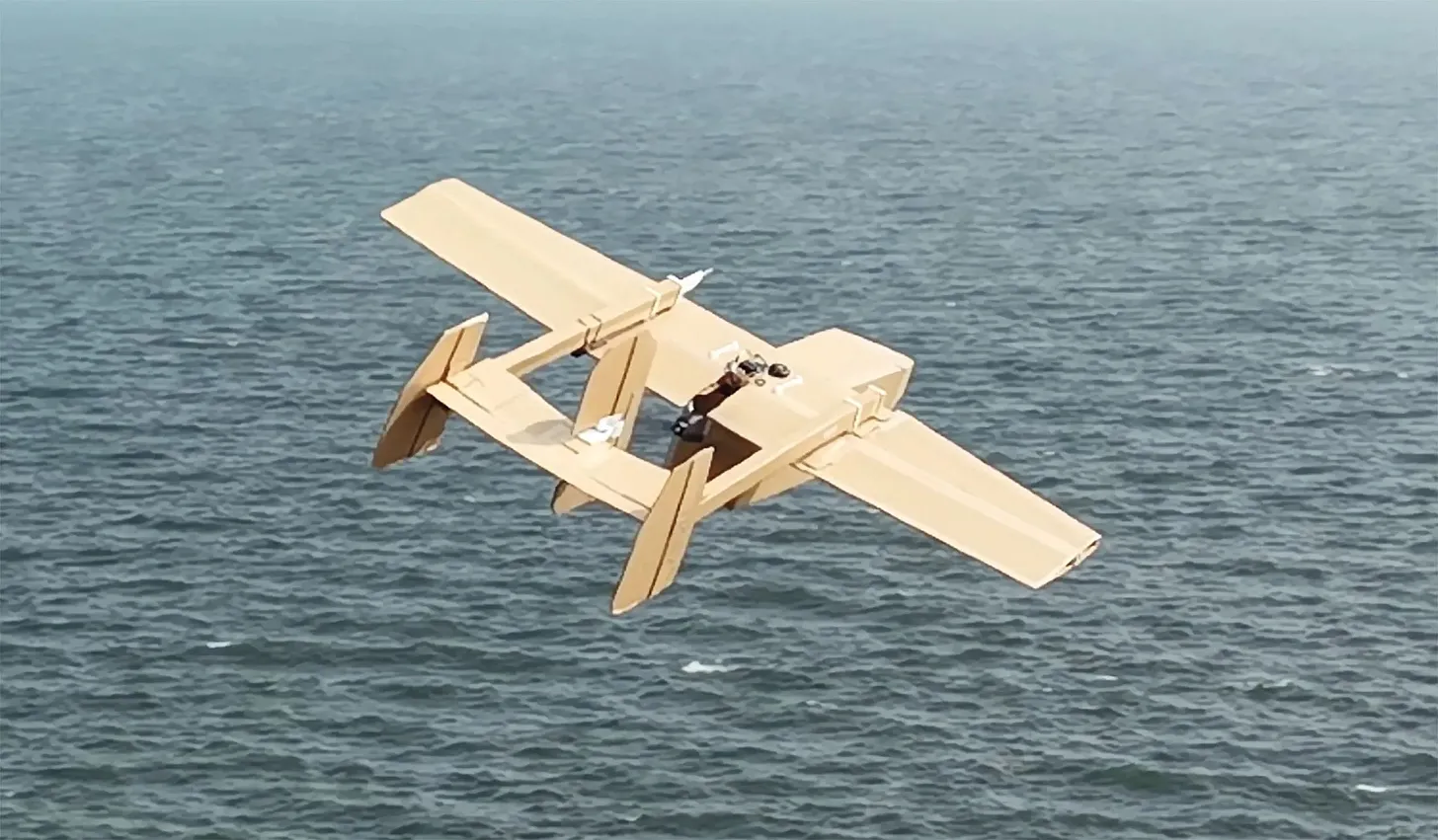
As highlighted in reporting from TechRadar and defense commentator Wes O’Donnell, Australia has already supplied similar flat-packed, wax-coated cardboard drones to Ukrainian forces.
Produced by the Australian company SYPAQ, these drones have been delivered to the frontlines at a rate of roughly 100 units per month. They have been successfully utilized in active combat zones for ammunition delivery, critical frontline reconnaissance, and even deploying explosive payloads directly onto hostile positions.
Japan is actively learning from this real-world battlefield data. However, while Australia proved the concept in a localized European conflict, Japan’s defense apparatus appears determined to scale the concept to an industrial, Pacific-theater level.
The Real Battlefield is Software, Not Hardware
As an expert analyzing the intersection of software and defense, I argue that focusing too much on the “cardboard” completely misses the true paradigm shift.
The material is simply a cost-reduction mechanism serving a much larger, software-defined operational concept. As Startup Fortune rightly pointed out in its analysis of the defense startup ecosystem, when the hardware is cheap enough to be genuinely disposable, the strategic value migrates up the technology stack.
The real competition, and the true commercial margin, now lives exclusively in the software layer.
A cardboard airframe is merely a dumb delivery vehicle. The intelligence, navigation algorithms, visual target recognition, swarm coordination, and secure communications protocols must live in the code.
This marks a stark, irreversible departure from how legacy defense procurement has operated for the last fifty years. Prime contractors like Lockheed Martin and Raytheon are structurally optimized for managing the extreme complexity of exquisite hardware programs, like the multi-decade F-35 fighter jet project.
Building software that runs natively on a $2,000 disposable airframe requires an entirely different organizational DNA. It demands small, agile engineering teams, rapid iteration cycles, and the ability to push over-the-air (OTA) updates in a matter of days in response to changing battlefield conditions.
In modern combat, the most lethal platforms are those whose software can be updated the fastest to bypass evolving electronic warfare and GPS-jamming countermeasures. Startups operating in the defense space understand that building the operating system for a hundred-unit swarm is the actual prize.
Doctrinal Shift: The Era of Attritability and Swarm Warfare
Japan’s embrace of the AirKamuy 150 fits neatly into a broader, calculated reorientation among allied defense establishments. We are officially entering the era of “attritability.”
This is a term utilized by the defense sector to describe military platforms that are explicitly expected, and designed, to be destroyed during use. The strategic calculus of aerial warfare no longer favors the unit performance of a single exquisite system.
It favors volume, manufacturing speed, and overwhelming mass.
A $2 million precision drone shot down by a $50,000 surface-to-air missile represents an unsustainable economic loss for the attacking force. Conversely, a swarm of two thousand $2,000 cardboard drones fundamentally inverts those economics in favor of the attacker.
By utilizing swarm warfare tactics, an attacker can intentionally saturate enemy airspace. This forces adversaries to activate their radar systems—revealing their positions—and deplete their limited, expensive interceptor missile stockpiles on essentially worthless cardboard targets.
Once the air defenses are exhausted, higher-value assets can strike with impunity.
Contrasting Viewpoints: The Limitations and Legitimate Skepticism
Despite the obvious economic and logistical advantages, we must inject a dose of realism. The deployment of cardboard drones is not a universal panacea for modern warfare.
Many veteran aerospace engineers harbor legitimate skepticism regarding the operational effectiveness of these platforms in a highly contested environment. The most pressing concern involves the realities of Electronic Warfare (EW).
While the physical airframe is incredibly cheap, shielding a rudimentary $2,000 drone against sophisticated electromagnetic interference is incredibly difficult. If a drone swarm’s communication links are severed by broad-spectrum jamming, 500 flat-packed drones could be rendered instantly useless, crashing into the dirt before they ever see a target.
Furthermore, the logistics of a one-way intelligence mission present a complex hurdle. Reconnaissance is a primary use case for these platforms, but recovering battle data from a drone that is designed not to return requires constant, high-bandwidth data transmission.
If that transmission is jammed, or if the drone is physically destroyed before transmitting its final packet, the gathered intelligence is permanently lost. The military effectively flew a camera into the void for nothing.
There are also physical limitations to consider. A payload capacity of three pounds severely restricts the type of kinetic damage the AirKamuy 150 can inflict. While it might be effective against unprotected infantry, soft transport vehicles, or exposed radar dishes, it completely lacks the penetrative power to threaten armored tank columns or hardened concrete infrastructure.
We must be careful not to mistake a brilliant logistical and manufacturing innovation for a fully mature, standalone tactical weapon system. Its effectiveness against a deeply integrated, $2 billion air defense umbrella remains largely theoretical until tested at a massive scale.
Environmental Implications: The Biodegradable Battlefield
There is a fascinating, yet rarely discussed, secondary benefit to this material shift: environmental impact.
Modern warfare leaves deep ecological scars. Traditional drones shot down over combat zones litter the landscape with heavy metals, toxic battery acid, non-degradable plastics, and shattered carbon fiber.
If warfare transitions toward deploying thousands of disposable drones simultaneously, the post-conflict cleanup becomes a monumental task. By utilizing corrugated cardboard, the AirKamuy 150 introduces a highly biodegradable element to the battlefield.
While the internal batteries and electric motors still pose a contamination risk, the vast majority of the airframe’s mass will simply dissolve and decompose when exposed to the elements over time. It is a surprisingly green side-effect to a technology built for destruction.
Conclusion: Redefining the Economics of the Sky
Japan’s deployment of ultra-cheap cardboard drones is far more than a quirky headline about origami-inspired warfare. It is a stark, unavoidable indicator of where modern combat is heading.
By aggressively combining the mass production capabilities of ordinary commercial cardboard plants with sophisticated software and swarm logic, Japan is drastically lowering the barrier to entry for localized air superiority. They are prioritizing volume, resilience, and software iteration over hardware perfection.
As defense startups continue to challenge legacy prime contractors in this new arena, the skies of tomorrow will likely be filled not just with exquisite billion-dollar jets, but with massive, disposable swarms of intelligent, flat-packed cardboard.
The economics of the sky have changed forever. The question now is which nations have the software architecture to command the swarm.
By LeoSafi, Resident Expert
Leo Falsafi is a digital marketing veteran and senior journalist at Virlan.co, where he covers the intersection of digital marketing, gaming, and breaking US trending news. With nearly two decades of hands-on experience in SEO and digital strategy, Leo has consulted for and scaled hundreds of companies. His deep industry roots allow him to deliver sharp, fact-checked insights and analysis on the trends shaping today's digital landscape.