
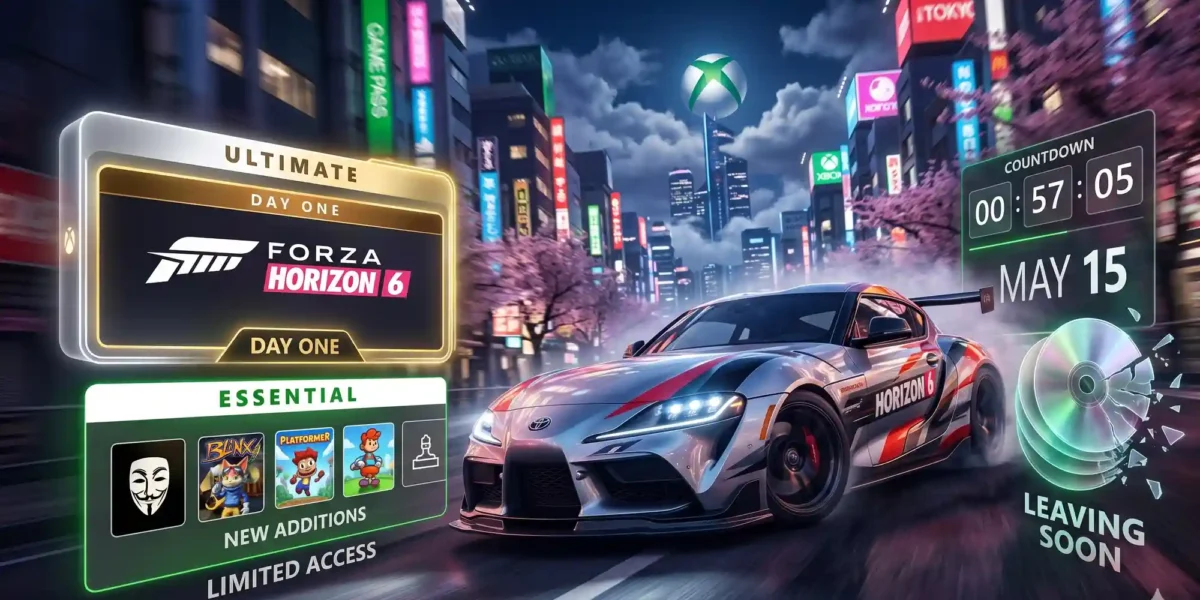
Navigating the Tides of Xbox Game Pass in May 2026
The landscape of digital gaming subscriptions is constantly shifting, and May 2026 serves as a fascinating microcosm of this evolving ecosystem. Microsoft’s Xbox Game Pass remains the dominant force in the industry, yet the nuances of how content is deployed, segmented, and ultimately retired provide crucial insights into the platform’s broader corporate strategy.
This month, subscribers have witnessed a whirlwind of activity. From high-profile, day-one megahits like Forza Horizon 6 to stealthy catalog injections into the frequently neglected Essential tier, the sheer volume of movement is staggering. However, as is the cyclical nature of subscription libraries, this influx of content is matched by a notable wave of departures, reminding consumers that digital leasing comes with strict expiration dates.
As a subscription model analyst, I have been closely tracking the subtle shifts in Microsoft’s deployment strategy. The May 2026 roadmap is particularly telling because it aggressively highlights the increasing fragmentation of the Game Pass ecosystem. We are no longer looking at a monolithic service; instead, we are examining a highly segmented, multi-tiered architecture designed to push users toward higher-yielding premium subscriptions.
By cross-referencing recent operational data with the May 2026 catalog updates, we can begin to unpack the “why” behind these moves. Why did the Essential tier suddenly receive nine unannounced games? Why is the biggest release of the month heavily gated behind the Ultimate and PC tiers? And what do the specific departures tell us about the lifecycle of independent titles on the platform?
In this comprehensive analysis, we will explore the varied facets of the Xbox Game Pass May 2026 additions and the looming games leaving Xbox Game Pass May 15 deadline, offering contrasting viewpoints on value proposition, technical tier restrictions, and the underlying economics of the service.
The Stealth Drop: Analyzing the Xbox Game Pass Essential Tier Surprise Games
One of the most perplexing and intriguing developments of early May 2026 occurred over the weekend of May 8. Without any prior fanfare, press release, or social media buildup, Microsoft quietly added nine titles to the Xbox Game Pass Essential tier.
This is a stark departure from the company’s usual highly choreographed marketing beats. The Essential tier, which serves as the foundational entry point for Xbox subscribers, has historically been starved of major updates. Outside of the occasional additions like Warhammer: Vermintide 2 and DayZ last month, the Essential tier hadn’t seen a significant catalog refresh since December 2025.
The nine games added include Blinx: The Time Sweeper, Jetpac Refuelled, Perfect Dark Zero, Kameo: Elements of Power, Stacking, Iron Brigade, Massive Chalice, Neon Abyss, and Max: The Curse of Brotherhood.
From a technical perspective, this lineup is fascinating. The majority of these titles—such as Perfect Dark Zero, Kameo, and Blinx—are deeply rooted in Xbox’s legacy backward compatibility program. These are first-party and legacy classic assets that cost Microsoft virtually nothing to distribute at this point in their lifecycle.
Adding these legacy titles to the Essential tier serves a dual purpose. First, it artificially inflates the perceived value of the baseline subscription. By padding the library with historically significant but functionally dormant intellectual properties, Microsoft can claim a vast catalog size without sacrificing the lucrative third-party licensing deals reserved for the Ultimate tier.
However, a contrasting viewpoint suggests that this stealth drop might be an operational oversight or a rapid pivot to address subscriber churn. In recent quarters, baseline subscription retention has become increasingly difficult as consumers tighten their entertainment budgets. A silent drop of nine well-regarded games—especially indie gems like the fast-paced roguelite Neon Abyss and Double Fine’s Massive Chalice—provides an immediate, low-cost retention hook.
Furthermore, including Windows-compatible versions of games like Neon Abyss suggests that Microsoft is attempting to unify its backend licensing infrastructure. Historically, console and PC entitlements were strictly segregated. The quiet inclusion of these cross-compatible SKUs in the Essential tier hints at a backend restructuring aimed at lowering the friction between the Xbox dashboard and the Windows Xbox App.
Whether this represents a new strategy of regular, unannounced legacy drops or simply a one-off correction remains to be seen. But for the budget-conscious consumer, the Xbox Game Pass Essential tier surprise games of May 2026 represent an undeniable windfall.
Forza Horizon 6 Game Pass Ultimate Exclusivity: A Shift in Day-One Delivery
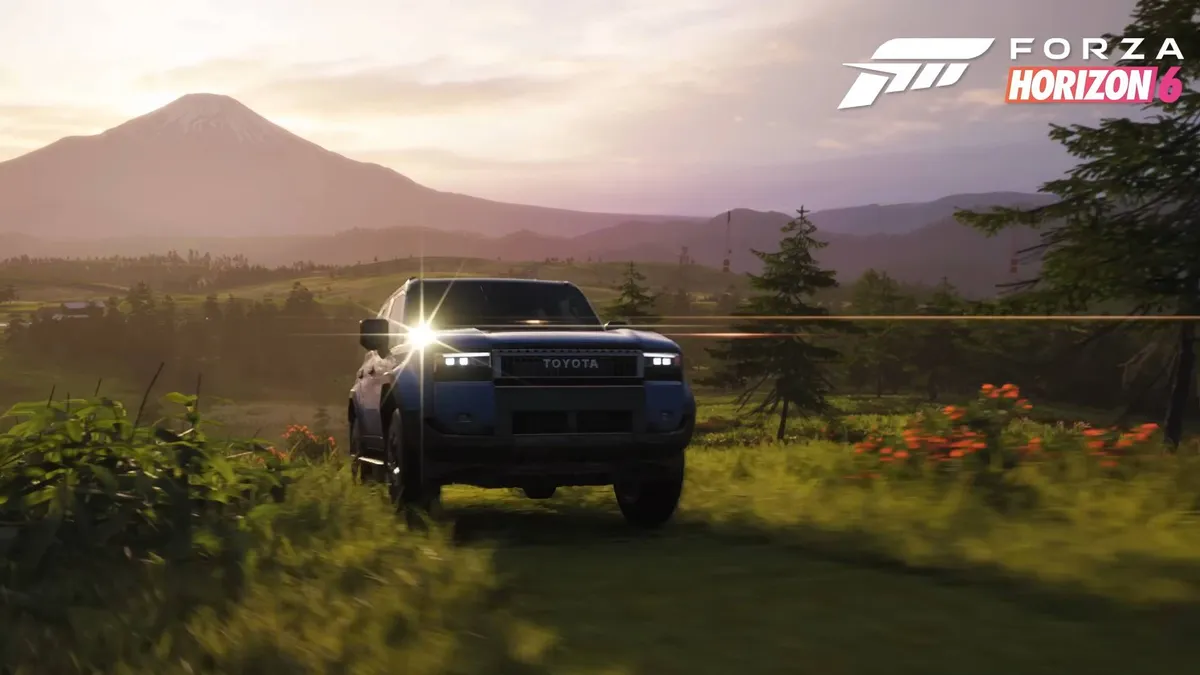
While the Essential tier received a quiet boost, the real gravitational pull of May 2026 belongs to Forza Horizon 6. Arriving on May 19, the latest iteration of Playground Games’ critically acclaimed open-world racing franchise takes players to a sprawling, meticulously detailed recreation of Japan.
Boasting over 550 real-world cars, Forza Horizon 6 is not just a game; it is a technical showcase for the Xbox Series X|S and high-end PC hardware. However, the most crucial talking point isn’t the game’s cherry-blossom-lined streets or its rumored 135GB preload size; it is how the game is being distributed to subscribers.
Forza Horizon 6 will be a day-one release, but strictly for Game Pass Ultimate and PC Game Pass subscribers. For the first time in a flagship first-party release of this magnitude, standard Essential and Premium tier members are fundamentally locked out of the core experience unless they upgrade their subscription plan.
This represents a massive shift in Microsoft’s “Play It Day One” marketing promise. For years, the appeal of Game Pass was the democratization of access. If you had the service, you had the game. Now, we are witnessing the stark reality of the Forza Horizon 6 Game Pass Ultimate exclusivity.
This tier-gating strategy is a calculated risk. On one hand, it drives aggressive conversion rates. An Xbox Game Pass Essential subscriber who desperately wants to drift through the neon-lit streets of Tokyo has strong motivation to upgrade to Ultimate. Furthermore, Microsoft is offering a $60/£60 Premium Upgrade Bundle, which allows players to access the game early on May 15 alongside two post-launch expansions and the VIP membership.
From a financial analytics standpoint, this is a brilliant move to extract higher Average Revenue Per User (ARPU). The base game retails for $70, but by offering a $60 upgrade path that requires an active Ultimate subscription, Microsoft is effectively securing both high-margin DLC sales and a recurring premium subscription fee simultaneously.
However, there is a contrasting viewpoint that warns of subscriber fatigue. The increasing complexity of the tiers—Essential, Premium, PC, and Ultimate—mirrors the confusing landscape of cable television packages that streaming services originally sought to disrupt. If subscribers feel that the goalposts for “Day One” access are constantly being moved to higher price brackets, the foundational trust in the Game Pass ecosystem could erode.
Technologically, Forza Horizon 6 represents a true generational leap, fully leaving the Xbox One hardware behind. This “sea change” allows the developers to leverage the full bandwidth of the Series X SSD for seamless asset streaming at high speeds. The decision to limit it to Ultimate and PC plans might also be tied to cloud computing economics; delivering a stable 1440p or 4K stream of a highly demanding racing game requires immense server overhead, a cost Microsoft is only willing to absorb for its highest-paying customers.

The Mid-Month Indie and AA Surge: Balancing the Portfolio
While AAA behemoths like Forza dominate the headlines, the lifeblood of Game Pass has always been its steady cadence of AA and independent titles. The early May rollout illustrates a highly sophisticated, staggered deployment strategy across cloud, console, handheld, and PC devices.
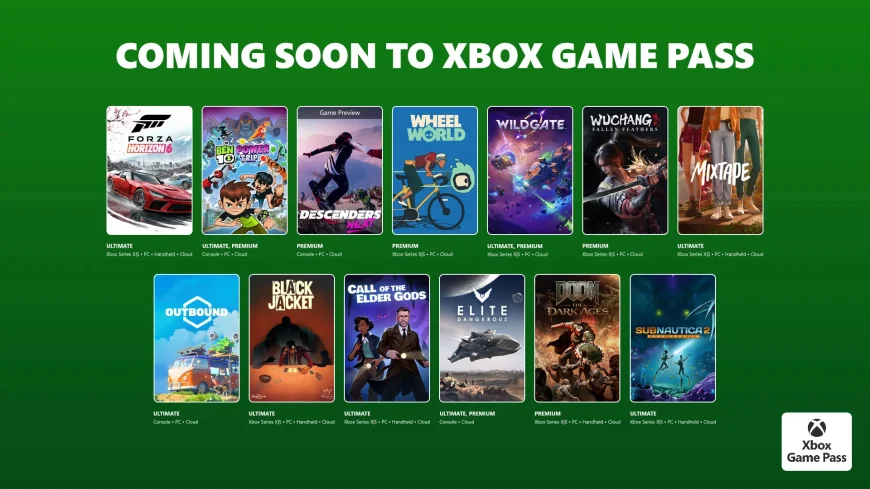
Starting on May 5, the classic Final Fantasy V arrived for Cloud, Series X|S, and PC, reinforcing Microsoft’s ongoing relationship with Square Enix to bring legacy JRPGs to the ecosystem.
On May 6, the service saw a diverse drop including Ben 10 Power Trip, Descenders Next, Wheel World, Wildgate, and the highly anticipated Wuchang: Fallen Feathers. The latter—a souls-like Action RPG set in the dark final days of the Ming Dynasty—serves as a crucial counterbalance to the casual racing of Forza, appealing to the hardcore, mechanically driven gaming demographic.
The staggered release continued on May 7 with Mixtape, a nostalgic narrative adventure inspired by classic coming-of-age movies developed by Beethoven & Dinosaur. Notably, Mixtape was prominently listed for “Handheld,” a clear nod to the growing dominance of portable PC gaming devices like the ROG Ally and Lenovo Legion Go, which rely heavily on the Xbox app and PC Game Pass architecture.
This spread of content is not accidental. It is a managed release schedule designed to keep engagement metrics high throughout the entire month. If Microsoft dropped all these titles on the same day, smaller narrative games like Mixtape would be completely cannibalized by the marketing black hole of Forza Horizon 6. By pacing the releases, Microsoft ensures that users log in multiple times a week, a key metric for subscription health.

The Departures: Games Leaving Xbox Game Pass May 15
To maintain the economic viability of licensing, the entry of new titles necessitates the exit of others. Subscribers have until Friday, May 15, to complete several critically acclaimed games before they are removed from the service.
The list of games leaving Xbox Game Pass May 15 includes:
- Galacticare (Cloud, Console, PC)
- Go Mecha Ball (Cloud, Console, PC)
- Kulebra and the Souls of Limbo (Cloud, Console, PC)
- Paw Patrol Rescue Wheels: Championship (Cloud, Console, PC)
- Planet of Lana (Cloud, Console, PC)
From a data perspective, the departure of these games offers insights into the standard Game Pass licensing contract lifecycle. Titles like Planet of Lana—a breathtaking, critically acclaimed puzzle platformer—were added roughly a year ago. The 12-month standard licensing agreement is a common staple in Game Pass negotiations, allowing developers a guaranteed revenue floor for a year before they can capitalize on secondary sales spikes upon leaving the service.
Galacticare, a well-reviewed space hospital management simulator, and Go Mecha Ball, a twin-stick roguelike, both represent the kind of mid-tier indie games that thrive on Game Pass. Their departure will undeniably disappoint active players, but Microsoft softens the blow by offering a 20% discount to purchase these games outright before they leave.
This 20% discount is a vital, often overlooked piece of the Game Pass monetization puzzle. By serving as a robust discovery engine for a year, the platform builds a dedicated player base. When the game leaves, a significant percentage of users who haven’t finished the campaign will convert to full purchasers utilizing the discount. It is an incredibly effective funnel that transforms passive subscribers into active retail buyers.
For parents, the removal of Paw Patrol Rescue Wheels: Championship might cause some immediate friction. Children’s titles have incredibly high replay value, and their sudden disappearance often forces parents into immediate retail purchases to avoid household meltdowns—a psychological leverage point that publishers of family-friendly games exploit masterfully when signing short-term Game Pass deals.
The Broader Economic Implications for Microsoft Gaming
Looking at the totality of the May 2026 data, we can draw some definitive conclusions about the current state of Xbox Game Pass. The service, which boasts roughly 35 million subscribers, is pivoting from a phase of aggressive, loss-leading acquisition to a phase of meticulous, margin-focused retention.
The tier-gating of Forza Horizon 6 is the loudest indicator of this pivot. As game development budgets balloon—with AAA titles regularly exceeding $200 million—the math of putting a game on a $10/month subscription service no longer balances without strict tier segmentation. We are likely to see this trend accelerate. Future monolithic releases like the next Halo or Gears of War will almost certainly adopt the Forza model: Day One for Ultimate, while Essential users get legacy drops and indie titles.
At the same time, the inclusion of titles explicitly marketed for “Handheld” (such as Mixtape) shows Microsoft’s brilliant hedge against traditional console hardware. They no longer care if you buy an Xbox Series X; they simply want you paying for PC Game Pass to play on your portable PC or streaming via your smartphone.
Conclusion
The Xbox Game Pass May 2026 lineup is a masterclass in portfolio management. The silent drop of nine legacy and indie titles to the Essential tier provides unexpected value to the budget-conscious, while the staggered release of AA titles like Wuchang: Fallen Feathers keeps weekly engagement stable. However, the true story of the month is the structural shift represented by Forza Horizon 6. By restricting its biggest launch to the Ultimate tier, Microsoft is boldly redefining what “Day One” means on Game Pass. As players rush to finish Planet of Lana before the May 15 departures, they are participating in a carefully calibrated ecosystem designed to extract maximum value at every tier.
Leo Falsafi is a digital marketing veteran and senior journalist at Virlan.co, where he covers the intersection of digital marketing, gaming, and breaking US trending news. With nearly two decades of hands-on experience in SEO and digital strategy, Leo has consulted for and scaled hundreds of companies. His deep industry roots allow him to deliver sharp, fact-checked insights and analysis on the trends shaping today's digital landscape.