
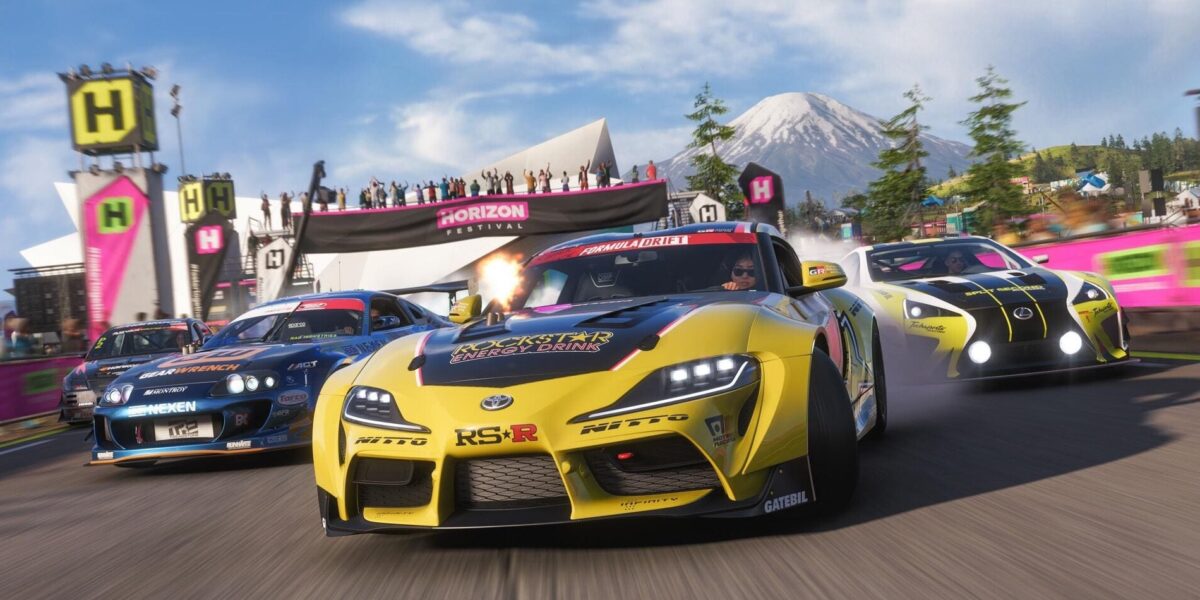
Forza Horizon 6 Arrives: A New Era of Open-World Racing in Japan
The wait for the most anticipated racing game of the decade is finally over. Forza Horizon 6 officially launches its Early Access on May 15, 2026, for Premium Edition owners, ahead of the global May 19 release. Playground Games has transported the Horizon Festival to the land of the rising sun.
Japan serves as the ultimate playground, fulfilling a fan request that has dominated forums for years. Players are treated to the largest city environment in any Horizon game to date, alongside coastal highways, snow-capped mountains, and rural bamboo forests.
But beyond the stunning cherry blossoms and neon-drenched Tokyo streets, how does Forza Horizon 6 actually perform? We are diving deep into the technical benchmarks, contrasting viewpoints on its gameplay loop, and the hidden mechanics that make this entry a true next-generation showcase.
Deeper Technical Analysis: RTGI and the ForzaTech Engine
At its core, Forza Horizon 6 still utilizes the proprietary ForzaTech engine. However, the introduction of Ray-Traced Global Illumination (RTGI) fundamentally transforms how the game is rendered.
Traditional rasterized lighting is now paired seamlessly with RTGI, drastically altering the nuance of light propagation. When you race through the dense urban streets of Tokyo, the neon signs dynamically bounce light onto your car’s paintwork, grounding the vehicles in the environment with unprecedented realism.
Furthermore, ray-traced reflections have been completely overhauled. Unlike the screen-space reflections (SSR) of past titles that broke easily at screen edges, the new system allows Tokyo’s skyscrapers to act as literal mirrors.
Forza Horizon 6 PC Performance Benchmarks and DLSS Dominance
Testing Forza Horizon 6 PC performance benchmarks reveals a demanding but scalable experience. High-end rigs, such as those equipped with AMD’s Ryzen 7 9850X3D and NVIDIA’s RTX 5080, can push 4K resolution at 60+ FPS with maximum ray-tracing enabled.
However, there is a catch. NVIDIA has a distinct advantage in frame generation. While upscaling options include NVIDIA DLSS, AMD FSR, and Intel XeSS, frame generation is currently restricted exclusively to NVIDIA DLSS 3/4. AMD and Intel GPU owners are left relying purely on brute rasterization and standard upscaling.
This creates a performance gap for Radeon users who want to experience the highest-tier ray tracing without sacrificing framerate. It’s a contrasting viewpoint to Microsoft’s usual hardware-agnostic approach on PC, likely highlighting the engine’s deep integration with NVIDIA’s latest software suites.
Also read:
Handheld Gaming: ASUS ROG Ally X and Xbox Mode
Handheld PC gaming has become a crucial market, and Forza Horizon 6 caters to it directly. On devices like the ASUS ROG Ally X, the game introduces a “Default Game Profile” optimized by Xbox first-party studios.
This profile automatically tailors the TDP (Thermal Design Power), allowing the handheld to boost up to 27W dynamically during intense weather effects. Players can expect a relatively stable 30 FPS at 1080p on High settings.
PC players also benefit from the newly introduced Windows “Xbox Mode,” which creates a console-like, full-screen UI that is entirely navigable with a controller. However, sleep state mechanics remain frustrating. Putting the PC or handheld to sleep forces the game to reset your position to your home estate, interrupting the seamless open-world exploration.
Project Helix: A Glimpse into the Next-Gen Xbox
The sheer demanding nature of Forza Horizon 6’s maximum settings has sparked intense speculation regarding Xbox’s unannounced Project Helix. Digital Foundry’s analysis suggests that the ray-tracing suite seen on top-end PCs is the baseline for Microsoft’s next-generation console hardware.
Currently, the Xbox Series X runs the game via a 30 FPS Quality mode (native 4K) or a 60 FPS Performance mode (dynamic upscaling). The 30 FPS cap in Quality mode, while beautiful, introduces input lag that competitive racers might find jarring.
If Project Helix is designed to bridge the gap between high-end PC modularity and console accessibility, Forza Horizon 6 stands as its ultimate proof-of-concept. It teases a future where uncompromised RTGI and 60 FPS coexist on a home console.
The Gameplay Loop: Time Attacks and Yuji’s Auto
While the traditional Festival Playlist returns, Forza Horizon 6 introduces substantial new value through specialized gameplay modes. The most notable is the Time Attack circuits scattered across Japan. These events strip away the chaotic arcade elements and demand precision, recording hundredths of a second and displaying leaderboards on physical in-game billboards.
Another brilliant addition is “Yuji’s Auto.” Serving as a spiritual nod to anime like Wangan Midnight, this mode tasks players with transporting newly purchased used cars back to Yuji’s garage without a scratch.
Successfully delivering the car unlocks an upgraded, tuned version of that vehicle. It’s a structured, narrative-driven progression system that contrasts beautifully with the usual “spin the wheel to win a hypercar” economy of past Horizon games.
Also read:
Estate Editors and Real Estate: Buying Your Own Akiya
Player agency is taken to new heights with the Garage and Estate Editor. Beyond merely painting cars, players can now purchase an akiya—a traditional, abandoned Japanese countryside home.
You can renovate these properties and build elaborate garage layouts. The community aspect shines here, as players can share their garage designs online. Earning likes and downloads on your Jurassic Park-themed garage or minimalist Tokyo drift shop nets you passive in-game credits.
You can even lay down asphalt on your estate grounds to create private test tracks for you and your friends. This level of base-building is a massive leap forward for the franchise’s social infrastructure.
Contrasting Viewpoints: The Flaws in the Festival
Despite the visual triumphs, Forza Horizon 6 is not without its glaring flaws. A contrasting viewpoint to the overwhelming praise is the state of the NPC AI and world density.
Downtown Tokyo, a city famous for its suffocating traffic, feels oddly empty. The civilian cars that do exist navigate corners with robotic stiffness, lacking the dynamic suspension physics of the player’s vehicles.
Furthermore, the character models remain a weak point. While the cars feature millions of polygons, the human avatars look dated and lifeless.
The audio presentation also suffers from a jarring cultural disconnect. Despite the rich Japanese setting, the radio hosts and festival organizers lean heavily into over-enthusiastic British slang. The dialogue often feels like an energy drink commercial rather than an authentic representation of Japan’s underground car culture.
The Car Roster: Over 550 Vehicles at Launch
At launch, Forza Horizon 6 boasts over 550 meticulously detailed cars. The VIP Membership and Welcome Packs inject immediate variety, giving Premium players access to the 1999 Dodge Viper GTS ACR Forza Edition and the 2021 BMW M4 Competition Coupé.
Playground Games encourages ridiculousness. Reviewers have highlighted the sheer joy of taking a twin-turbo, rear-wheel-drive Cadillac XTS limousine and drifting it alongside a Lexus LFA on a mountain touge.
Barn finds return as well, rewarding exploration with legendary classics like the abandoned Toyota 2000GT hidden deep within the bamboo forests. With Car Pass promising 30 new vehicles in the coming weeks, the automotive sandbox is denser than ever.
Frequently Asked Questions (FAQ)
When does Forza Horizon 6 Early Access start?
Early access begins at 12:01 AM local time on Xbox consoles and the PC Xbox App on May 15, 2026. Steam users globally unlock the game at 4:01 AM UTC on May 15. The standard edition launches on May 19.
Is Forza Horizon 6 coming to PS5?
Currently, Forza Horizon 6 is exclusive to Xbox Series X|S and PC. However, Xbox leadership is reportedly “reevaluating” exclusivity, and given the port of Forza Horizon 5, a PlayStation 5 release down the line is highly possible.
What are the PC system requirements for Ray Tracing in Forza Horizon 6?
To utilize the new Ray-Traced Global Illumination (RTGI) at 4K 60 FPS, you will need a top-tier GPU like the NVIDIA RTX 5080. DLSS Frame Generation is highly recommended, though FSR and XeSS are available for AMD and Intel users.
Can you play Forza Horizon 6 on the ASUS ROG Ally X?
Yes. The game features a “Default Game Profile” specifically for Xbox handhelds, which dynamically manages the TDP (up to 27W) to maintain a steady 30 FPS at 1080p on High settings.
What is Yuji’s Auto in Forza Horizon 6?
Yuji’s Auto is a new progression mode akin to Gran Turismo’s Menu Books. You help a local mechanic transport used cars safely to his shop, and in return, you get to drive the newly tuned and upgraded versions of those vehicles.
Leo Falsafi is a digital marketing veteran and senior journalist at Virlan.co, where he covers the intersection of digital marketing, gaming, and breaking US trending news. With nearly two decades of hands-on experience in SEO and digital strategy, Leo has consulted for and scaled hundreds of companies. His deep industry roots allow him to deliver sharp, fact-checked insights and analysis on the trends shaping today's digital landscape.