
In the ever-evolving landscape of digital media, few symbols hold as much weight, prestige, and power as the elusive blue checkmark. Originally introduced as a simple tool to prevent impersonation of public figures and celebrities, the verification badge has transformed into a universal status symbol. It signifies trust, authenticity, and industry authority. For brands, influencers, and businesses, getting verified on social media isn’t just about feeding vanity metrics—it is a critical step in establishing a robust digital footprint, securing brand identity, and unlocking exclusive platform features that drive algorithmic success and revenue.
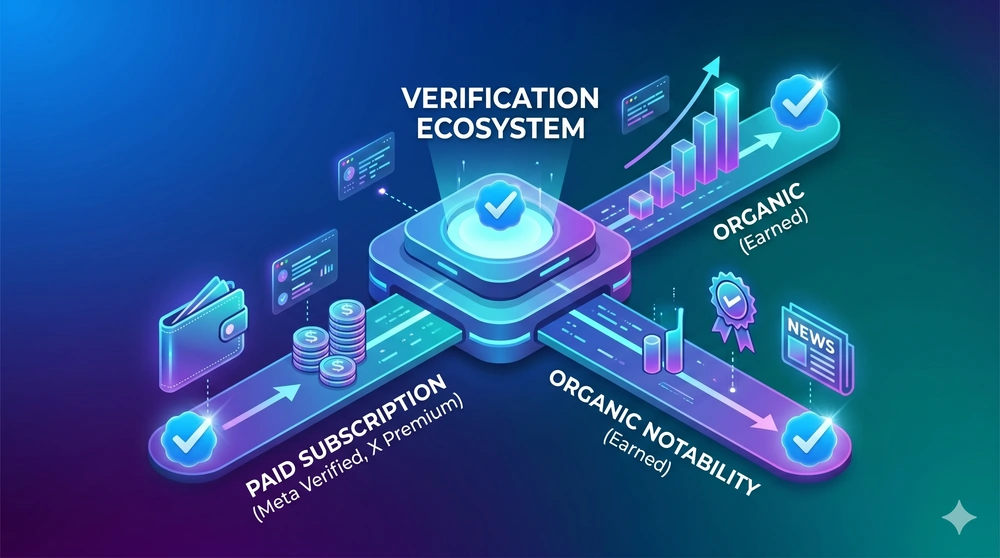
However, the path to verification is no longer a one-size-fits-all journey. With the introduction of subscription models like Meta Verified and X Premium (formerly Twitter Blue), the rules of the game have shifted dramatically. While some platforms now allow users to simply pay a monthly fee in exchange for identity verification, others maintain strict, organic, and highly exclusive criteria. Navigating this complex ecosystem requires a deep understanding of what each platform values, how their specific verification algorithms work, and what steps you can take to make your application undeniable.
Whether you are a budding TikTok creator, a corporate brand expanding its reach on LinkedIn, or an ecommerce business looking to drive sales through Pinterest, securing that badge of authenticity is crucial. In this comprehensive, step-by-step guide, we will break down the exact requirements, strategies, and insider tips you need to get verified across all major social media platforms, drawing on the latest criteria from industry experts.
The Evolution of the Blue Checkmark: From Exclusivity to Accessibility
To understand how to get verified today, we must look at how the verification system has evolved. Social media platforms originally treated the blue checkmark like an exclusive VIP club. You had to be a household name, a major corporation, or an individual with substantial media coverage to even be considered. The primary goal was purely protective: platforms needed a way to ensure that users searching for “Beyoncé” or “Nike” were interacting with the real entity, not a scammer or fan page.
Fast forward to recent years, and the paradigm has shifted. As social media platforms became central hubs for global commerce, the need for verification expanded to small businesses, local creators, and independent entrepreneurs. At the same time, platforms realized the incredible monetization potential of the blue badge. Elon Musk’s acquisition of Twitter (now X) catalyzed a massive industry shift when legacy verification was replaced by a paid subscription model. Soon after, Mark Zuckerberg announced Meta Verified, allowing users to verify their identity via government ID for a monthly fee on Facebook and Instagram.
Despite this shift towards paid verification, organic verification—often referred to as “legacy” or “notable” verification—still exists and is highly sought after by brands that do not want to be tied to a monthly subscription, or who want the prestige of being hand-selected by platform administrators. Furthermore, platforms like TikTok, YouTube, and Snapchat have entirely resisted the “pay-to-play” verification model, keeping their badges strictly merit-based. Understanding the difference between paying for a badge and earning one organically is the first step in formulating your verification strategy.
The Tangible Benefits of Verification for Brands and Creators
Before diving into the specific steps for each platform, it is important to understand why you are putting in the effort. The benefits of verification extend far beyond mere aesthetics.
- Instant Credibility and Trust: In an era rife with misinformation, fake news, and AI-generated content, consumers are increasingly skeptical of unverified accounts. The blue badge acts as an immediate signal of trust. When a user sees a verified badge, they know they are interacting with the authentic brand or person, which drastically increases conversion rates and followers.
- Protection Against Impersonation: For growing businesses and creators, impersonation is a serious threat. Scammers often create duplicate accounts to steal followers or solicit money. Verification gives you priority customer support on many platforms and ensures that imposters are swiftly dealt with or ignored by the algorithm.
- Algorithmic Boosts and Increased Visibility: Many social media algorithms favor verified accounts. Your comments will often appear at the top of the comment section on other users’ posts, and your profile is more likely to be recommended in the “Discover” or “For You” pages. This organic reach is incredibly valuable in a saturated market.
- Access to Exclusive Features: Verification often unlocks premium features. On Instagram, it can mean access to special stickers and deeper analytics. On YouTube, it allows for longer uploads and custom thumbnails (though some of these are tied to account age and phone verification, channel verification offers even more perks). On Pinterest, it turns your account into a verified merchant, enabling direct shopping integrations.
Now that we understand the value, let’s explore the platform-specific strategies to secure your badge.
How to Get Verified on Instagram
Instagram offers two distinct paths to verification: the traditional organic route (free but difficult) and the Meta Verified subscription (paid and accessible).
The Meta Verified Route:
If you are an individual creator or a personal brand, Meta Verified is the fastest way to get the blue badge. Currently costing around $14.99 USD per month on mobile devices, this service requires you to submit a government-issued ID that matches your profile name and picture. Once approved, you receive the blue badge, proactive account protection, exclusive stickers, and direct account support. It is important to note that this is currently targeted at personal accounts, though Meta has been gradually testing and rolling out business subscriptions.
The Organic (Notable) Route:
If you want to earn the badge for a business or prefer the traditional route, you must prove that your account is authentic, unique, complete, and notable. Here is the step-by-step process:
- Optimize Your Profile: Your profile must look professional. Use a clear, high-resolution profile picture (like your brand logo). Your bio should be accurate, free of obscure jokes, and include up-to-date contact information and a link to your official website.
- Build a Real Audience: Do not buy followers. Instagram’s algorithm instantly detects fake engagement. Focus on building a community that genuinely interacts with your content. Host giveaways, utilize Instagram Reels, and collaborate with other established creators in your niche.
- Generate Off-Platform Visibility: This is the most crucial step. Instagram defines “notability” by looking at external press. You need to be featured in multiple prominent news sources. Paid press releases or sponsored content do not count. You need genuine editorial features.
- Submit Your Request: Open the Instagram app, go to Settings, tap “Account,” and select “Request Verification.” You will need to provide your full name, business category, and official identification documents (such as a driver’s license for individuals, or articles of incorporation/tax filings for businesses). You can also link up to five press articles that prove your notability.
If denied, you must wait 30 days before reapplying. Use that time to secure more press coverage.
How to Get Verified on Facebook
Much like Instagram, Facebook falls under the Meta umbrella and offers the same two paths: Meta Verified and the traditional notable verification.
The Organic Business Route:
Getting a Facebook Business Page verified organically requires proving that you are a well-known, frequently searched entity.
- Prepare Your Page: Ensure your page has an updated “About” section, a professional cover photo, a profile photo, and a consistent history of posting high-quality content. Facebook strictly prohibits general interest pages (like meme pages or fan clubs) from being verified.
- Gather Your Evidence: If other accounts are impersonating you or stealing your content, take screenshots. Demonstrating to Facebook that a verified badge is necessary to prevent consumer confusion is a highly effective strategy. Gather all your trademarks, copyright documents, and international PR features.
- Submit the Application: Go to the Facebook Help Center and find the verification request form. You will be asked to select your profile type, upload identification documents, and provide a compelling reason why your page deserves verification.
Pro Tip from Agency Experts: Having a dedicated Facebook Account Manager drastically increases your chances of getting a business page verified. Agencies that spend tens of thousands of dollars on Facebook ads often have direct lines to Meta representatives who can manually push verification requests through. If you don’t have this luxury, ensuring your PR portfolio is undeniably strong is your only alternative.
How to Get Verified on TikTok
TikTok is a completely different beast. Unlike Meta and X, TikTok does not offer a paid verification subscription, nor does it have a simple “Request Verification” button in the app settings for the general public. Verification on TikTok is entirely in the hands of the platform’s internal team.
TikTok offers two types of badges: Verified Users (for mainstream A-list celebrities and massive global brands) and Popular Creators (for users who consistently produce highly engaging, viral content on the app).
Criteria for TikTok Verification:
- Consistent Daily Growth: TikTok looks for accounts that are rapidly gaining followers and consistently generating high view counts.
- Authenticity and Security: Your account must be authentic, public, and secure with multi-factor authentication enabled. You must have a completed profile bio and a verified email address (preferably an official business domain if applying as a brand).
- Cross-Platform Verification: If you are already verified on Instagram, Facebook, or Twitter, your chances of getting verified on TikTok skyrocket. The platform views cross-platform verification as a strong indicator of notability.
- Viral Content and PR: Your content needs to make waves. Furthermore, you need external PR. Having roughly 10 pieces of press from the last two years is often the benchmark for TikTok’s team to consider your account notable.
How to Apply: Since there is no in-app button, you must either rely on the algorithm to flag your account for internal review, or apply through a dedicated TikTok representative if your brand works with a marketing agency. Some users have reported success by emailing [email protected], though having an agency rep submit your UID (User ID) is far more effective.
How to Get Verified on X (formerly Twitter)
Twitter was the pioneer of the verification badge back in 2009. However, the platform’s verification system underwent a radical transformation following Elon Musk’s takeover in late 2022. Today, the blue checkmark is primarily tied to the X Premium subscription service.
Getting the Blue Checkmark via X Premium:
Any user can apply for a blue checkmark by subscribing to X Premium. However, you still need to meet certain eligibility criteria to receive the badge:
- Completeness: Your account must have a display name and profile photo.
- Active Use: You must have been active on the platform in the previous 30 days.
- Security: Your account must be older than 30 days and have a confirmed phone number.
- Non-Deceptive: Your account must have no recent changes to your profile photo, display name, or handle (@username), and must not have signs of being deceptive, spammy, or engaging in platform manipulation.
Once you subscribe and pass the review process, the blue checkmark is applied to your profile.
Gold and Gray Checkmarks:
X has also introduced color-coded checkmarks.
- Gold Checkmarks: These are reserved for official businesses and non-profit organizations via the X Verified Organizations program (which comes with a significant monthly cost).
- Gray Checkmarks: These are reserved for government organizations, government officials, and multilateral organizations.
How to Get Verified on YouTube
YouTube verification is straightforward, transparent, and entirely merit-based. You cannot buy a verified badge on YouTube.
The 100,000 Subscriber Milestone:
The golden rule for YouTube verification is that your channel must surpass 100,000 subscribers. Once you hit this milestone, you become eligible to submit a verification request.
Additional Requirements:
Simply hitting the subscriber count isn’t enough; your channel must also be:
- Authentic: Your channel must represent the real creator, brand, or entity it claims to be. YouTube will review the channel to ensure it isn’t impersonating someone else.
- Complete: Your channel must be public, have a channel banner, a description, a high-quality profile picture, and be actively uploading content. It must strictly adhere to YouTube’s Community Guidelines.
The Verification Process:
Once eligible, you can go to the YouTube Help Center and fill out the verification application. If approved, your channel name will be accompanied by a small checkmark (or a music note if you are an Official Artist Channel). Note that if you change your channel name after being verified, you will lose your badge and must reapply.
How to Get Verified on LinkedIn
LinkedIn approaches verification with a distinctly professional lens. Unlike other platforms where verification is about fame or pop-culture notability, LinkedIn verification is primarily about proving your professional identity and employment status.
Identity and Workplace Verification:
LinkedIn offers a free verification feature that adds a shield icon to your profile, proving you are who you say you are, or that you truly work where you claim to work.
- Clear or Government ID: LinkedIn has partnered with third-party identity verification services like CLEAR. You can verify your identity by providing your government ID to these partners.
- Work Email: You can verify your employment by receiving a four-digit code to your official company email address.
- LinkedIn Lookup App: In some cases, businesses can use the LinkedIn Lookup app to verify employees.
LinkedIn Premium:
While not a blue checkmark, paying for a LinkedIn Premium membership grants you a gold LinkedIn logo on your profile. This visual cue indicates to recruiters and potential clients that you are serious about your professional networking and have invested in the platform’s advanced tools.
How to Get Verified on Pinterest
Pinterest verification is incredibly valuable for e-commerce brands and bloggers. It signifies that you are a trustworthy source of inspiration and a legitimate merchant. The badge comes in two forms: a red checkmark for verified accounts, and a blue checkmark for Verified Merchants.
The Verified Merchant Program:
This program is designed for businesses that sell products. Being a Verified Merchant means your pins can appear organically to users searching for products.
- Account Requirements: Your Pinterest business account must be at least three months old, and your business website must have been created at least 13 months ago.
- Connect Your Catalog: You must ingest your product catalog into Pinterest. At least 50% of your products must be successfully uploaded.
- Install the Pinterest Tag: You must install the Pinterest tag on your website to track key conversion events (Page Visit, Add to Cart, Checkout).
Once you meet these criteria, you can apply through the Verified Merchant Program dashboard.
Claiming Your Website (The Red Checkmark):
For non-e-commerce businesses or bloggers, you can get a verified red checkmark simply by claiming your website. You do this by going to your Pinterest settings, entering your URL, and pasting a provided HTML tag into your website’s header. Within 24 hours of successful integration, the red checkmark will appear next to your URL on your profile.
How to Get Verified on Snapchat
Snapchat’s verification process is arguably the most secretive and exclusive of all the major social networks. There is no application form, and you cannot pay for a badge.
The Custom Emoji and the Gold Star:
Verified accounts on Snapchat originally featured a custom emoji next to the user’s name (for example, DJ Khaled famously used the key emoji). Today, it is generally represented by a gold star.
The Invite-Only Process:
Verification on Snapchat is strictly invite-only. To even be considered by the Snapchat team, you must reach a massive threshold of engagement—typically cited as achieving at least 50,000 views per story on a consistent basis. You must position yourself as a highly influential public figure with a completely public account that consistently produces engaging, brand-safe content. If you reach these metrics, the Snapchat team may reach out to invite you into their official verification program.
The Power of Public Relations in Social Media Verification
A recurring theme across all organic verification methods—particularly for Meta, TikTok, and legacy Twitter—is the absolute necessity of Public Relations (PR). Social media platforms use external media as a barometer for your real-world notability.
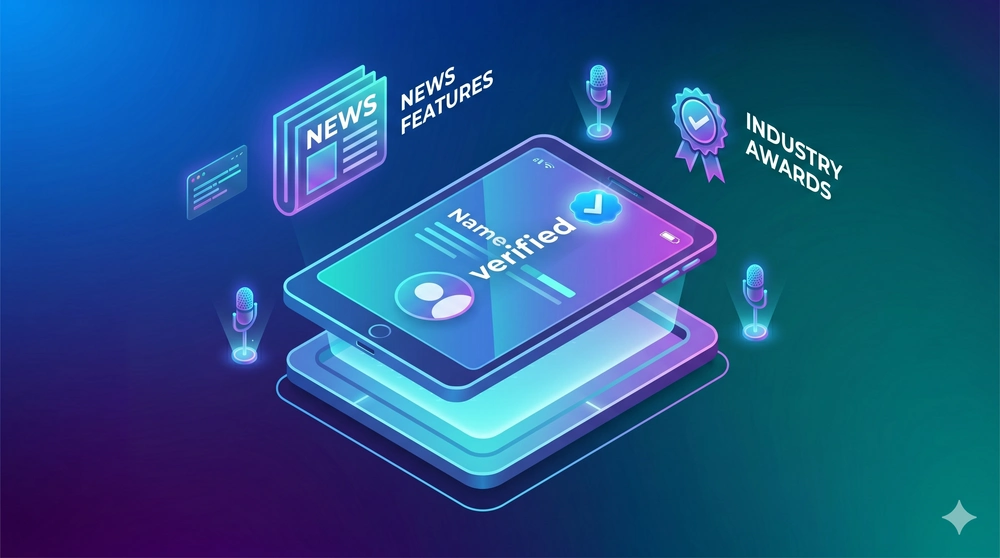
If you are a business or creator aiming for organic verification, you must invest in a PR strategy. This means getting featured in notable, recognized media outlets. Press releases submitted through wire services (like PR Newswire), paid advertorials, and sponsored blog posts are routinely ignored by verification reviewers.
You need organic, editorial features. Pitch your unique business story, your rapid growth, or your innovative products to journalists. Participate in podcast interviews, secure segments on local or national television, and aim for features in renowned digital magazines. Compile all of these links into a centralized spreadsheet so that when you or your agency submits a verification request, you can easily provide undeniable proof of your cultural or industry relevance.
Mistakes to Avoid When Seeking the Blue Badge
The desperation to secure a blue checkmark leads many brands and creators to make critical errors that can permanently damage their accounts.
- Buying Fake Followers: Never pay for bot followers to artificially inflate your numbers. Platforms use sophisticated AI to detect bot activity. A high follower count with a near-zero engagement rate is a massive red flag that will instantly get your verification request denied and could lead to a shadowban.
- Falling for Verification Scams: The internet is flooded with scammers claiming they “know someone on the inside” who can verify your account for a few thousand dollars. These are almost always scams. Never give your login credentials to a third party claiming they can force a verification.
- Rushing the Process: Do not apply for organic verification if your profile is incomplete, or if you have zero press coverage. Getting rejected means waiting 30 days (or more) to reapply. Take the time to build your foundation first.
- Inconsistent Branding: Your name, profile picture, and bio should be consistent across all platforms. If your brand is “John Doe Consulting” on Facebook but “JD_LifeCoach” on Instagram, reviewers will have a hard time linking your cross-platform presence.
Conclusion
Getting verified on social media in 2026 is a multifaceted endeavor. The introduction of paid subscriptions like Meta Verified and X Premium has democratized access to the blue badge for individuals, allowing for immediate credibility and enhanced security. However, for businesses, corporate brands, and creators looking to conquer platforms like TikTok, YouTube, and Snapchat, the traditional pillars of verification remain steadfast: you must be authentic, highly engaging, and culturally notable.
By carefully optimizing your profiles, investing heavily in a legitimate public relations strategy, and deeply understanding the unique requirements of each individual platform, you can successfully navigate the verification landscape. The blue checkmark is more than just a digital accessory; it is a powerful catalyst for growth, trust, and long-term digital success. Approach the process with patience, strategy, and authenticity, and the validation of the platforms will inevitably follow.
 How to Get Verified on Twitter ? Blue Verified Badge on Twitter
 How to get verified on TikTok ? the blue checkmark Verification. What Is a TikTok Verified Badge?
 How do you get a verified check on Youtube? Verification badges on channels
 How to Get Verified on snapchat ? the Blue Checkmark
 How to get verified on Pinterest ? Red check mark
 How to Get Verified on Twitch? a Purple checkmark
 How to Get Verified on LinkedIn ? verified LinkedIn Profile
 How to get verified blue checkmark on Tinder ?