
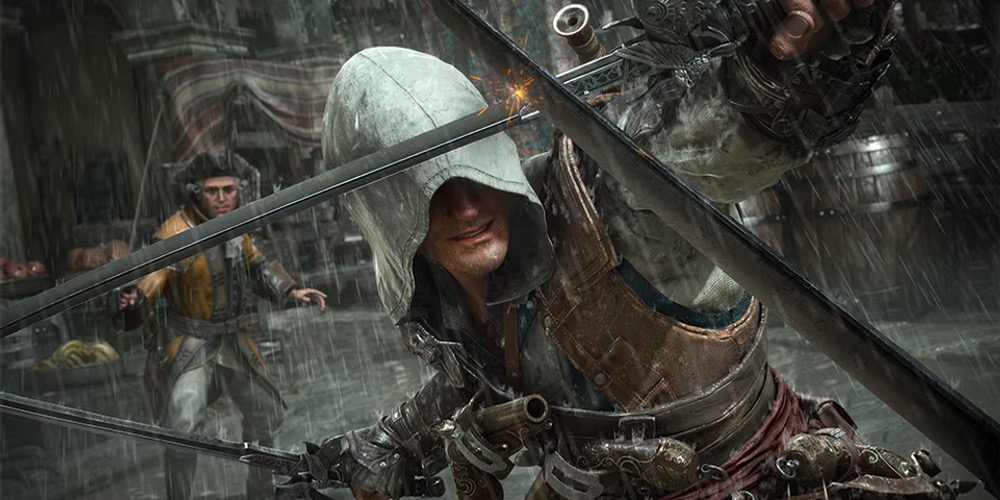
The Assassin’s Creed franchise is undergoing one of the most transformative periods in its near two-decade history. As Ubisoft pushes forward into 2026, the publisher has adopted an aggressive, multi-pronged approach to its flagship series. From entirely rebuilding a beloved classic from the ground up to experimenting with unexpected multiplayer genres and even taking the leap of faith onto the live theatrical stage, the sheer scope of the franchise’s current roadmap is staggering.
However, this ambitious expansion has not come without its share of turbulence. While fans are eagerly anticipating the highly requested Assassin’s Creed: Black Flag Resynced, the development of other projects like the multiplayer spin-off Assassin’s Creed Invictus is reportedly facing major hurdles, complete with online feuds between Ubisoft and prominent leakers. Furthermore, leadership shakeups behind the scenes indicate that the franchise’s darker, upcoming entry, Assassin’s Creed Hexe, might be experiencing its own growing pains.
Here is your comprehensive breakdown of everything happening in the world of Assassin’s Creed, straight from the latest developer deep dives, industry reports, and community leaks.
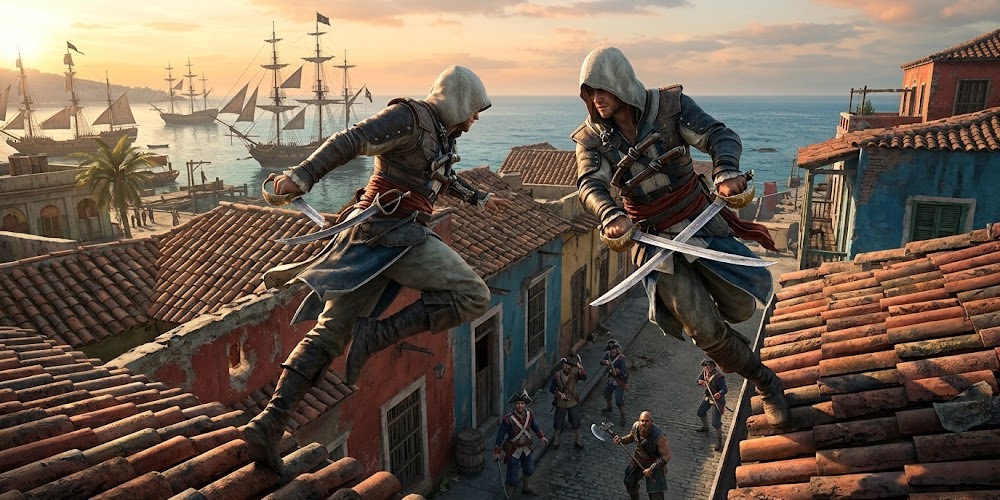
Assassin’s Creed Black Flag Resynced: Fixing the Flaws of a Masterpiece
When Assassin’s Creed IV: Black Flag originally launched, it was hailed as the ultimate pirate fantasy, blending naval combat with the series’ signature historical exploration. However, looking back over a decade later, certain mission structures and mechanics have aged poorly. Ubisoft is keenly aware of this, and with Assassin’s Creed: Black Flag Resynced slated for a July 9, 2026 launch on PC, PlayStation 5, and Xbox Series X/S, the studio is overhauling the game from the ground up using the latest iteration of the Anvil Engine.
In a recent comprehensive deep dive, Ubisoft—alongside Paul Fu, the Creative Director and a veteran developer of the original Black Flag—revealed exactly how Edward Kenway’s ground gameplay is being modernized.
Stealth Mechanics and the End of Instant Desynchronization
Perhaps the most universally celebrated news regarding Black Flag Resynced is the complete restructuring of the game’s most widely criticized mission type: trailing and eavesdropping. In the 2013 original, these missions were notoriously rigid, punishing players with an instant “desynchronization” game-over screen if they stepped out of range or temporarily lost line of sight of their target.
“One thing that we really wanted to improve from the original when it comes to stealth was how you would desync from tailing and eavesdropping missions when you were out of range, and that this could be super punishing,” explained Paul Fu. “We’ve removed this, so that if you get sidetracked and lose a target while trailing or eavesdropping, you’ll still be able to complete the mission.”
Beyond mission structure, Edward’s core stealth toolkit has been vastly expanded, borrowing heavily from recent entries like Assassin’s Creed Shadows. Players can now crouch at any time to modify their visibility meter. This makes Edward significantly harder to detect at medium and long ranges, especially when navigating under the cover of night, stalking through bushes, or moving across rooftops.
The classic “Eagle Vision” has also received a massive upgrade with the integration of the “Observe” feature. This allows the camera to pull in closer for a cinematic view, letting players highlight enemy positions, discover quest objectives, and track clues dynamically.
Edward’s classic arsenal is also returning, but with adjusted pacing. The Blowpipe—featuring Berserk and Sleep darts—and Smoke Bombs remain crucial for both offensive and defensive crowd control. The fan-favorite Rope Dart, which allows Edward to pull enemies in for close-range strikes or suspend them from beams, will now be unlocked much earlier in the story (Sequence 3 instead of Sequence 11), giving players access to advanced predator tactics for the majority of the campaign. Add in the returning ability to hire dancers for cover, blend into crowds of three or more civilians, toss coins as a distraction, and dynamically toggle Edward’s hood on and off, and the stealth sandbox is deeper than ever.
Also read: How Many Sequences Are in Assassin’s Creed 4: Black Flag?
Rebuilding Parkour and Traversal for a Pirate’s Pace
Parkour remains a foundational pillar of the Assassin’s Creed experience, and Resynced aims to make Edward’s movements snappier and far more deliberate. The developers have meticulously refined landing animations to ensure Edward recovers faster from drops, eliminating the heavy, stumbling sensation that could ruin the flow of a rooftop run in the original game.
Urban exploration in locations like Havana and Nassau will feature new additions like ziplines to drastically speed up downward traversal. Furthermore, the game will feature “Advanced Parkour,” a system powered by the updated Anvil Engine that untethers Edward’s movement capabilities. Players who master this system can execute precise side ejects and back ejects from virtually any height, even into the void if they choose. For purists who want ultimate agency over their movement, a manual jump button has been implemented to allow for shortcutting and velocity building, though players can disable these advanced tools for a more guided experience if they prefer.
A Complete Combat Overhaul: Tactical Takedowns and Adaptive Foes
Combat in Black Flag Resynced has been redesigned to reflect the brutal, charismatic dual-wielding swordplay and gunplay of a pirate, moving away from purely stat-based RPG mechanics and leaning into systematic action-adventure design.
The core combat loop revolves around “Takedowns.” By breaking an enemy’s defense, timing a perfect parry, or utilizing the environment, players open foes up to cinematic, fatal finishers. These include Hidden Blade Takedowns, Wall Takedowns (initiated by kicking an enemy into a structure), Ground Takedowns, and Perfect Parry Takedowns. Once the Hidden Blade is unlocked in the story, the visual variety of these finishers expands significantly, allowing for chained takedowns across up to four nearby enemies depending on Edward’s equipped sword.
The game also introduces advanced moves like Perfect Dodge attacks and heavy attacks that change based on the weapon type. A rapier’s heavy strike will pierce foes, a cutlass will cover a wide area to hit multiple enemies, and the unique Pistol-Sword will unleash two devastating shots that can be focused on one target or split between two. The iconic Gun Kata maneuvers also make a return for players who progress deep enough into the skill tree.
Crucially, players cannot simply spam the same move to win. Enemies in Resynced are highly adaptive. If a player relies too heavily on parrying, enemies will begin utilizing unblockable attacks. If a player spams kicks, enemies will learn to dodge them. Advanced enemy archetypes like the Brute, the Captain, and the newly introduced Demolitionist require specific strategies. They will actively block Chain Takedowns, forcing players to seamlessly weave Flintlock pistol shots into their combos to break their guard and continue the slaughter.
Assassin’s Creed Invictus: Multiplayer Turmoil and Leak Controversies
While the single-player legacy is being carefully restored with Black Flag Resynced, Ubisoft’s attempt to bring Assassin’s Creed back into the multiplayer space is currently mired in controversy and rumor.
In 2022, Ubisoft announced Assassin’s Creed Invictus, a standalone multiplayer project developed by a team of For Honor veterans at Ubisoft Montreal. According to Head of Content Jean Guesdon, the game was intended to represent “a new approach to multiplayer in the franchise.” However, recent leaks have painted a troubling picture of the game’s current state.
Prominent and historically reliable Ubisoft leaker “j0nathan” recently ignited a firestorm when he shared reports from a private April 30 playtest. According to the leaker’s sources, the playtest was “really f****** awful.” Rumors have suggested that Invictus plays less like the tense, cat-and-mouse social stealth multiplayer of early Assassin’s Creed games and more like a Fall Guys-inspired bubbly platformer featuring Assassin’s Creed characters navigating arena rounds.
The drama escalated when j0nathan posted a screenshot allegedly showing an early, untextured gray-box build of the game. In a highly unusual move, the official Assassin’s Creed X (formerly Twitter) account publicly called out the leaker, responding: “Nice try… This might have started as an image from our private test, but it’s been heavily altered (most probably with AI). Not great to spread misinformation. For those genuinely curious about the project: we’ll share more when the time is right!”
The leaker swiftly hit back, sharing what he claimed was the original, unaltered screenshot, which looked virtually identical to his first post. He admitted to using AI solely to remove an identifying watermark and upscale the image quality to protect his source, and noted he altered the default white costume colors. “They can’t own up to their s****y game at all,” j0nathan fired back, asserting that the leaked image was 99.99 percent accurate to the current build of the game.
According to a recent report by Vice, Assassin’s Creed Invictus may be in serious jeopardy. Ubisoft has struggled immensely to secure a foothold in the live-service multiplayer market over the last few years, suffering high-profile failures and shutdowns with titles like Roller Champions, the pirate simulator Skull and Bones, and the Call of Duty-inspired shooter XDefiant. With playtesters reportedly reacting poorly to the bizarre, platformer-style direction of Invictus, insiders suggest the late-2026 release target could be pushed back entirely, or the project could face outright cancellation.
Assassin’s Creed Hexe: Leadership Shakeups
Further complicating the franchise’s development pipeline is the news surrounding Assassin’s Creed Hexe, the mysterious, witchcraft-themed project currently in the works. While details on the game remain scarce, GameSpot recently noted that the game has lost its director. Benoit Richer recently departed Ubisoft Montreal to co-found his own independent studio, Servo Games. While turnover in the AAA games industry is standard, losing a game director mid-project often points to internal shifting and could impact Hexe‘s ultimate release timeline.
Assassin’s Creed Heredis: The Franchise Takes the Stage
Amidst the video game leaks and development deep dives, Ubisoft is making a massive, unexpected push into live entertainment. On social media, the publisher announced Assassin’s Creed Heredis, a brand-new, original live theater show.
Heredis is being produced in collaboration with the renowned theater and acrobatics group, The 7 Fingers. The show will weave a completely original narrative about “a young man traveling across history to find his lost father.” Ubisoft has explicitly stated that the stage show will not require the audience to have any prior familiarity with the video games, making it an accessible entry point for general audiences.
The stage production will heavily incorporate acrobatics, dance, and live parkour to emulate the high-flying movement the digital franchise is known for. Heredis will hold its world premiere on December 3, 2026, at the Théâtre Maisonneuve, Place des Arts in Montreal, running until December 20. Following its North American debut, the production will cross the Atlantic, opening at the Casino de Paris in France on January 21, 2027, and running through February 7.
Conclusion
The remainder of 2026 is shaping up to be a defining era for the Assassin’s Creed brand. If Ubisoft can stick the landing with the meticulously crafted Black Flag Resynced and impress audiences with the acrobatic spectacle of Heredis, the franchise’s legacy will remain ironclad. However, they will need to navigate the treacherous waters of live-service development and fierce community scrutiny if they hope to salvage Assassin’s Creed Invictus and deliver a multiplayer experience that fans actually want to play.
Leo Falsafi is a digital marketing veteran and senior journalist at Virlan.co, where he covers the intersection of digital marketing, gaming, and breaking US trending news. With nearly two decades of hands-on experience in SEO and digital strategy, Leo has consulted for and scaled hundreds of companies. His deep industry roots allow him to deliver sharp, fact-checked insights and analysis on the trends shaping today's digital landscape.