
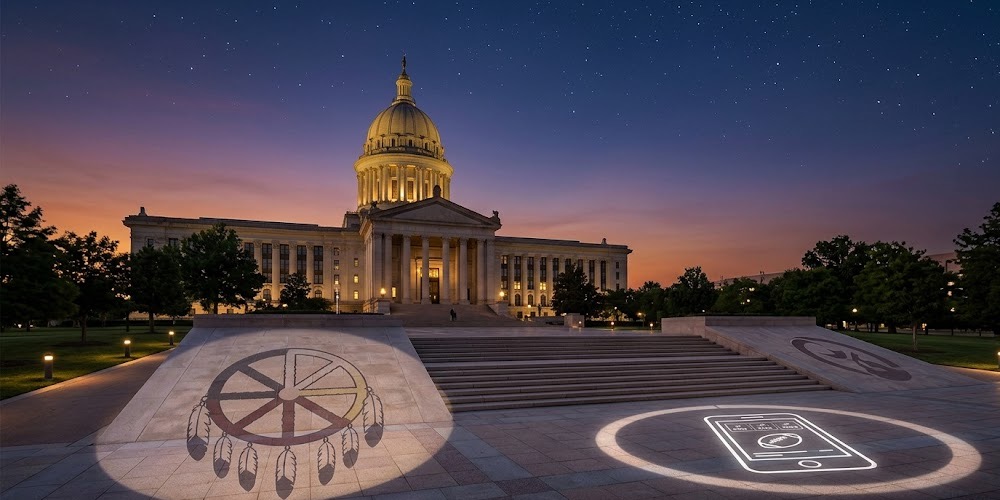
OKLAHOMA CITY — The push to legalize sports betting in Oklahoma has returned to the forefront of the state legislature in 2026, but familiar roadblocks are already threatening to derail the process.
After multiple failed attempts in recent years, Oklahoma lawmakers are giving it another shot, drafting fresh proposals aimed at capturing the millions of dollars currently bleeding across state lines into neighboring Kansas, Arkansas, Colorado, and New Mexico. Despite the clear economic incentives, the path to a formalized 2026 Oklahoma sports betting deal remains tangled in complex negotiations between the state government and Indigenous tribes.
The Tribal Monopoly Debate
At the heart of the gridlock is the tribal-state gaming compact. Oklahoma’s Indigenous tribes currently hold exclusive rights to casino gambling in the state. Recent legislative drafts in the House and Senate aimed at legalizing sports betting have frequently included provisions that would grant tribes exclusivity over both retail and mobile sportsbooks.
However, Gov. Kevin Stitt has made his position clear, frequently stating he will oppose any deal that hands tribes an absolute monopoly on sports betting. The governor has previously argued that a strict tribal monopoly is not transparent, not a fair deal for all operators, and ultimately limits the potential tax revenue the state could generate for education and infrastructure.
“I’m always going to stand for what’s good for the taxpayers of Oklahoma,” Stitt stated during earlier legislative disputes on the topic. The governor favors an open, competitive market that allows major commercial platforms (such as DraftKings and FanDuel) to operate independently or alongside tribal entities, rather than strictly through them.
What to Expect in 2026
According to recent coverage by KOCO 5 News, some lawmakers are actively working to bridge the divide. Proponents of the newly revised 2026 deal are emphasizing the potential to restore and strengthen tribal-legislative relations, which have been strained over the last few years.
A successful 2026 sports betting bill would likely need to:
- Allow statewide mobile betting: Retail-only sports betting is widely viewed as insufficient by lawmakers looking to maximize revenue.
- Find a revenue-sharing compromise: An agreement must be reached on the percentage of mobile betting revenue that would flow to the state versus what remains with the sovereign tribes.
- Pacify commercial operators: Navigating Governor Stitt’s mandate to allow non-tribal entities a piece of the mobile betting pie without violating the existing federal IGRA (Indian Gaming Regulatory Act) compacts.
Will It Pass?
For now, the 2026 legislative push is hanging in the balance. As earlier proposals stalled out in Senate committees due to a lack of consensus, lawmakers are heavily relying on behind-the-scenes discussions to iron out the details before bringing a unified bill to the floor.
Supporters remain hopeful that an agreement can be reached before the end of the legislative session, noting the massive “win-win” economic stimulus legal sports betting promises. Until then, Oklahoma bettors will continue looking across the border to place their wagers, while the state leaves millions in potential tax revenue on the table.
Also read:
- Best Legal Arkansas Sportsbooks & Betting Apps 2026
- Austria’s 2027 Online Gambling Reform: Licensing & Limits
- Crypto Casinos vs Regulated Sportsbooks: 2026 US Market
- Best Indiana Online Casinos & Apps Reviewed: 2026 Law Update
- New Jersey Online Casinos Cross $1 Billion YTD Mark Following $263.1 Million April Haul
Leo Falsafi is a digital marketing veteran and senior journalist at Virlan.co, where he covers the intersection of digital marketing, gaming, and breaking US trending news. With nearly two decades of hands-on experience in SEO and digital strategy, Leo has consulted for and scaled hundreds of companies. His deep industry roots allow him to deliver sharp, fact-checked insights and analysis on the trends shaping today's digital landscape.