
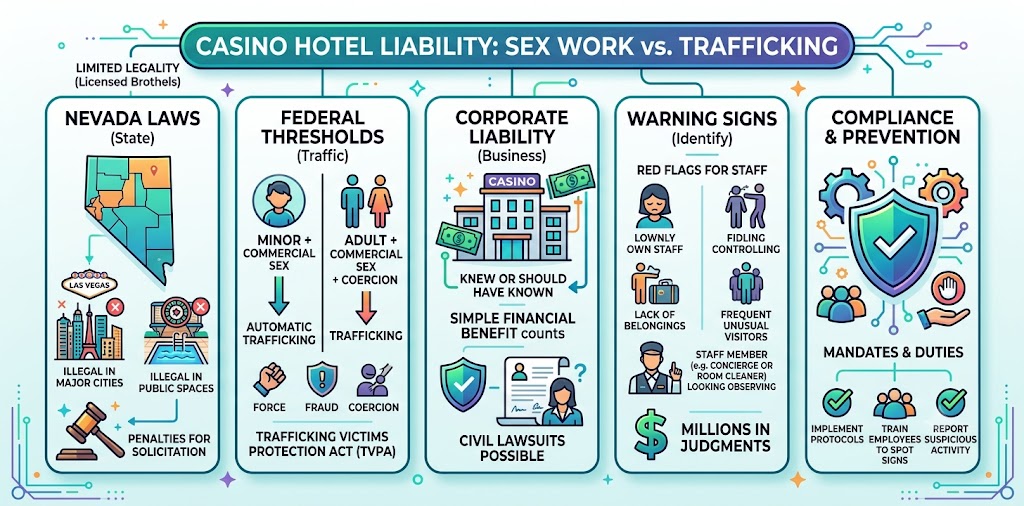
Nevada stands as the sole U.S. jurisdiction that permits prostitution, though this allowance is restricted to specific licensed brothels located in 10 out of its 16 counties. In major population centers like Clark County—home to Las Vegas—and Washoe County, commercial sex remains entirely prohibited. Furthermore, offering or soliciting sexual services in any public venue, including casino floors, streets, and parking lots, is a criminal act across the entire state. Law enforcement in Las Vegas frequently utilizes undercover operations to target illegal solicitation, particularly at hotel pool parties. Those caught engaging in or soliciting prostitution for the first time generally face a misdemeanor charge, which can result in fines up to $1,000, mandatory educational classes, and up to six months of jail time, though probation is common.
The Federal Threshold: When Sex Work Becomes Trafficking
Under federal regulations, any commercial sexual activity involving a minor is automatically classified as trafficking. For adults, the line is drawn at coercion; commercial sex is deemed human trafficking when it is facilitated through force, fraud, or coercive tactics. The penalties for these offenses are severe, with federal convictions for sex trafficking carrying mandatory minimum sentences of 10 to 15 years, and a maximum penalty of life imprisonment. A primary legislative tool for addressing these crimes is the Trafficking Victims Protection Act (TVPA), originally passed in 2000, which specifically targets modern slavery, involuntary servitude, and the sex trade.
Corporate Liability in the Hospitality Sector
The legal framework in the United States exposes commercial entities, including casinos and hotel chains, to corporate liability if they profit from human trafficking networks and either knew or reasonably “should have known” about the exploitation occurring on their premises. Federal law grants victims of both sex and labor trafficking the right to pursue civil lawsuits against any party that knowingly benefits from these operations, regardless of whether criminal charges were filed against the trafficker. The standard for receiving a “financial benefit” is remarkably low and can be satisfied simply by a hotel collecting standard room rental fees.
Enforcement and Warning Signs in Casinos
Gaming establishments and related businesses face significant civil exposure from lawsuits initiated by trafficking survivors if the venue profited from the illegal operations. Legal precedents suggest that a hotel’s liability can be established if staff members—ranging from concierges and front desk clerks to room service and cleaning crews—witnessed indicators of coercion or control and failed to act. The presence of identifiable “red flags” ignored by hotel personnel has proven sufficient in court to allow civil litigation to proceed. Successful civil claims in these matters have resulted in monetary judgments reaching into the millions.
Compliance and Prevention Mandates
The gaming and hospitality industries bear both a moral duty and a legal requirement to verify that their patrons and workforce are operating safely and voluntarily, necessitating concrete actions to spot and halt trafficking. To mitigate the risk of corporate liability stemming from staff awareness of illegal activities, comprehensive anti-trafficking protocols are essential. Businesses are strongly urged to integrate rigorous compliance procedures and implement proactive, ongoing employee training programs designed to recognize and report the warning signs of human trafficking.
Sources Quoted:
Sourced from legal and industry frameworks, including 702Defense, 8 Ball Bail Bonds, The Gersten Law Firm, Pillsbury Law, and the American Gaming Association.
Leo Falsafi is a digital marketing veteran and senior journalist at Virlan.co, where he covers the intersection of digital marketing, gaming, and breaking US trending news. With nearly two decades of hands-on experience in SEO and digital strategy, Leo has consulted for and scaled hundreds of companies. His deep industry roots allow him to deliver sharp, fact-checked insights and analysis on the trends shaping today's digital landscape.