
A New Normal in America: Sports Betting and Cannabis Use
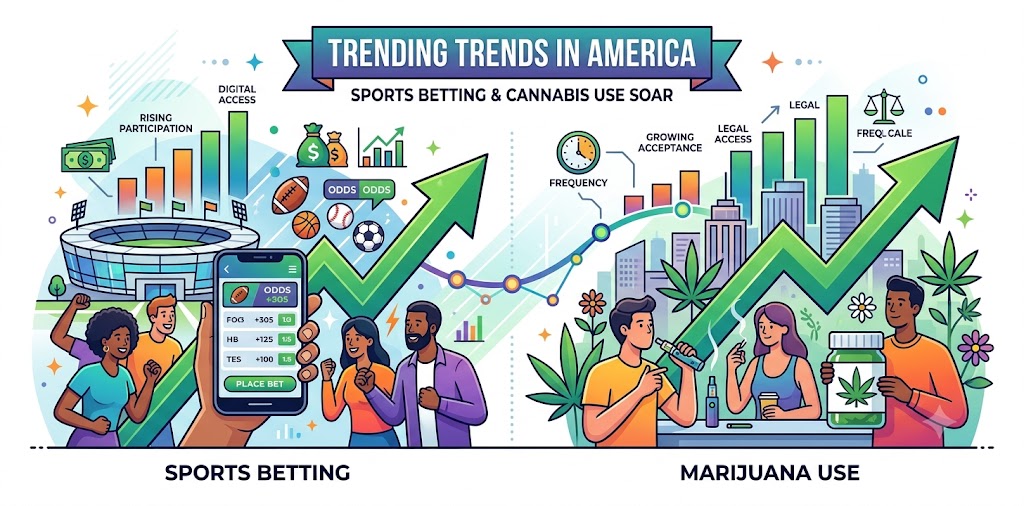
As attitudes shift and laws evolve, behaviors once considered taboo, such as sports betting and cannabis use, have become commonplace. A national survey found that nearly 20% of Americans had bet on sports within the past 12 months. Many young adults engage in sports betting for entertainment or to enhance their experience of sporting events, while others turn to cannabis for experimentation, socialization, and stress relief. an estimated 21.4 million Americans used marijuana on a daily basis or near daily basis in 2025. that’s more than 17.2. million who drank alcohol that frequently. and the 19.9. million who smoked cigarettes every day or nearly every day researchers say it’s the first time daily cannabis exceeds both drinking. and smoking
The Intersection of Gambling and Cannabis Use Disorder
However, emerging research highlights the risks associated with repeated cannabis use and sports betting, may contribute to addiction cycles and broader public health concerns. Problem gambling and cannabis use disorder (CUD) are two increasing mental health concerns in the United States (U.S.). These concerns often co-occur and this co-occurrence is associated with more severe outcomes. Emerging research shows that U.S. adults who wager on sports experience significantly elevated difficulties with problem gambling and binge-drinking, yet less is known about problematic cannabis use among these communities.
Examining the Data Behind Co-Occurring Behaviors
Participants (N = 4363) included both a census-matched sample of U.S. adults (n = 2806) and an oversample of sports gamblers (n = 1557). Results indicated that risk for CUD is significantly higher among sports gamblers (M = 7.25, SD = 11.06) relative to other types of gamblers… as well as non-gamblers… Additionally, a moderation analysis (adjusted for age) indicated that the relationship between problem gambling severity and risk for CUD was significantly higher in sports gamblers relative to other types of gamblers… Research has shown a link between dealing with gambling problems and illicit drug use, including marijuana use. Because sports betting can be a stressful activity, people may choose to use drugs to manage their stress. Additionally, prescription drug misuse and illicit drug use can impair decision making, which could lead to making riskier bets.
Mitigating Risks and Responsible Gaming Strategies
While it can be a fun and harmless recreational activity, sports betting can also lead to problems if it spirals out of control. When sports betting becomes difficult to manage, it can resemble the signs of substance misuse and turn self-destructive. addiction specialists say with the growing popularity of both sports betting. and cannabis use it’s pointing to a couple of things. one we need to make sure we have better public education as well as expanded. public use campaigns that are geared around responsibility. and finally expanded access to treatment for people struggling with abuse
Evidence-Based Prevention and Practical Limits
Set a budget for yourself before you start. Once you have reached that amount, stop betting. If you are losing money, don’t try to win back the money you lost. This may result in an even bigger loss. Don’t let your love for the game mix with your betting tendencies. This will help you avoid blending your passion with gambling. By limiting the number of gambling platforms, you reduce accessibility, minimize temptation, and allow yourself time to focus on other important parts of life.
Leo Falsafi is a digital marketing veteran and senior journalist at Virlan.co, where he covers the intersection of digital marketing, gaming, and breaking US trending news. With nearly two decades of hands-on experience in SEO and digital strategy, Leo has consulted for and scaled hundreds of companies. His deep industry roots allow him to deliver sharp, fact-checked insights and analysis on the trends shaping today's digital landscape.