
Mastering Retro Bowl: A Comprehensive Guide to Gameplay, Strategy, and Dynasty Building
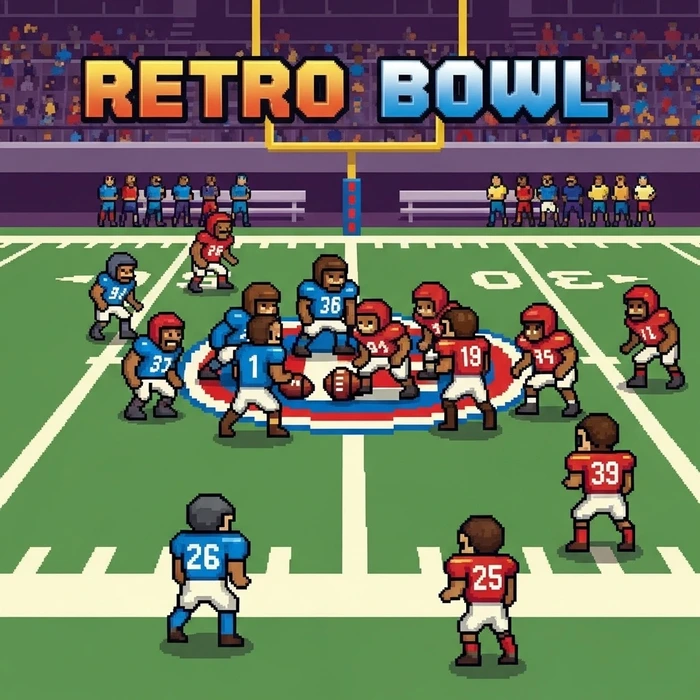
Retro Bowl stands as a distinctive American Football simulator, captivating players with its blend of nostalgic pixel graphics and a core gameplay loop that is both streamlined and deeply engaging. It is primarily a single-player experience, offering both offline and online capabilities, with its primary focus on Player vs. Environment (PvE) scenarios. At its heart, the game involves controlling offensive plays during football matches, where players make real-time decisions—balancing safe plays against risky maneuvers—to score points through touchdowns or field goals.
The overarching objective presented to the player is to win the “Retro Bowl” championship. However, the game’s design encourages a continuous pursuit of victory across multiple seasons, fostering a compelling experience centered on building a lasting legacy as a coach. A notable departure from traditional football simulations lies in its simplified defensive mechanics: players exert direct control only over offensive plays, while defensive outcomes are simulated and conveyed through concise text updates. This design choice fundamentally shifts the strategic emphasis, placing a heavy premium on offensive execution and meticulous team management.
1.1 What is Retro Bowl?
Retro Bowl presents itself as an American Football simulator, distinguished by its crisp pixel graphics and a core gameplay loop that is both enjoyable and streamlined, offering a carefully calibrated level of depth.1 The game operates primarily as a single-player experience, supporting both offline and online play, with its primary focus on Player vs. Environment (PvE) engagement.1 The central gameplay revolves around controlling attacking plays in football matches, where players are tasked with making real-time decisions to score points, whether through touchdowns or field goals. These decisions often involve a strategic choice between playing conservatively or taking calculated risks.2
The ultimate goal, as initially perceived by many players, is to win the Retro Bowl championship.
However, the game extends beyond a singular victory, encouraging an ongoing pursuit of success season after season. This continuous striving for victory cultivates a unique legacy-building experience, where the highs and lows of each season, despite their repetitive nature, are never quite the same.2 This design choice elevates the game beyond a simple mini-game, transforming it into a rewarding journey of an 8-bit football coach.2
1.2 Why Play Retro Bowl?
The appeal of Retro Bowl stems from its accessibility and surprising depth. Its core gameplay is lauded for being “simple to understand, easy to master & satisfying to repeat”.2 This inherent accessibility allows players to quickly grasp the mechanics and derive immediate enjoyment from the on-field action.
Beyond the immediate gratification of scoring, Retro Bowl integrates a “relatively simple meta layer” that significantly enhances its depth and replayability.2 This meta-layer encompasses crucial aspects of team management, including overseeing player rosters, coaches, and team facilities. Furthermore, players are regularly presented with impactful decisions between matches, such as choosing between attending a press conference to appease the owner or a training session to satisfy the players.2 These choices are not merely transactional; they directly influence player morale and team dynamics, leading to a palpable sense of attachment to individual players and the unfolding of unique “side stories” throughout a season.2 The game provides immediate feedback for these decisions, often through visual cues like 8-bit avatars displaying their morale icons, which makes the choices engaging and provides tangible consequences beyond just in-game currency or stats.2
The game’s design effectively streamlines the experience by eliminating the “boring bits” often found in more complex sports management simulations, yet it never feels barebones.2 This careful curation of features allows players to deeply care about building a legacy as an 8-bit football coach, a testament to its “super sticky rewarding experience”.2
This balance between simplicity and depth is a fundamental aspect of Retro Bowl’s enduring appeal. By removing direct defensive control, the game significantly simplifies the real-time gameplay, allowing players to concentrate intensely on offensive execution. This reduction in cognitive load during matches enables players to fully appreciate and engage with the “meta-layer” of team management, player morale, and strategic decisions without feeling overwhelmed. This creates a unique equilibrium where the game remains accessible while offering surprising long-term engagement and a profound sense of building a legacy. The game’s capacity to provide “just the right amount of depth” refers precisely to this carefully engineered balance, ensuring that the experience remains compelling without becoming tedious.
Furthermore, the game’s ability to generate emergent narratives from its simplified mechanics is a powerful draw. The combination of straightforward decision points, such as choosing between a press conference or training, coupled with immediate and visible feedback like morale icons or specific player reactions, creates a clear and direct consequence for player choices. This feedback loop, even with its minimalist graphical representation, encourages players to project personalities and narratives onto their 8-bit players. This fosters a strong sense of emotional investment in the virtual team and its individual members, transforming what might otherwise be simple resource management into a personal story. This approach leverages the player’s imagination to fill in the narrative gaps, making the “story” feel authentically their own, which is a significant contributor to the game’s long-term appeal and replayability beyond merely winning championships.
2. Fundamental Gameplay: Controls and Mechanics
Understanding the fundamental controls and mechanics of Retro Bowl is paramount for any player aiming to succeed. The game’s design prioritizes offensive control, while defense operates largely as a simulated outcome influenced by strategic team building.
2.1 Offensive Controls
Offensive plays in Retro Bowl are executed through a set of intuitive, touch-based controls that are easy to learn but offer a high ceiling for mastery.
Passing: To initiate a pass, a player taps and holds on the intended receiver. This action generates a target circle around the player, indicating the passing lane. While holding, the player drags their finger in the opposite direction of the running back to aim the throw. The distance of this drag directly correlates with the height of the throw, allowing for precise trajectory control. Releasing the finger executes the pass, with the accuracy and distance of the throw being influenced by both the player’s aim and the quarterback’s inherent throwing statistics.3 The passing game is where Retro Bowl truly distinguishes itself, offering a satisfying experience as players learn to change pass direction on the fly to deliver perfectly weighted passes to open receivers.1 There are two primary pass types: the
Lob Pass, which throws the ball high and is effective for deep passes that need to clear defenders, and the Bullet Pass, a strong, direct throw ideal for getting the ball quickly to a receiver’s chest. Bullet passes are particularly effective when thrown to receivers with high catching ability.5
Running: To initiate a run play, a player simply swipes up on the screen with their thumb. Once the handoff occurs, the running back automatically takes control, and direct movement cannot be precisely controlled by the player.3 However, once the player has the ball and is running, they can swipe to dodge left and right (or up and down) to evade incoming defenders.1 Swiping forward, towards the opponent’s end zone, allows the player to perform a slide, which is useful for avoiding tackles and securing extra yards.3 For situations where the quarterback is running with the ball, tapping the “A” or “D” buttons (if using a controller) enables the QB to slow down or dive, respectively. This can be strategically employed to avoid tackles or gain crucial extra yards near the end zone.3 Juking is a fundamental component of the running game, with swiping DOWN proving significantly more effective than swiping UP for evading defenders.5 A swipe to the LEFT can initiate a dive, while a swipe to the RIGHT can momentarily stop the player or trigger a celebration.5
Kicking (Field Goals & Extra Points/Punts): Kicking, whether for field goals or extra points, typically involves a two-tap sequence.3 The first tap can be anywhere on the field and is used to set the power of the kick. The second tap is then made on the target zone, which is located between the goalposts for field goals and extra points, to aim and execute the kick.3 Punts follow a similar two-tap mechanic: one tap to set the power, and a subsequent tap to determine the direction of the punt.3
The game’s offensive controls, while simple in their input, allow for a high degree of skill expression. The precise drag-and-release mechanic for passing, the timing-based jukes, and the two-tap kicking system enable nuanced execution that rewards practice. This design creates a clear feedback loop where initial struggles, such as difficulty making passes beyond 10 yards, can be overcome through dedicated play, leading to the satisfaction of “pinging long balls” and executing “daring runs”.2 This accessible-yet-deep control scheme is fundamental to the game’s long-term engagement, providing a tangible sense of player improvement and skill progression that motivates continued play beyond merely winning championships.
| Action | Control | Notes |
| Pass (Lob/Bullet) | Tap & Hold Receiver, Drag Opposite Direction, Release | Drag distance affects height. Bullet passes for high-catching receivers; Lob for deep throws over defenders. |
| Run (Initiate) | Swipe Up | Running back takes control; direct movement not controlled. |
| Juke (Evade) | Swipe Up/Down | Swipe DOWN is significantly more effective. |
| Dive/Slide (RB) | Swipe Forward | Useful for avoiding tackles and gaining extra yards. |
| Slow Down/Dive (QB Run) | Tap ‘A’/’D’ (controllers) | Avoids tackles, gains extra yards near end zone. |
| Kick (Set Power) | Tap Anywhere | First tap for all kicks. |
| Kick (Aim/Execute) | Tap Target Zone | Second tap for field goals, extra points, and punts. |
2.2 Defensive Mechanics
In Retro Bowl, players have no active role in controlling defensive plays during a match; instead, the game provides updates on the opponent’s progress via text boxes when they possess the ball.1 The defensive player closest to the ball carrier will automatically attempt a tackle, meaning there is no specific button to press for tackling.3 The only direct influence a player has on defense during gameplay is the optional ability to swipe left or right on the screen before the snap to shift their defensive line. This maneuver can be strategically employed to exploit perceived gaps in the offensive line.3
The success of the defense is not determined by real-time player skill during matches but rather by the quality of the defensive players on the roster and broader squad management decisions.2 This design choice means that defensive success is almost entirely a function of strategic team building, including effective drafting, free agent acquisitions, and the quality of defensive coordinators.2 By removing direct defensive control, the game transforms defense into a resource management challenge rather than a skill-based one. This simplification of on-field gameplay amplifies the importance of off-field decisions related to defensive personnel. Consequently, defensive “stops” become more unpredictable “RNG moments” 2, adding a layer of tension and requiring a robust offense to compensate for potential defensive shortcomings. This approach reinforces the significance of the meta-layer, establishing a clear causal link between strategic player investment and financial management (e.g., Coaching Credits, salary cap) and on-field defensive outcomes.
2.3 Understanding Game Modes and Difficulty
Retro Bowl offers various game modes and difficulty settings to cater to different player preferences and skill levels.
- Dynamic: This mode adjusts the game’s difficulty based on the player’s performance, becoming more challenging after wins and easier after losses.5
- Easy: This is the simplest difficulty setting, ideal for new players to learn the mechanics.5
- Medium: Offers a fair challenge, being more difficult than Easy mode but still approachable.5
- Hard: Presents an increased level of difficulty, requiring more strategic play.5
- Extreme: This is the most challenging mode, where all opposing teams are automatically rated as 5-star, regardless of their actual star rating, making it a formidable test for experienced players.5
For players looking to quickly accumulate in-game currency (coins) and experience points (XP), setting the difficulty to “Easy” and the quarter timer to 1:00 allows for rapid progression through seasons.8
3. Offensive Strategies: Dominating the Field
Mastering offensive play is the cornerstone of success in Retro Bowl, given the game’s emphasis on player-controlled offense and simulated defense. Strategic execution in passing, running, and overall play calling is critical for consistently winning matches.
3.1 Mastering Passing Plays
Retro Bowl consistently rewards a pass-first offensive approach.7 The running game, while useful, is often advised for situational use, such as third-and-short scenarios, even where passing remains a viable alternative.9
Throwing Techniques: Beyond the basic tap-and-drag controls, precise dragging dictates the throw’s height and distance, enabling players to execute “pinging long balls”.2 Players should strategically choose between a
lob pass for deep throws over defenders and a bullet pass for direct throws to receivers, especially those with high catching ability.5
Receiver Routes and Check-downs: Players are encouraged to familiarize themselves with various offensive formations and play types.11 Utilizing quick passes can effectively keep opponents off balance.11 Receivers running slant routes frequently find open spaces within the defense.9 When primary receivers are covered, particularly against strong defenses, players should not hesitate to “check down” to the running back or tight end, as these players are often open if they possess sufficient speed.9 On Extreme difficulty, short passes prove particularly effective, especially when the offensive line is not strong.5 For scoring quickly, especially when time is a factor, players should always prioritize looking for deep throws, as slants and quick outs may not suffice.12 If only short options are available, an audible may be considered, or the ball should be thrown to the most open receiver to make something happen.12
The game’s design, which provides a high degree of player agency and skill expression in passing, makes a strong quarterback and fast wide receivers disproportionately valuable. The inherent difficulty in consistently achieving long yardage on runs and the increased fumbling risk for quarterbacks carrying the ball further compel players towards a pass-heavy strategy. This creates a clear meta-strategy for team building: investing heavily in offensive skill positions, particularly quarterbacks and wide receivers, even if it means incurring high costs.7 Consequently, offensive linemen are often considered “not very useful” 5 because their impact is less pronounced in a pass-heavy, skill-based offense where the player’s direct control over the ball carrier is paramount. This highlights a core design philosophy that prioritizes player agency and skill expression in passing, which in turn shapes optimal roster construction.
3.2 Effective Running Game
While passing often takes precedence, a strategic running game is vital for effective clock management and adding diversity to the offensive playbook.11
Juking Mastery: Timing is paramount when executing jukes; the most effective jukes occur as late as possible, precisely when a defender is charging directly at the ball carrier. This timing exploits the defender’s momentum, which will carry them in their original direction for a split second after the juke.10 Juking too early allows defenders to adjust, while juking too late results in a tackle.10 Both up and down jukes are functional, but swiping DOWN is considerably more effective for evading defenders.5 An unconventional but effective technique involves running
at defenders rather than away from them; this can cause them to momentarily freeze, making them easier to juke or run over.10 Juking directly into defenders who are positioned even with the ball carrier on the “x-axis” can trigger a stiff arm animation, which is highly useful for breaking contain.10 Conversely, juking into defenders who are slightly behind the ball carrier can trigger a “skip animation”.10
Running Back Attributes: For running backs, Speed is the most critical attribute, followed by Strength, Stamina, and Catching.13 High speed assists in skipping tackles from behind, while strength enhances the ability to perform stiff arms, both of which are vital for achieving successful runs.13
Run Play Execution: After receiving a handoff, players can consider swiping backward to briefly pause the running back. This tactic allows offensive linemen and tight ends an opportunity to engage or bypass defensive linemen before the running back commits to a direction.13 Players should also be adept at exploiting open sides of the field; if a play’s route directs the runner towards the middle but a far side is open with only a safety to beat, cutting to that open side can create significant yardage.13 On outside runs, juking towards the sideline can buy enough time to secure 8-10 yard gains.10 Against blitzes, a direct dive up the gut can be effective approximately 40% of the time, potentially leading to long runs if the initial defender is bypassed.10
Quarterback Runs: Quarterback runs are a valuable option, particularly when the offensive line is struggling to protect the pocket. A “QB DRAW Middle” can yield significant yards, or the quarterback can juke defenders and run to other open areas of the field.5 A crucial cautionary note: players should always slide before being tackled when the quarterback is carrying the ball, as quarterbacks are highly prone to fumbling.5
3.3 Strategic Play Calling and Adjustments
Effective play calling in Retro Bowl necessitates both familiarity and flexibility. Players should thoroughly familiarize themselves with the various formations and play types available in the game.11 Experimentation is key to discovering which plays are most effective against specific defensive schemes.11 It is equally important to vary defensive plays, as sticking to a single strategy for too long will allow opponents to adapt quickly.11
Balancing Risk and Reward: Winning in Retro Bowl frequently requires a calculated balance between risk and reward.11 Players must discern when it is appropriate to “go for it” on fourth down, considering factors such as field position and remaining game time.11 Similarly, the decision to attempt risky passes should be carefully weighed, balancing potential gains against the possibility of turnovers that could result in loss of possession.11 An incompletion, achieved by throwing the ball away when no receiver is open, is always preferable to a sack or an interception.12
Adjusting Mid-Match: Flexibility is a critical attribute for gaining an advantage over less adaptable opponents.11 Players should pay close attention to what strategies prove effective against the opponent’s defense and how the defense responds to repeated plays. This observational insight allows players to effectively exploit emerging weaknesses during the game.11 Running plays can also be strategically employed for clock management, reducing the number of opportunities for the opponent’s defense.13 When behind late in a game, if a touchdown is not immediately achievable, players should aim to get out of bounds to stop the clock and conserve valuable time.12
The game’s integration of clear and impactful consequences for risk-taking, such as scoring a touchdown versus committing a turnover, makes the outcomes of these decisions readily apparent. The absence of penalties and the ability to intentionally throw the ball away mitigate some of the inherent risks, subtly encouraging aggressive play. However, the low success rates associated with onside kicks and the general advice against routine two-point conversions indicate that risks are not universally rewarded. This compels players to make calculated decisions based on the current game state, including the score, remaining time, and field position. This “calculated risk” element forms a fundamental strategic layer, adding tension and depth to every offensive drive. It transforms each play into a mini-decision-making challenge, where players must continuously weigh potential gains against possible setbacks. This dynamic contributes significantly to the game’s enduring appeal by keeping players engaged and thinking critically, rather than merely executing pre-determined plays. It also implies that a comprehensive understanding of game flow and situational awareness is as vital as mastering the physical controls.
3.4 Special Situations
Certain game situations demand specific strategic considerations to maximize scoring opportunities or manage critical moments.
2-Point Conversions: Generally, attempting a two-point conversion after scoring a touchdown is not advised.9 However, there are specific scenarios where it becomes a viable option. If the running back is executing a “Bubble” route—a play that directs the runner towards the sideline before moving upfield—the defense often struggles to stop it, making it a strong choice for conversions.9 Additionally, players should always attempt a two-point conversion if they were down by 14 or more points before scoring the touchdown, or if an extra point would only tie the game at the very end of regulation.12 It is also advisable to go for two if the last extra point attempt in the current game was missed.12 Furthermore, if an extra point would only increase a lead to 5 or 12 points, choosing a two-point conversion can force the opponent to convert their own PAT, potentially giving the player an advantage.12
Punts: Punting is recommended when the team is pinned deep in its own endzone and it is highly unlikely to convert on fourth down.5 However, punting too frequently can be detrimental to overall game strategy.5
Onside Kicks: Onside kicks are considered a last resort due to their inherently low success rate, typically around 5% without a star kicker and increasing to a maximum of 15% with one.12 These should only be attempted in truly desperate situations: when less than a minute remains on the clock, and the team needs a touchdown (or more) to win or tie the game.12 If the team is only down by three points, it is generally more prudent to kick off normally.12
4. Defensive Strategies: Building a Wall
While direct defensive control is absent in Retro Bowl, strategic decisions made off the field are crucial for influencing defensive performance. The success of a team’s defense is a direct reflection of its player quality and effective coordinator management.
4.1 Understanding Defensive Mechanics
As previously noted, players do not actively control defensive plays during a match; instead, the outcomes of defensive possessions are simulated by the game.1 This means that the success of a team’s defense is primarily dependent on the inherent quality of its defensive players and the strategic management decisions made by the player.2
4.2 Prioritizing Defensive Players
In Retro Bowl, the effectiveness of a defense hinges on quality over quantity. It is significantly more effective to have a single high-rated player at each defensive position rather than multiple lower-rated defenders, a strategy that becomes particularly critical for consistently stopping opposing offenses on Extreme difficulty.6 For defensive players, their overall star rating is generally considered more important than their specific individual statistics, as the defense is not expected to achieve consistent stops through player skill alone.6 A star rating of 3.5 to 5 stars is recommended for all key defensive positions: Defensive Backs (DBs), Defensive Linemen (DLs), and Linebackers (LBs).6
The most impactful defensive positions, ranked from most to least, are: Defensive Back (DB) > Defensive Lineman (DL) > Linebacker (LB).6
- Defensive Backs (DBs): DBs are identified as the fastest position players on the roster and should be designated as kick returners.6 The aim should be to acquire a DB with maxed-out speed to significantly enhance kick returns, as DBs with maxed stamina and speed are considered the best kick returners.6
- Defensive Linemen (DLs): DLs are ranked as the second most impactful defensive position.6
- Linebackers (LBs): LBs are considered the least impactful defensive position.6 It is worth noting that the second round of the draft frequently yields linebackers with the potential to develop into 4.5-star players.7
Since direct player skill input is removed from defense, defensive success becomes a direct consequence of pre-game resource allocation. Players must strategically invest their limited draft picks, free agent signings, and salary cap space into acquiring defensive talent.6 The emphasis on “quality over quantity” for defensive players implies that a few elite defenders will have a greater impact than numerous mediocre ones, forcing challenging choices during roster construction. The importance of Defensive Coordinators further underscores this, as they indirectly boost the performance of non-star players on defense. This transforms defense into a sophisticated management mini-game. Players are not making tackles, but they are making critical investment decisions that directly determine the probability of defensive stops. This means that a strong defense is a testament to effective long-term team building and financial management, rather than in-game reflexes. Consequently, defensive “stops” become anticipated moments, as their occurrence is a direct outcome of prior strategic investments.
The unique value of Defensive Backs is also noteworthy. Their dual utility as crucial defensive players and effective kick returners makes them exceptionally efficient roster spots.6 A DB with maxed speed not only improves defensive outcomes (even in a simulated context) but also provides a consistent source of favorable field position through kick returns, which directly benefits offensive starting opportunities. This means that a single high-quality DB can influence both defensive performance and offensive opportunities. This creates a synergistic player archetype that offers compounded value. Investing in a top-tier DB, especially one with maximum speed, provides a “two-for-one” benefit, making them a high-priority target in drafts and free agency.5 This suggests that optimal team building extends beyond just position-specific roles and involves identifying players who can contribute across multiple phases of the game.
4.3 Utilizing Defensive Coordinators
Defensive Coordinators (DCs) play a disproportionately significant role compared to Offensive Coordinators (OCs) in Retro Bowl.6 A high-star DC is considered “extremely valuable” for achieving defensive stops during games.6 The star rating of a coordinator directly influences how well non-star players on both offense and defense will perform, translating to improved performance in areas of the team not directly controlled by the player.6
The most cost-effective strategy for acquiring high-star coordinators involves a long-term approach. Players should hire new level 1 coordinators and then extend their contracts for a minimal cost of 1 Coaching Credit (CC) per year.6 While it takes several seasons for these coordinators to level up to the desired star rating (approximately 9 full seasons to transform a 0.5-star new hire into a 5-star coordinator), this method is considerably cheaper than directly hiring and extending multi-star coordinators.6 Coaching Credits are a vital resource in the game, and spending them on expensive high-star coordinators can significantly hinder overall team development.6 Some community members even suggest that coaches, in general, may not be worth the Coaching Credits unless the player is specifically attempting to win games without relying on star players.7
Regarding training levels, it is generally recommended to set the training level to medium for both coordinators, unless players are experiencing significant exhaustion.6 Light training can be utilized if the team’s rehab facilities are not yet maxed out. However, heavy training is generally not advised due to the rapid stamina drain it imposes on players.6
5. Team Management: Building a Dynasty
Building a lasting dynasty in Retro Bowl extends far beyond on-field execution, demanding astute strategic decisions in player acquisition, development, financial management, and maintaining team morale.
5.1 The Crucial First Draft: Key Positions and Roster Construction
The initial draft in Retro Bowl is a pivotal moment for establishing a strong foundation for the team.1 A recommended strategy involves trading the entire initial team to accumulate more draft picks, which can then be used to select high-quality players.5
Key Positions to Draft (in order of importance):
- Quarterback (QB): The most critical position, responsible for throwing the ball.5 A 4.5-5 star QB is essential and should be re-signed annually, regardless of the cost, as their value justifies the investment.7 When drafting, prioritizing high arm strength and stamina is advised, even if accuracy or speed stats are lower.5
- Wide Receiver (WR): WRs run routes and catch passes.5 A 5-star WR1 is crucial and should be consistently re-signed until they are nearing retirement.7 For the WR2 position, it is strategic to scout 2-3 star potential players in the first and second rounds of the draft who can develop into future 5-star WR1s.7
- Running Back (RB) & Tight End (TE) (Tied for 3rd):
- Running Back (RB): Receives handoffs and can also run routes similar to a WR.5 For RBs, prioritizing maximum speed and good stamina is key for effective runs.5
- Tight End (TE): TEs can run routes like receivers or function as offensive linemen for blocking.5 They are important for the passing game, often slipping past defenders, and while high speed is preferred, it is not critical.6
- Defensive Back (DB): DBs are crucial for defending wide receivers.5 Prioritizing maximum speed in DBs is also beneficial for kick returns.6
- Linebacker (LB): LBs act as the “quarterback of the defense,” patrolling the middle, stopping runs, baiting the QB, or attempting sacks.5
- Defensive Linemen (DL): Their primary roles are to sack the quarterback and stop runs.5
- Kicker (K): Handles field goal attempts and kickoffs. A higher power stat translates to longer kickoffs.5 While recommended, a Kicker is not considered “100% necessary”.5
Positions to Avoid Drafting: Offensive Linemen (OL) are generally not considered very useful and should be avoided in the draft.5
Recommended Roster Composition: A balanced roster typically includes 1 Quarterback (QB), 1 Running Back (RB), 1 Tight End (TE), 2 Wide Receivers (WR), 2 Defensive Backs (DB), 2 Linebackers (LB), and 1 Kicker (K).5 Some players opt for a composition of 4 offensive players and 6 defensive players to compensate for the generally lower star potential of defensive players found in the draft.7
| Position | Priority | Key Stats/Traits | Strategic Notes |
| Quarterback (QB) | 1 (Most Important) | 4.5-5 star, High Arm Strength, Stamina | Re-sign annually regardless of cost; cornerstone of pass-first offense. |
| Wide Receiver (WR) | 2 | 5-star WR1, Speed | Re-sign WR1 until retirement; scout 2-3 star potential WR2s for development. |
| Running Back (RB) | 3 (Tied with TE) | Max Speed, Good Stamina, Strength | Rotational position; trade after rookie deal, draft replacement. |
| Tight End (TE) | 3 (Tied with RB) | High Speed preferred | Can run routes or block; rotational position, trade after rookie deal. |
| Defensive Back (DB) | 3 (Tied with TE/RB) | Max Speed (for kick returns), 3.5-5 star | Most impactful defensive position; best kick returners. |
| Linebacker (LB) | 4 | 3.5-5 star | Often found as 4.5-star potential in 2nd round of draft. |
| Defensive Lineman (DL) | 5 | 3.5-5 star | Second most impactful defensive position. |
| Kicker (K) | 6 (Recommended) | High Power | Handles FGs/kickoffs; not strictly essential but beneficial. |
| Offensive Linemen (OL) | Avoid Drafting | N/A | Generally not very useful in the game’s meta. |
5.2 Player Recruitment and Development
Beyond the initial draft, continuous player recruitment and development are essential for long-term success.
Free Agents: Free agents represent an opportunity to acquire top players using Coaching Credits (CCs).5 This feature is best utilized when a team needs to fill talent gaps and has spare CCs available.5 Notably, free agents are often available at a lower cost than re-signing existing players.14
Training & Rehab Facilities: Prioritizing the improvement of training facilities is crucial, as this helps players gain experience faster, contributing to a better overall team.9 Similarly, enhancing rehab facilities is vital for player recovery from injuries, which occur frequently in Retro Bowl.9 Maintaining these facilities at a “solid” level is a wise investment of Coaching Credits.7
Player Development: Player development is a process that takes time, and new players should not rush it.5 Player speed is a particularly important attribute for development, and its effectiveness is amplified by positive team morale and maxed-out stadium and practice facilities.6
5.3 Financial Management: Coaching Credits and Salary Cap
Coaching Credits (CCs) are a vital in-game currency, representing the respect and trust earned from players, staff, and fans.15 Their strategic management is fundamental to building and sustaining a dynasty.
Coaching Credit Acquisition: CCs can be acquired through several means. Winning Retro Bowls grants an extra 10 CCs, providing a significant boost.7 Maxing out fan loyalty quickly also increases the number of CCs earned per win.9 Furthermore, upgrading the stadium can yield 3 CCs per match, contributing to a steady income stream.14
Strategic Spending of Coaching Credits:
- Increasing Salary Cap: One of the most impactful uses of CCs is to increase the salary cap. It costs 100 CCs to raise the cap by 25 million, an amount that can fund an entire new 5-star player.7 This is a long-term investment that provides significant financial flexibility for player retention and acquisition over many seasons.14
- Hiring Coordinators: Coordinators are crucial for player development, with higher star levels translating to improved team star levels.5 The most cost-effective strategy for acquiring high-star coordinators is to hire new level 1 coordinators and extend them for just 1 CC per year, allowing them to develop over time.6 However, some community members suggest that coaches may not be worth the CC investment unless the goal is to win without relying on star players.7
- Maintaining Facilities: CCs should be spent on maintaining solid (though not necessarily perfect) rehab and training facilities.7 Initially, it is advisable to ignore stadium upgrades to save CCs for more impactful investments.7
- Boosts: Minor enhancements that can be purchased with CCs, though they are generally described as “pretty useless” and are best avoided.5
Sign and Trade Strategy: A key technique for dynasty building involves signing and trading players. If a player’s replacement has been drafted, it is often beneficial to re-sign the outgoing player and then trade them at the draft. Draft picks acquired through trades can also be sold for CCs: first-round picks yield 3 CCs, second-round picks yield 2 CCs, and third-round picks yield 1 CC.7 This method is critical for generating CCs and maintaining a continuous flow of talent and resources.7
Salary Cap Management: Effective salary cap management is vital for sustaining a 5-star team. A 5-star QB is a cornerstone and should be re-signed annually regardless of cost.7 For positions like Running Backs, Tight Ends, and Offensive Linemen, a rotational strategy is often employed: trade them when their rookie deals are ending and draft their replacements.7 Regularly checking free agents for cheaper talent is also a smart financial move.7
Coaching Credits function as strategic capital that directly influences long-term team building and financial stability. The ability to increase the salary cap represents a direct investment in future player retention and acquisition. The necessity of making trade-offs between investing in coaches versus facilities or direct player acquisition (via free agents) compels players to make complex, multi-season strategic choices. The fact that winning Retro Bowls and maximizing fan loyalty are crucial for CC generation creates a positive feedback loop where on-field success directly fuels off-field growth. This system elevates CC management beyond simple spending to a core strategic challenge. Players must decide whether to prioritize immediate gains (e.g., boosts, quick free agent signings) or long-term infrastructure (e.g., salary cap increases, facility upgrades, developing coordinators over time). This depth in resource management is a key factor in the game’s “sticky rewarding experience” and its ability to simulate a “dynasty,” as effective CC management is the engine of sustained success.
The game also encourages a sophisticated “player lifecycle management” approach, particularly evident in roster turnover strategies. The established “pass-first offense” meta makes the quarterback and primary wide receiver irreplaceable cornerstones, justifying their high re-signing costs. Conversely, running backs, tight ends, and offensive linemen are often viewed as more replaceable or less impactful long-term investments. Trading these players while they are still on cheaper rookie deals and then drafting new talent allows for a continuous injection of low-cost, high-potential players, thereby maximizing salary cap efficiency.7 This establishes a player lifecycle strategy where certain positions are deliberately churned for financial and talent renewal, while others are secured for long-term stability. This reflects a sophisticated economic model within the game, where players must understand the relative value and contractual lifecycle of different positions. It encourages proactive roster management and planning several seasons in advance, rather than simply reacting to expiring contracts. This strategic depth in player acquisition and retention is crucial for building a sustainable “5-star team” and maintaining a long-term dynasty.
| Usage Category | Cost/Benefit | Strategic Note |
| Salary Cap Increase | 100 CCs for +25M Cap | Key for long-term player retention and acquiring 5-star talent; prioritize over stadium upgrades initially. |
| Coordinator Hiring/Extension | 1 CC/year to extend new Level 1; expensive to hire high-star directly | DCs more important than OCs; crucial for non-star player performance; cost-effective to develop over time. |
| Free Agent Signing | Varies (often cheaper than re-signing existing players) | Good for filling talent gaps with spare CCs. |
| Facility Maintenance (Training/Rehab) | Ongoing CC cost | Helps players gain XP faster and recover from injuries; maintain at a “solid” level. |
| Selling Draft Picks | 1st Rd: 3 CCs; 2nd Rd: 2 CCs; 3rd Rd: 1 CC | Generates CCs from surplus picks or traded players; vital for dynasty building. |
| Boosts | Minor CC cost | Generally considered “pretty useless”; avoid spending CCs here. |
5.4 Maintaining Player Morale and Condition
Maintaining high player morale and condition is fundamental for consistent team performance and player retention.
Condition: Players must always strive to keep their players’ condition high, as a lower condition significantly increases the likelihood of fumbles during gameplay.5
Morale: Similarly, keeping player morale high is crucial, as low morale can lead to players refusing to re-sign with the team during contract negotiations.5
Balance: Allowing both player morale and condition to decline can have severe repercussions, potentially “wrecking your team” after the offseason.5 Inter-match decisions, such as choosing to praise a player versus praising the fans, directly impact morale and fan loyalty.9 There is no single steadfast rule for these decisions; instead, players should continuously monitor all their resources and ensure that none are running low.9
6. Advanced Techniques and Winning Tips
For players seeking to gain a competitive edge and achieve consistent victories, particularly on higher difficulties, a range of advanced techniques and strategic insights can be employed.
6.1 Optimizing for Extreme Difficulty
Playing on Extreme difficulty presents unique challenges that necessitate a refined approach to gameplay and team building.
- Pass-First Offense: On Extreme, running the ball becomes exceptionally difficult.10 Therefore, a pass-first offense is not merely preferred but essential. Short passes are highly effective, particularly because the offensive line is likely to be weaker, making deep pocket protection challenging.5
- Defensive Player Quality: To consistently achieve defensive stops on Extreme difficulty, it is crucial to have one high-rated player at each defensive position.6 For defenders, the overall star rating holds more importance than specific individual statistics.6
- Coordinator Importance: A high-star Defensive Coordinator is exceptionally valuable for generating defensive stops on Extreme, as their influence helps elevate the performance of non-star players.6
- Running Back Role: On Extreme, running backs often function more as an extra receiver, consistently open for short yardage gains rather than long, game-breaking runs.10
- Juking and Stiff Arms: These techniques are paramount for gaining any significant yards on runs. Players must practice the timing of their jukes for maximum effectiveness.10 Running
at defenders can momentarily freeze them, creating opportunities for easier jukes or stiff arms.10 - Defensive Formations to Avoid Running Against: Players should learn to identify and avoid running against specific defensive formations, such as when linebackers are positioned directly behind the defensive line, when linebackers or safeties are lined up in a column, or when linebackers or corners are at the line of scrimmage without clear gaps.10
6.2 XP Farming and “Do-Over” Tricks
Beyond standard gameplay, certain techniques can be employed to optimize player progression and mitigate negative outcomes.
- “Do-Over” for Lost Games: If a game is lost and the player wishes for a “do-over,” they can simply quit the application before the game officially ends (i.e., before proceeding to the next screen). Upon reloading the app, the player will be returned to the beginning of the lost game, allowing for a replay.8
- Maximize XP before Bye Weeks: To gain maximum experience points (XP) while still benefiting from player rest and injury healing, players should set both offensive and defensive coaching strategies to “Hard” immediately before playing a game that precedes a bye week. This strategy can also be applied during playoff bye weeks.8
- Quick Seasons for Coins/XP: For players focused on rapidly accumulating in-game currency (coins) and XP, setting the game difficulty to “Easy” and the quarter timer to 1:00 allows for swift progression through seasons, yielding substantial rewards.8
- Player Naming Trick: A clever trick to easily answer questions from foreign reporters and gain fan loyalty involves renaming players with initials that match their positions (e.g., “Quintin Benson” for a Quarterback or “Tyrone Edmonds” for a Tight End).8
- Retro Bowl without Star Players Achievement: To achieve the “win the Retro Bowl without star players” record, players can play the entire season with their star players until reaching the Retro Bowl game. Before playing the final game, all star players can be fired, the difficulty set to Easy, and the game then played and won.8
The existence and community sharing of these “tricks” suggest that the game, despite its apparent simplicity, possesses underlying mechanics that can be strategically manipulated. The “do-over” trick, for instance, leverages how the game saves progress, allowing players to mitigate the impact of unfavorable outcomes. Similarly, the XP farming methods exploit the experience gain system in conjunction with the bye week recovery. This indicates a design that, while not explicitly promoting exploits, does not strictly prevent them, thereby allowing for a player-driven optimization meta. These techniques contribute to the game’s appeal by offering players a sense of “insider knowledge” and control beyond mere gameplay skill. They empower players to overcome challenges, such as difficult losses or slow progression, in creative ways, fostering a deeper sense of mastery and engagement with the game’s systems. This also highlights a community that actively explores and shares these optimizations, further enhancing the game’s longevity and perceived depth.
6.3 Long-Term Dynasty Building Approaches
Sustained success in Retro Bowl, leading to a true dynasty, requires a long-term perspective and consistent strategic efforts.
- Continuous Improvement: Consistent practice is fundamental for refining gameplay techniques and becoming a formidable opponent over time.11
- Facility Prioritization: A key long-term strategy involves prioritizing the improvement of training and rehab facilities first. This accelerates player experience gain and ensures faster recovery from the frequent injuries that occur in the game.9
- Morale and Condition Balance: Players must continuously monitor and maintain high player morale and condition. Neglecting these aspects can lead to fumbles and prevent key players from re-signing, severely impacting the team after the offseason.5
- Salary Cap Expansion: Increasing the salary cap is a crucial long-term economic focus. This investment allows for the re-signing of key players and the sustained acquisition of high-star talent, enabling the construction of a stable, powerful team over many seasons.14
- Strategic Trades: Offensive linemen, despite their limited utility in direct gameplay, can serve as valuable assets for trades, providing opportunities to acquire other needed resources.6 Additionally, the “sign and trade” strategy, where players whose replacements have been drafted are re-signed and then traded, is an effective way to generate Coaching Credits.7
- “RetroBowl+” (Unlimited): A one-time purchase of $0.99 USD, “RetroBowl+” (also known as “Unlimited”) provides several extra features, most notably the inclusion of kickoffs and 2 additional roster slots. The additional roster slots are particularly recommended for new players, offering greater flexibility in team composition.5
The game presents a clear trade-off between immediate gratification and long-term strategic investment. For example, spending Coaching Credits on minor boosts or immediately hiring expensive high-star coordinators offers short-term gains. However, prioritizing long-term infrastructure, such as maxing out training and rehab facilities, slowly developing coordinators, and consistently increasing the salary cap, creates a compounding effect of player development and financial flexibility over many seasons.7 This approach leads to a more stable and powerful dynasty. Conversely, focusing solely on immediate benefits might lead to temporary success but ultimately results in unsustainable team management. This dynamic compels players to adopt a patient, foresightful mindset for true dynasty building. It emphasizes that success is not merely about winning the next game, but about making decisions that lay the groundwork for sustained dominance many seasons into the future. This strategic depth is a core reason why the game maintains its engaging quality and encourages continuous play, as players strive to perfect their long-term management approach.
7. Conclusion: Your Path to Retro Bowl Glory
Retro Bowl, while deceptively simple in its pixelated aesthetic, offers a remarkably rich and rewarding experience. Its design is built upon a foundation of engaging offensive gameplay, where intuitive controls allow for both immediate enjoyment and a high skill ceiling, and a sophisticated meta-management layer that transforms team building into a strategic challenge.
To achieve consistent success and ultimately forge a lasting legacy in Retro Bowl, players must master several interconnected domains. This includes a deep understanding of the nuanced offensive controls, enabling precise passing and effective running. It also necessitates an appreciation for the game’s unique defensive mechanics, where success is not about direct control but about strategic player acquisition and the wise utilization of defensive coordinators. Crucially, long-term triumph hinges on astute team management decisions, encompassing intelligent player recruitment and development, meticulous financial planning with Coaching Credits, and the consistent maintenance of player morale and condition.
By embracing the game’s distinctive blend of immediate on-field action and profound strategic planning, players can not only repeatedly win the coveted Retro Bowl championship but also cultivate a formidable and enduring legacy as the ultimate 8-bit football coach, season after captivating season.
FAQ
What is Retro Bowl?
Retro Bowl is a mobile and browser-based American football game designed with 8-bit graphics, simple controls, and team-management features.
Is Retro Bowl free to play?
Yes. It is free on most platforms, with optional in-game purchases for upgrades.
Where can I play Retro Bowl?
It is available on iOS, Android, and various browser-game platforms.
How do you control players during a match?
You control offensive plays: selecting routes, passing, running, and kicking. Defensive plays are simulated automatically.
Can you customize your team?
Yes. You can rename players, adjust uniforms, and manage roster changes through drafts, trades, and free agency.
How does player morale work?
Morale is affected by playing time, performance, team success, and coaching decisions. Low morale can reduce player effectiveness.
What is Coaching Credits (CC)?
CC is the in-game currency used to upgrade facilities, expand rosters, hire staff, and improve player contract options.
How does difficulty impact gameplay?
Higher difficulty increases AI performance and reduces player success rates, requiring more strategic play-calling.
Does Retro Bowl have multiplayer?
There is no real-time multiplayer. The game is primarily single-player with season-based progression.
How long is a season in Retro Bowl?
A season includes 17 regular-season games plus playoffs if your team qualifies. Matches are short, allowing rapid progression.
How can advanced players maximize offensive efficiency in Retro Bowl?
Use mixed route trees, adjust pass timing based on defender leverage, and exploit mismatches by targeting high-speed receivers against weaker DBs.
What is the most effective way to manage the salary cap in long-term franchises?
Prioritize quarterback and wide receiver contracts, avoid overpaying aging players, and rotate mid-tier defenders through short contracts to maintain roster flexibility.
How do fumbles and interceptions scale with difficulty levels?
Turnover frequency increases sharply on Extreme and Dynamic difficulties. Timing windows tighten, and hit detection becomes less forgiving, requiring shorter release times and safer routes.
What strategies help maximize CC generation across multiple seasons?
Maintain fan morale through consistent wins, invest early in training and rehab facilities, and perform regular roster optimizations to avoid morale penalties.
How can a player optimize draft outcomes for long-term team building?
Scout positions with high expected value first (QB, WR, DB), prioritize players with strong potential ratings, and trade down if classes are shallow to accumulate picks.
What advanced defensive management techniques matter most since defense isn’t user-controlled?
Balance DB speed with LB tackling attributes, avoid over-investing in one position group, and maintain high defensive coaching prestige to reduce simulated big plays.
How does weather affect high-level play?
Rain reduces passing accuracy and increases fumble risk. Elite players adjust by emphasizing short passes, increasing run attempts, and minimizing sideline throws.
What is the optimal play-calling ratio for top-tier teams?
A 65/35 pass-to-run ratio often yields peak efficiency, but balanced play-calling remains crucial on Extreme difficulty to prevent AI adjustments.
How can veteran players extend the lifespan of aging stars?
Upgrade rehab facilities early, limit snap counts through balanced depth charts, and avoid forcing older players into high-contact roles.
What franchise rebuild strategies work best for multi-season dominance?
Tank strategically for one strong draft, secure a franchise QB first, surround them with high-ACC receivers, and invest in coaching upgrades before pursuing expensive free agents.
Bro we play Retro Bowl every lunch break 💀 our whole table turns into NFL coaches 😂🏈
I yelled ‘TOUCHDOWN!!’ in the library and got kicked out
worth it tho 😎