
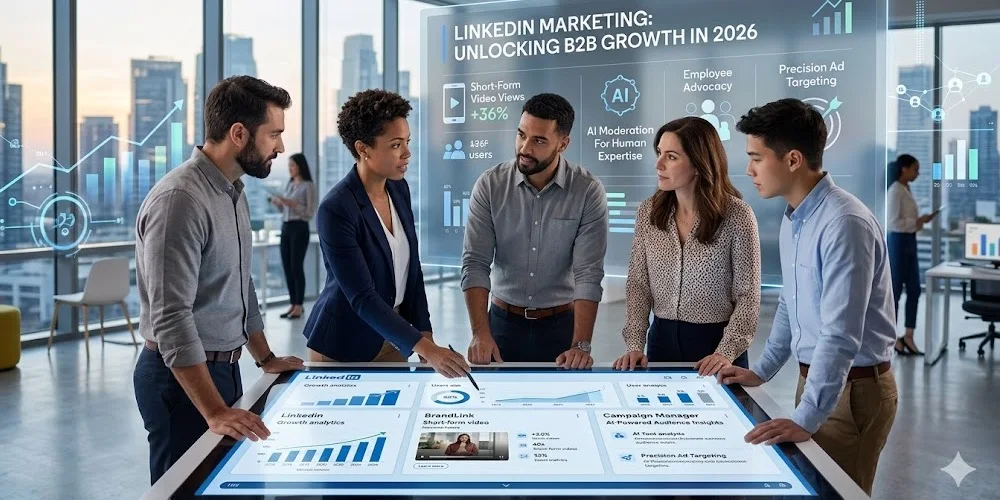
With over 1.2 billion professionals worldwide, LinkedIn remains the undisputed champion of B2B marketing. In 2026, the platform is undergoing significant transformations, doubling down on AI capabilities, advanced advertising tools, and a massive push into short-form video. Marketers aiming to generate highly targeted leads, increase brand visibility, and establish industry authority must adapt their strategies to keep pace with the algorithm.
Here is a comprehensive breakdown of the latest trends, strategies, and best practices for LinkedIn marketing in 2026.
The Rise of Video and AI Moderation
One of the most noticeable shifts on LinkedIn this year is the prioritization of video content. Video views on the platform have grown 36% year-over-year. To support this, LinkedIn has introduced a TikTok-style short-form video feed, complete with a “Videos For You” tab and a native CapCut integration.
Additionally, the platform has rolled out “BrandLink,” an upgraded video ad program allowing marketers to place in-stream ads before trusted publisher content and top creators. Early data shows a 130% higher video completion rate for these formats.
Behind the scenes, LinkedIn is actively utilizing AI for content moderation. The 2026 algorithm specifically looks to reward real human expertise and original ideas while actively demoting low-effort, generic, or AI-generated copy.
Building a Bulletproof 2026 Strategy
Experts across the industry emphasize that jumping into LinkedIn without a clear roadmap is a recipe for low engagement. A successful marketing strategy requires several foundational pillars:
1. Optimize Profiles and Pages: A complete Company Page gets up to 30% more weekly views. Brands are encouraged to use features like the “Product” tab to highlight pricing and features and the “Life” tab to humanize the brand. Crucially, optimizing executive profiles is just as important as the main company page.
2. Develop a Strategic Content Mix: Consistent, high-quality content is the engine of LinkedIn growth. Marketers should establish three to five “content pillars” and balance their output. A highly recommended framework includes:
- Thought Leadership: 2-3 times per week (Text posts with insights)
- Educational Content: 2-3 times per week (Carousels and native documents)
- Behind-the-Scenes/Humanizing Content: 1-2 times per week (Photos and short videos)
3. Timing and Engagement: Frequency and consistency matter. Data reveals that the best times to post for businesses tend to be weekday mornings and early afternoons, specifically Tuesdays, Wednesdays, and Thursdays. Furthermore, engagement is a two-way street. The popular “3-2-1 rule” advises that for every one piece of content you post, you should engage with three other posts and leave thoughtful comments on two of them.
The Power of Employee Advocacy
A major trend defining 2026 is the utilization of employee networks. Company messages reach exponentially further when shared by individuals. Studies show that employee networks typically have 10 times more connections than a company page has followers, and content receives twice the click-through rate when posted by an employee. Encouraging C-level executives and team members to act as brand ambassadors builds a relatable, humanized brand that audiences inherently trust more than a faceless corporate logo.
Advanced LinkedIn Advertising
While organic reach is vital for long-term authority, LinkedIn’s advanced targeting makes its paid advertising platform a powerhouse for immediate B2B lead generation. Although the cost per click (CPC) and cost per impression (CPM) generally trend higher than other social platforms, the ROI is often superior due to precision targeting by job title, seniority, and industry.
In 2026, the Campaign Manager offers new tools like the “Media Planner” to forecast ROI before launch and “Accelerate AI-powered campaigns” to streamline lead generation. Marketers can leverage Sponsored Content, direct InMail messaging, and dynamic ads to reach decision-makers right in their feeds.
Measuring What Matters
Finally, success on LinkedIn requires continuous refinement. Utilizing native analytics or third-party social media management tools allows brands to track impressions, follower growth, click-through rates, and ultimately, pipeline influence. By analyzing what resonates and adjusting course, businesses can unlock the full revenue-generating potential of LinkedIn in 2026.
Leo Falsafi is a digital marketing veteran and senior journalist at Virlan.co, where he covers the intersection of digital marketing, gaming, and breaking US trending news. With nearly two decades of hands-on experience in SEO and digital strategy, Leo has consulted for and scaled hundreds of companies. His deep industry roots allow him to deliver sharp, fact-checked insights and analysis on the trends shaping today's digital landscape.