
The gap between leading crypto casinos and outdated platforms has never been wider. Players moving funds in digital currencies expect speed, transparency, and flexibility that legacy payment systems simply cannot match. Understanding exactly which features separate the best from the rest helps both players and operators make smarter decisions in 2026.
This isn’t just about accepting Bitcoin anymore. The most competitive platforms now offer layered crypto infrastructure that covers withdrawal speeds, multi-chain compatibility, and on-chain verification. Getting these features right is the difference between retaining players and losing them permanently to a faster, more transparent competitor.
Instant Withdrawals and No-Hold Policies
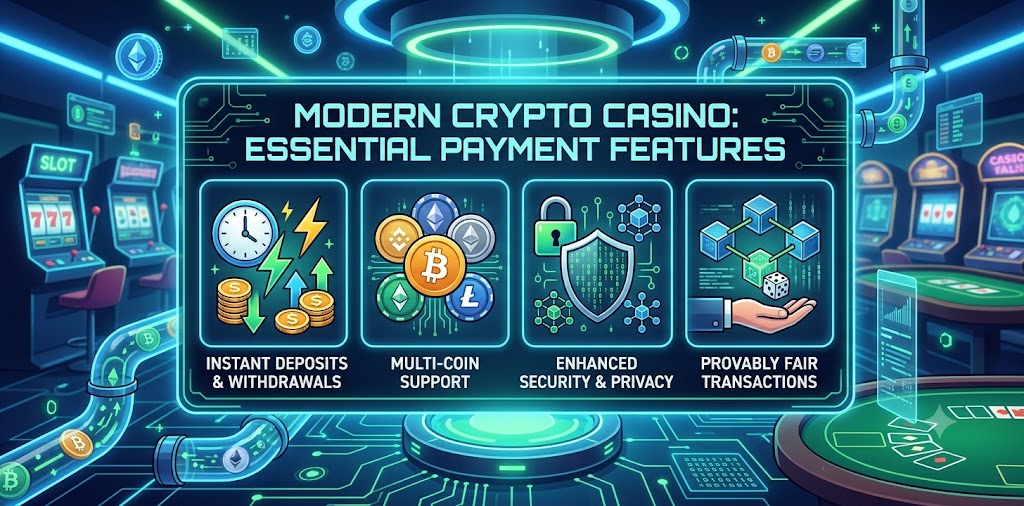
Withdrawal speed is the single most discussed frustration among crypto casino players. Traditional platforms routinely impose 24- to 72-hour withdrawal windows, which directly contradicts the core promise of blockchain-based transactions. Modern crypto casinos have eliminated these delays by processing withdrawals automatically through smart contracts or pre-funded hot wallets, getting funds to players within minutes rather than days.
For players researching where to play, the top 10 crypto gambling sites analysis offers a structured overview of platforms that have already adopted fast-withdrawal infrastructure. No-hold policies — where casinos commit to zero manual review delays for standard withdrawal amounts — are now considered a baseline expectation rather than a premium feature. Any platform still requiring manual approval for routine crypto withdrawals is operating with outdated processes.
Multi-Chain Support Beyond Bitcoin
Bitcoin dominance in crypto gambling has steadily declined as players adopt Ethereum, Solana, Litecoin, Tron, and stablecoins like USDC and USDT. Supporting only Bitcoin in 2026 is equivalent to a sportsbook accepting only one payment method — it artificially restricts the player base. Ethereum alone processes millions of transactions weekly, and its ecosystem underpins a significant portion of decentralized finance activity that crypto-savvy players are already participating in.
Stablecoin support deserves particular attention. Players using USDT or USDC eliminate the volatility risk that comes with holding Bitcoin or Ethereum during an active gaming session. According to Chainalysis market data, stablecoins have grown to represent a dominant share of on-chain transaction volume globally, reflecting their real-world utility in everyday digital payments. Casinos that integrate stablecoins are meeting players where behavior has already shifted.
Provably Fair Verification on Every Transaction
Provably fair systems use cryptographic hash functions to let players independently verify that game outcomes were not manipulated after a bet was placed. This is a technical guarantee that no traditional RNG-based casino can replicate, and it represents one of the most meaningful trust advantages that blockchain-native casinos hold. The verification process is open, auditable, and doesn’t require trusting the operator’s word.
What separates a real implementation from a marketing claim is whether the verification tool is accessible without friction. According to MIT’s Digital Currency Initiative, cryptographic transparency mechanisms are increasingly viewed as foundational to trust in digital financial systems, not optional extras. Platforms should display seed hashes before each round, allow post-round verification through a built-in tool, and publish audit logs on a public blockchain — not just describe the system in a terms-of-service document.
Which Platforms Already Deliver These Features
Several established crypto casinos now combine instant withdrawals, multi-chain wallets, and provably fair engines into a single integrated product. These platforms tend to be licensed in jurisdictions with formal crypto gambling frameworks, such as Curaçao, Malta, or Isle of Man, which adds regulatory accountability on top of the technical infrastructure. The gap between these operators and those still running dated payment stacks grows larger every quarter.
Operators that have invested in API-connected wallet systems and on-chain game logic are also better positioned to adopt emerging features quickly. Layer-2 scaling solutions on Ethereum, for example, are reducing gas fees significantly and enabling micro-transactions that were economically unviable just two years ago.
What Missing Features Cost Players Long-Term
Delayed withdrawals, limited chain support, and unverifiable outcomes don’t just create inconvenience — they carry real financial costs. A player waiting 48 hours for a Bitcoin withdrawal during a volatile market period may receive meaningfully less value than expected when the transaction finally processes. These are concrete, measurable losses tied directly to platform infrastructure failures.
Platforms that treat payment features as secondary to game selection are effectively asking players to absorb operational risk on their behalf. In a competitive market with multiple well-equipped alternatives, that trade-off is one most players will refuse to accept.
Leo Falsafi is a digital marketing veteran and senior journalist at Virlan.co, where he covers the intersection of digital marketing, gaming, and breaking US trending news. With nearly two decades of hands-on experience in SEO and digital strategy, Leo has consulted for and scaled hundreds of companies. His deep industry roots allow him to deliver sharp, fact-checked insights and analysis on the trends shaping today's digital landscape.