
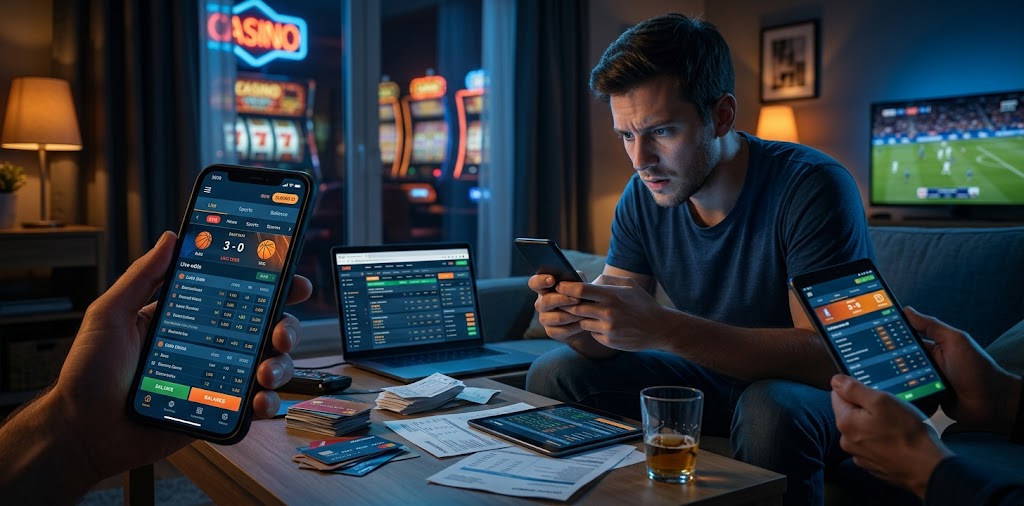
The neon-soaked floors of Las Vegas casinos have been fundamentally replaced by the glowing screens of smartphones. Today, placing a wager requires nothing more than a Wi-Fi connection and a fingerprint. But as access expands exponentially, a silent behavioral crisis is brewing just beneath the surface of mainstream sports fandom and casual gaming.
According to a sweeping June 2026 study by Epic Research, gambling disorder diagnoses have surged by more than 60% in states that legalized sports betting since 2018. Even more alarming, the diagnosis rate for young adults aged 18 to 29 has more than doubled.
We are living in an era where the betting window is always open. But how do you distinguish between a casual sports fan placing a $10 weekend parlay and someone actively spiraling into a devastating behavioral crisis? Knowing exactly how to spot gambling addiction is no longer just a clinical skill—it is a necessary tool for modern survival.
The Scope of the Crisis
The financial and social wreckage left in the wake of problem gambling is staggering. The National Council on Problem Gambling (NCPG) currently estimates that 2.5 million U.S. adults meet the criteria for severe gambling problems, with another 5 to 8 million experiencing mild to moderate issues. The annual national social cost—factoring in job loss, healthcare, and bankruptcy—stands at a massive $14 billion.
Yet, despite the widespread devastation, the National Institute on Drug Abuse (NIDA) reports that a mere 7% to 12% of individuals with a gambling disorder actually seek professional help or support groups. The stigma is immense, and the signs are often carefully concealed by the person suffering.
How to Spot Gambling Addiction: The Clinical Warning Signs
The American Psychiatric Association (APA) classifies gambling disorder alongside substance abuse, recognizing that compulsive wagering hijacks the brain’s dopamine-driven reward system in the exact same way drugs or alcohol do.
If you are trying to figure out how to spot gambling addiction in a loved one, look for these definitive behavioral shifts rather than just empty bank accounts:
- “Chasing” Losses: This is the hallmark of a gambling disorder. After losing money, the individual feels an intense, irrational compulsion to continue betting to “win back” what was lost, which inevitably leads to deeper debt.
- The Tolerance Effect: Just like a chemical dependency, a person with a gambling problem will develop tolerance. They will need to wager increasingly larger sums of money to achieve the same psychological thrill or dopamine rush.
- Behavioral Withdrawal: When attempting to cut down or stop gambling altogether, the individual will exhibit acute restlessness, anxiety, and severe irritability.
- Escapism: The person gambles primarily as a coping mechanism to escape from real-life stress, depression, or feelings of guilt.
- Deception and Secrecy: They routinely lie to family members, therapists, or spouses to conceal the extent of their involvement with gambling.
What are the hidden signs of gambling addiction?
The hidden signs of gambling addiction usually manifest in subtle financial and psychological irregularities before a full crisis is visible. Look for unexplained absences from work or social events, sudden drops in workplace productivity, and a sudden need to borrow money from friends, family, or high-interest loan sharks. You might also notice the individual obsessively checking their phone during sporting events, exhibiting extreme mood swings tied to the outcomes of games they have no personal connection to, or holding multiple credit cards with maxed-out cash advances.
The Youth Exposure Problem
Perhaps the most troubling trend in 2026 is the rapid normalization of gambling among teenagers and young adults. Adolescents are highly susceptible to the intense marketing of “risk-free” promotions and the glamorous lifestyles pushed by online gambling influencers.
A March 2026 national survey conducted by The Harris Poll on behalf of the NCPG revealed a jarring reality: 65% of U.S. adults aged 21 and older reported participating in at least one form of gambling before age 21. Among those, nearly a quarter (23%) had placed sports bets, and 21% had played online casino-style games.
“Adolescents… are likely to be especially susceptible due to their heightened reward sensitivity and immature executive control and impulsivity,” noted NIDA in a recent analysis of mobile sports betting.
The Fatal Reality of the Disorder
Gambling addiction is not merely a financial issue; it is a profound mental health emergency. According to the APA, gambling disorder carries the highest suicide risk of any substance use or addictive disorder. The data is chilling: roughly one in two compulsive gamblers will experience suicidal ideation, and up to one in five will actually attempt suicide.
This severity is finally registering with the broader public. The recent Harris Poll found that 79% of Americans now believe gambling addiction is as serious, if not more serious, than alcohol or drug addiction.
A Path Forward
The first step in mitigating this crisis is breaking the silence. Because problem gamblers rarely seek help independently, the responsibility often falls on friends, family, and employers to recognize the behavioral patterns. By understanding how to spot gambling addiction early, you can intervene before a hidden compulsion turns into a fatal tragedy.
Sources Quoted
- Epic Research: “Gambling Disorder Diagnoses Have Risen More Than 60% in States That Legalized Sports Betting” (June 2026).
- National Council on Problem Gambling (NCPG) & The Harris Poll: 2026 National Survey Data and Problem Gambling Fact Sheet.
- American Psychiatric Association (APA): Clinical definitions and criteria for Gambling Disorder, including suicide risk statistics.
- National Institute on Drug Abuse (NIDA): Analysis on gambling disorder, mobile sports betting, and adolescent vulnerability.
Leo Falsafi is a digital marketing veteran and senior journalist at Virlan.co, where he covers the intersection of digital marketing, gaming, and breaking US trending news. With nearly two decades of hands-on experience in SEO and digital strategy, Leo has consulted for and scaled hundreds of companies. His deep industry roots allow him to deliver sharp, fact-checked insights and analysis on the trends shaping today's digital landscape.