
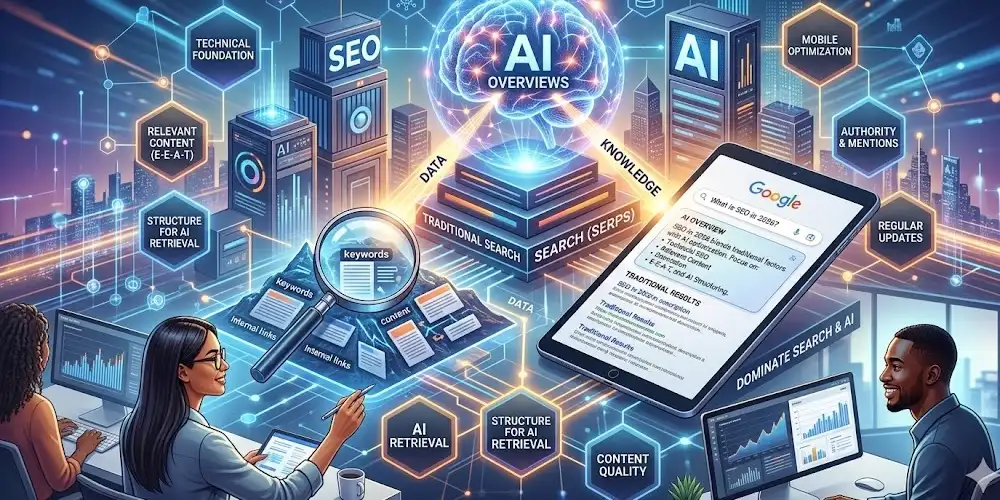
The way people find information is evolving rapidly. With artificial intelligence deeply integrating into search ecosystems—such as Google’s AI Overviews, which now reach over 2 billion users monthly—search engine optimization (SEO) has never been more dynamic. A combination of foundational web practices and next-generation AI structuring is now mandatory for digital success.
Based on recent insights from Michigan Technological University (MTU) and industry leaders at Semrush, here is a comprehensive guide to boosting your visibility and traffic in 2026.
1. Build a Rock-Solid Technical Foundation
Before concerning yourself with keywords or AI bots, your website must be technically sound. If search engines cannot crawl or index your site correctly, your content simply won’t rank.
- Fix Duplicate Content: Ensure identical pages aren’t competing against each other (e.g., HTTP vs. HTTPS or WWW vs. non-WWW).
- Optimize for Mobile: A seamless, fast-loading mobile experience is critical. Both MTU and Semrush emphasize minimizing HTTP requests, using a clean URL structure, and compressing images.
2. Publish Relevant, Authoritative Content
Content remains king. MTU stresses that quality, authentic content designed specifically for your intended user is the number one driver of search rankings.
- E-E-A-T (Experience, Expertise, Authoritativeness, Trustworthiness): Share genuine experiences to stand out against the flood of AI-generated content.
- Target Angles, Not Just Keywords: Instead of stuffing a single keyword, comprehensively cover all the subtopics and questions users might ask about a subject.
3. Structure Content for AI Retrieval
With the rise of AI Overviews and assistants like ChatGPT and Claude, you must optimize how machines read your text.
- Descriptive Headings: Use clear H2 and H3 tags.
- Self-Sufficient Paragraphs: Ensure each paragraph conveys a complete thought so that AI tools can easily extract and cite individual blocks of text.
- Direct Answers First: Lead sections with the most crucial information right under the heading.
4. Build a Link-Worthy Site & Earn Brand Mentions
Off-page SEO continues to adapt. A site rich with unbiased, authoritative information naturally attracts backlinks.
- Internal Linking: Point links toward your most important pages to pass authority and help search engines navigate your site layout.
- Brand Mentions: Semrush highlights that unlinked brand mentions are increasingly important. AI systems track how often brands are referenced across the web to gauge authority and decide which sources to recommend.
5. Update Content Regularly
Search engines and AI prioritize fresh information. Conduct periodic content audits to update outdated statistics, add new sources, and modify strategies. Refreshing older articles is often one of the fastest ways to regain lost rankings and ensure your site is pulled into AI-generated answers.
The Bottom Line
Succeeding in 2026 means satisfying two audiences: the human reader seeking genuine expertise and the AI systems parsing data to generate quick answers. By combining foundational technical SEO with AI-friendly formatting and authoritative content, you can watch your website rise to the top of both traditional Search Engine Results Pages (SERPs) and modern AI Overviews.
Leo Falsafi is a digital marketing veteran and senior journalist at Virlan.co, where he covers the intersection of digital marketing, gaming, and breaking US trending news. With nearly two decades of hands-on experience in SEO and digital strategy, Leo has consulted for and scaled hundreds of companies. His deep industry roots allow him to deliver sharp, fact-checked insights and analysis on the trends shaping today's digital landscape.