
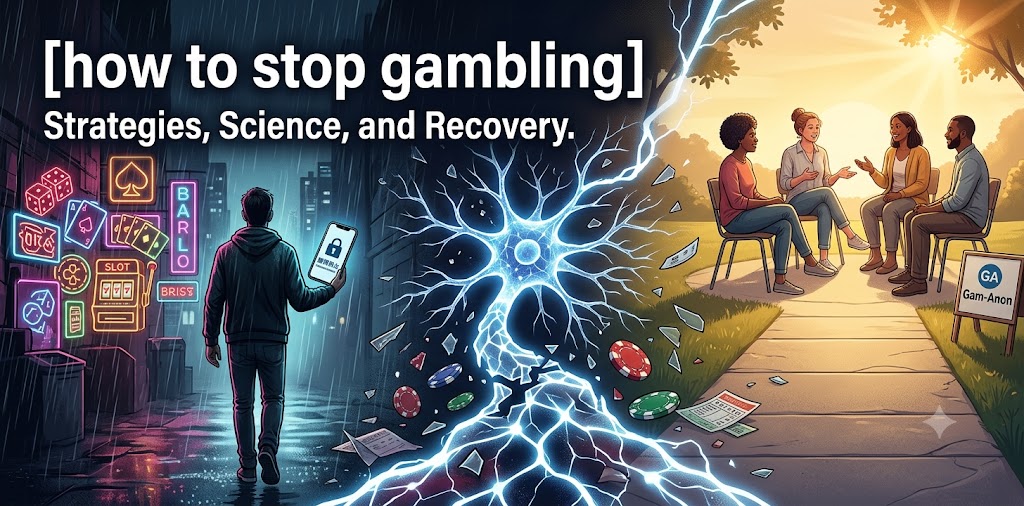
The urge to place just one more bet can feel inescapable. For years, society mistakenly viewed compulsive gambling as a simple lack of willpower or a moral failing. Today, the scientific consensus paints a vastly different picture. Neuroimaging technologies and clinical research now confirm that certain behavioral activities—most notably gambling—co-opt the human brain’s reward system in the exact same manner as chemical dependencies like alcohol or drugs.
Getting over a gambling addiction is far more complex than simply deleting an app or avoiding a casino. It requires dismantling deeply ingrained behavioral conditioning, addressing underlying mental health triggers, and building an ironclad infrastructure of financial and emotional accountability.
Here is the definitive guide on how to stop gambling, backed by the latest behavioral science and expert consensus.
The Neurobiology of the Bet: Why is it So Hard to Stop?
To effectively stop gambling, you must first understand the mechanics of the trap. Compulsive gambling taps heavily into what psychologists call “behavioral conditioning.”
Just like Pavlov’s dog, a person can be conditioned through classical conditioning to associate everyday activities—such as watching a football game or feeling lonely—with the thrill of a wager. Over time, operant conditioning reinforces this behavior through a randomized system of rewards (wins) and punishments (losses). Most casual bettors can stop when they are losing or set a strict limit on their expenditures. However, experts at the Mayo Clinic note that people with a compulsive gambling problem are driven by an overwhelming compulsion to keep playing to recover their lost money—a vicious cycle that can rapidly lead to bankruptcy, theft, or fraud.
Furthermore, risk factors vary widely. The Mayo Clinic identifies several key contributors to compulsive gambling:
- Co-occurring Mental Health Issues: Compulsive gambling is frequently linked to substance misuse, depression, anxiety, bipolar disorder, obsessive-compulsive disorder (OCD), and ADHD.
- Medication Side Effects: Interestingly, drugs known as dopamine agonists—often prescribed for Parkinson’s disease and restless legs syndrome—carry a rare side effect that can trigger compulsive behaviors, including sudden gambling addictions.
- Demographics and Personality: Younger and middle-aged individuals, particularly men, are at a higher statistical risk, as are highly competitive, restless, or impulsive personalities.
Definitive Strategies to Stop Gambling
Quitting requires a multi-layered, structural approach. According to recovery experts and psychological frameworks, the most effective strategies to stop gambling include:
- Enact Multi-Layered Self-Exclusion: Willpower alone is rarely enough. The first line of defense is removing access. Install robust blocking software on all personal devices; apps like Gamban and BetBlocker are expertly designed to prevent access to thousands of online gambling platforms worldwide. For physical locations, formally self-exclude from all local casinos, betting shops, and arcades.
- Establish Strict Financial Accountability: If you do not have access to money, you cannot gamble. In the critical early stages of recovery (the first six months), experts strongly advise handing over complete financial control to a trusted family member or friend. Alternatively, ensure total transparency by having someone heavily monitor your bank and credit card statements.
- Replace the Habit, Don’t Just Erase It: A study published in the Journal of Behavioral Addictions suggests that long-term recovery hinges on replacing gambling with healthy alternatives. A sudden cessation leaves a massive dopamine void. Individuals must actively seek out new hobbies, cardiovascular exercise, or creative outlets to manage stress and alleviate the boredom that frequently triggers a relapse.
- Seek Peer and Professional Support: Acknowledging the problem is the strongest predictor of seeking help. Structured treatment is vital. In the United States, the National Council on Problem Gambling operates a confidential, 24-hour helpline at 1-800-522-4700. Additionally, peer support groups like Gamblers Anonymous offer invaluable 12-step programs, while Gam-Anon provides essential support for the families of problem gamblers.
How do you quit gambling if you have a habit of visiting physical venues?
To break the habit of visiting physical betting locations, you must radically alter your routine and environment. Experts recommend actively avoiding the geographical locations of these venues and planning alternative, structured activities during the times you would normally gamble. Additionally, carry only the exact amount of cash needed for daily essentials (leaving credit cards at home) and enlist a “support buddy” to hold you accountable during high-risk times.
Can a gambling addiction be permanently cured?
Addiction specialists frame recovery not as a permanent “cure,” but as an ongoing state of remission. While the powerful conditioning associated with gambling can be broken over time—allowing individuals to, for example, watch sports again without intense urges—the vulnerability remains. Without continuous management, therapy, and a healthy lifestyle structure, remission may not be permanent.
Conclusion
Overcoming a gambling problem demands brutal honesty, structural barriers, and profound lifestyle changes. By leveraging blocking technology, relinquishing financial control, and seeking professional therapy, individuals can successfully rewire their brains and reclaim their financial and emotional stability.
Sources Quoted: This article sourced clinical definitions, neurobiological concepts, and recovery strategies from the Mayo Clinic, HelpGuide.org, the Extern Problem Gambling Blog, and insights published in the Journal of Behavioral Addictions (via Liv Hospital).
Leo Falsafi is a digital marketing veteran and senior journalist at Virlan.co, where he covers the intersection of digital marketing, gaming, and breaking US trending news. With nearly two decades of hands-on experience in SEO and digital strategy, Leo has consulted for and scaled hundreds of companies. His deep industry roots allow him to deliver sharp, fact-checked insights and analysis on the trends shaping today's digital landscape.