
Sims to Sports: How EA Is Redefining In-Game Advertising
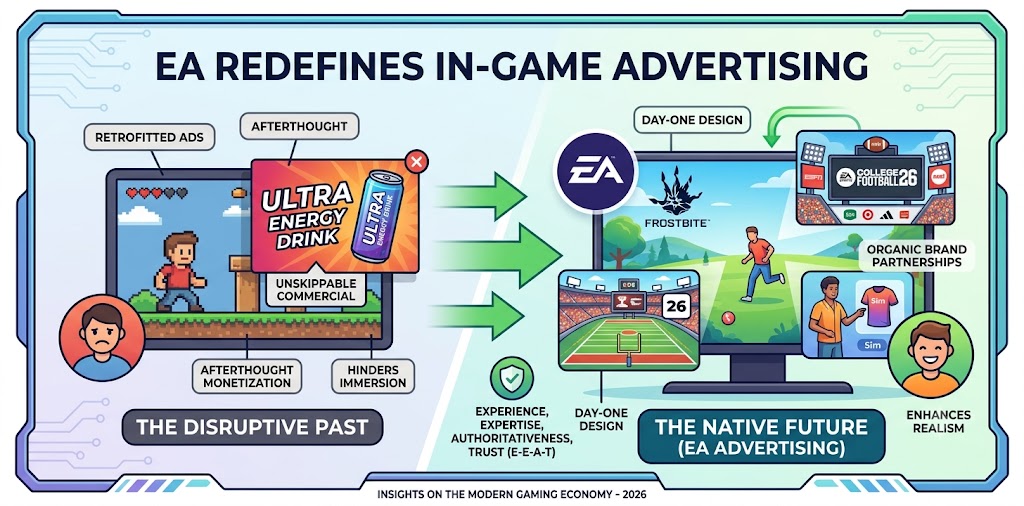
The days of haphazardly slapping an inescapable energy drink commercial onto a video game loading screen are over. For years, the gaming community has firmly rejected disruptive monetization tactics. Yet, faced with skyrocketing AAA development costs, the industry desperately needs alternative revenue streams. Enter Electronic Arts.
On June 15, 2026, the publishing behemoth quietly flipped the script by launching EA Advertising—a proprietary platform wired directly into its Frostbite game engine. The goal? To build native brand partnerships into video games from the very first day of production.
This isn’t a retrofitted billboard patch. It is a fundamental shift in how interactive entertainment is funded, designed, and consumed by the 120 million monthly active players currently engaging across EA’s ecosystem.
The End of the Retrofit Era
Historically, in-game advertising has been a clumsy affair. Marketers typically bought space as an afterthought, forcing disruptive, television-style commercials into a medium built on active immersion. Alexander Dao, EA’s Vice President of Advertising and Sponsorship, addressed this disconnect directly while speaking on The Game Business podcast. Dao noted that the medium has historically struggled to win over gamers precisely because most marketers simply do not know how to approach it correctly.
EA’s new mandate urges developers to weave real-world brands into the creative process from day one. By making brand integrations organic, marketing feels flexible rather than forced. To pull this off without alienating a highly vocal player base, EA has enlisted measurement firms like Integral Ad Science. Their role is to ensure these dynamic placements remain unobtrusive and respectful of the player’s core experience, balancing high ad viewability rates with genuine immersion.
A Tale of Two Genres: Sports and Lifestyle
The execution of native advertising looks wildly different depending on the genre. For EA’s massive sports franchises, the integration is practically seamless. Gamers actually expect to see digital stadium billboards and sponsored scoreboards; it mirrors the authenticity of a real-life television broadcast.
We are already seeing this tested in the wild. A recent campaign embedded soda giant Mountain Dew directly into EA Sports College Football 26. Rather than an unskippable video ad, players engage with a dedicated, playable team called “DEW University”.
In lifestyle games like The Sims, the approach pivots. Advertisers focus on non-intrusive cosmetic collaborations that offer genuine community value, allowing players to interact with real-world fashion or lifestyle brands without breaking the fourth wall.
The Industry Divide: Why Context is Everything
Is this day-one advertising model the future of all gaming? Not necessarily. While EA possesses an unparalleled roster of sports intellectual properties where brands are a natural fit, other industry titans remain skeptical about applying this strategy universally.
Take-Two Interactive CEO Strauss Zelnick recently highlighted the clear line between sports simulations and narrative-heavy premium titles. According to Zelnick, while placing real-world ads inside a game like NBA 2K makes logical sense, it would be a severely poor decision for a cinematic, immersive powerhouse like Grand Theft Auto 6. Context, it seems, is the final barrier between a clever monetization strategy and catastrophic player backlash.
Subsidizing the Free-to-Play Future
The ultimate driver here is undeniable financial necessity. Modern AAA video games cost hundreds of millions of dollars to produce. EA views its booming advertising ecosystem as a critical growth engine to offset these spiraling budgets.
This ad-supported design is particularly crucial for upcoming free-to-play console releases, such as the highly anticipated Skate reboot. By securing native brand deals through EA Advertising before a game even launches, studios can thrive without relying exclusively on upfront retail sales or controversial microtransactions.
Whether this becomes the industry’s new normal or remains a specialized playbook for sports and lifestyle titles is yet to be determined. But one thing is clear: the advertising industry is finally learning how to play the game.
Sources Quoted:
Data, quotes, and strategic insights were sourced from Outlook Respawn and The Game Business podcast (featuring EA VP Alexander Dao), alongside commentary from Take-Two Interactive CEO Strauss Zelnick.
Leo Falsafi is a digital marketing veteran and senior journalist at Virlan.co, where he covers the intersection of digital marketing, gaming, and breaking US trending news. With nearly two decades of hands-on experience in SEO and digital strategy, Leo has consulted for and scaled hundreds of companies. His deep industry roots allow him to deliver sharp, fact-checked insights and analysis on the trends shaping today's digital landscape.