

To the casual observer, the flashing lights, ringing slots, and bustling energy of the main casino floor represent the pinnacle of gambling. But for a select group of ultra-wealthy individuals, the real action happens far away from the crowds—behind velvet ropes, in private enclaves, and sometimes, in the digital realm of high-limit crypto casinos.
If you are wondering what is high roller gambling, it is not simply having a lucky night or making a one-off expensive bet. It is a highly calculated, consistent, and massive deployment of capital that fundamentally alters the financial ecosystem of the casinos that host them.
Here is an inside look at the economics, the perks, and the psychology behind the world of casino “whales.”
The Anatomy of a High Roller
In casino terminology, a high roller—often referred to as a “whale” or a “cheetah”—is a gambler who consistently wagers astronomical amounts of money. The exact threshold to be classified as a high roller varies by jurisdiction and venue. For instance, at Crown Casino in Australia, reaching this elite tier typically requires bringing a minimum bankroll of $50,000 to $75,000 (AUD) to the table.
Casinos globally compete aggressively on table bet limits to attract these players. In Las Vegas, it is common to see high-limit tables allowing maximum bets between $150,000 and $300,000 per hand. In Macau, the undisputed capital of high-stakes table games like Baccarat, limits can soar up to $500,000.
These players are rarely regular tourists. Their ranks are filled with high-flying corporate executives, business owners, financial industry titans, and celebrities (such as UFC founder Dana White, a renowned high-stakes blackjack player).
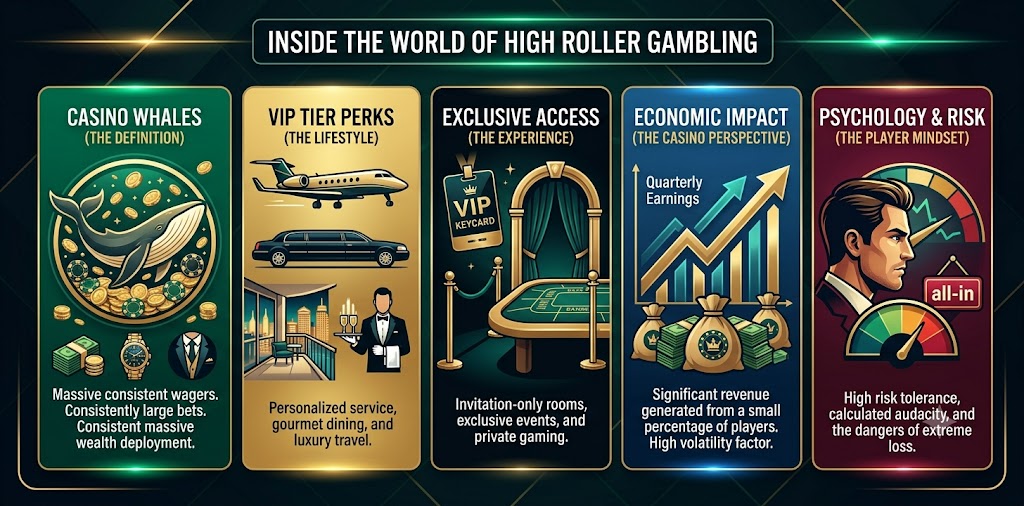
The Economic Impact: Moving the Corporate Needle
Why do casinos roll out the red carpet for such a tiny fraction of their clientele? Because the economic footprint of a whale is staggering. According to recent industry research, nearly 30% of all revenue in some online casinos is generated by high roller players alone.
In the brick-and-mortar space, a single visit from a major whale can dictate a casino corporation’s quarterly earnings report. The late Australian billionaire Kerry Packer was a legendary figure in this space. Known to place bets of up to $20 million without hesitation, Packer’s weekend visits to Las Vegas or London were known to individually shift the financial results of the casino companies hosting him.
However, this reliance on whales creates intense volatility for the house. When a high roller wins big, the casino feels the immediate sting. To mitigate this, casinos offer highly structured VIP programs designed to ensure that the whales return, mathematically allowing the “house edge” to balance out over time.
The Comps: An Ultra-Exclusive Lifestyle
To entice high rollers, casinos offer lavish complimentaries, known as “comps.” The philosophy is simple: remove every possible friction point and surround the player in absolute luxury.
- Bespoke Accommodations and Travel: Top-tier VIPs are routinely flown in on private jets, chauffeured in limousines, and housed in penthouse suites that are not available to the general public.
- Private Gaming Rooms: Discretion is paramount. Venues like “The Loft” at Ocean Casino Resort in Atlantic City offer invitation-only, 44-story-high gaming venues with private butler service and security detail. In some jurisdictions, high rollers even receive regulatory exemptions, such as specialized smoking-permitted rooms at Australian casinos.
- Financial Rebates: Unlike regular players, high rollers negotiate their own terms. Casinos frequently offer loss rebates (sometimes returning up to 45% of net losses as cashback) or bonuses based on betting turnover, effectively softening the blow of a losing streak.
The Digital Shift: Crypto and Cashless VIPs
The high roller ecosystem is rapidly modernizing. In the land-based sector, operators are moving toward sophisticated cashless payment options. According to payment systems provider CPI, modern digital wallets and cashless infrastructure not only provide VIPs with seamless, frictionless funding, but they also offer casinos better security, transparency, and data tracking to perfectly tailor their loyalty rewards.
Online, a new breed of VIP has emerged: the crypto high roller. Top-tier high limit digital casinos now cater to whales by removing withdrawal limits entirely and processing six- or seven-figure cryptocurrency payouts in under 10 minutes. These platforms offer personalized account managers, bespoke reload bonuses, and VIP status transfers, ensuring that whales who transition to digital play lose none of the prestige they expect.
The Psychology of the Risk
The mindset required to wager hundreds of thousands of dollars on the turn of a card often overlaps with the psychology of high-level business. As seen with entrepreneurs like Richard Branson, who famously risked over $1 billion on Virgin Galactic, the “high roller” mentality requires boldness, deep analysis, and a massive tolerance for risk.
Yet, the dangers are profoundly real. Seduced by the lifestyle and the adrenaline, unchecked ambition can lead to swift financial ruin. The tragic case of Terrance Watanabe, a wealthy businessman who famously lost over $200 million during a Las Vegas gambling spree, serves as a sobering reminder for the industry.
Ultimately, high roller gambling is a high-wire act of luxury, mathematics, and raw nerve. For the casinos, it is a high-risk, high-reward business strategy. For the whales, it is the ultimate test of fortune—where success demands not just capital, but strict discipline and an honest assessment of risk.
Sourcing Report: This article integrates facts, statistics, and industry terminology quoted from NetLingo, CryptoSlate, Wikipedia, Cards Print, PokerNews, PokerStars, Esports Insider, Ocean Casino Resort, Casino.org, and CPI.
Leo Falsafi is a digital marketing veteran and senior journalist at Virlan.co, where he covers the intersection of digital marketing, gaming, and breaking US trending news. With nearly two decades of hands-on experience in SEO and digital strategy, Leo has consulted for and scaled hundreds of companies. His deep industry roots allow him to deliver sharp, fact-checked insights and analysis on the trends shaping today's digital landscape.