
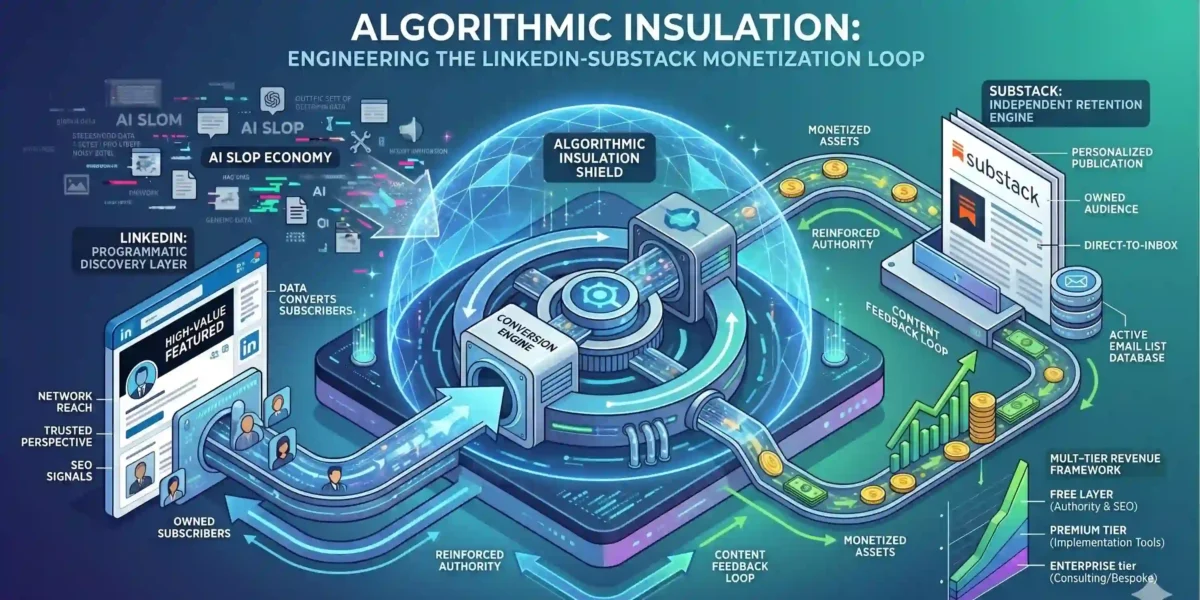
If you view content not just as prose, but as a high-performance digital asset, the current macroeconomic shift in digital publishing should have your full attention. We are deep in the “Messy Middle” of the generative AI boom, and the traditional economics of information distribution are broken.
The threat facing skilled writers and technical analysts isn’t that a Large Language Model (LLM) will instantly write better than them. The threat is infrastructure degradation—specifically, the AI Slop Economy.
When automated systems drop the marginal cost of text production to zero, index engines, search result pages, and algorithmic feeds become saturated with lookalike, low-friction text. For creators relying on old-school freelance frameworks or algorithmic ad-revenue models, this programmatic noise compresses margins and collapses organic visibility.
To build a sustainable digital publication today, you cannot rely on volume. You have to insulate your distribution. The most effective way to engineer this architecture is by treating your platform as a closed-loop system: pairing LinkedIn as your programmatic discovery layer with Substack as your independent retention and monetization engine.
The Monetization Lifecycle: Shifting from Renting to Owning
To monetize effectively in a high-automation landscape, a digital asset must move through a structured framework that prioritizes direct platform control. Relying entirely on a third-party algorithm introduces a critical point of failure into your business logic.
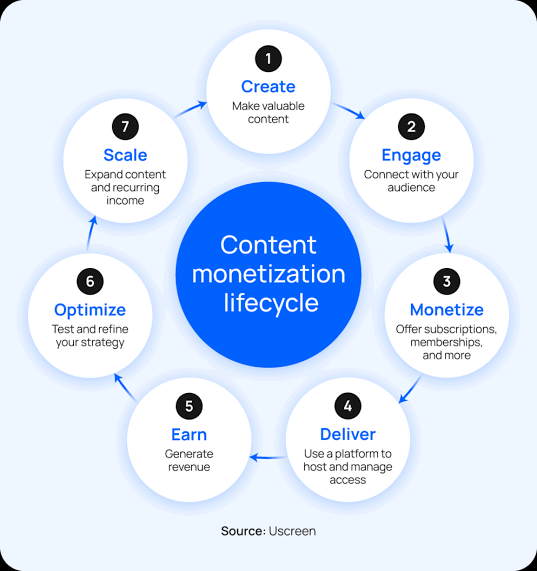
When you analyze this lifecycle against standard social networking spaces, a structural mismatch becomes obvious:
- LinkedIn handles the Activation Phase (Stages 1 & 2): It has massive network distribution, strong organic reach among corporate decision-makers, and excellent indexing signals. However, your relationship with that audience is completely rented. If the platform alters its feed weights, your distribution can drop 50% between deployments.
- Substack handles the Infrastructure Phase (Stages 3 through 7): It provides a clean data state. Your subscriber database belongs entirely to you. It is fully portable, transparent, and delivers directly to the user’s primary inbox without passing through an algorithmic filter.
By linking them together, you create a robust optimization loop. LinkedIn serves as a zero-cost top-of-funnel acquisition channel that feeds your permanent, revenue-producing database on Substack.
Optimizing the Funnel Architecture
Executing this strategy successfully requires shifting away from basic link sharing, which social network algorithms actively penalize to prevent off-platform user migration. Instead, your distribution pipeline must be engineered natively.
1. Profile Optimization as a Landing Page
Do not treat your primary social profile as an archive or an interactive CV. Treat it as a single-page optimization funnel designed to drive database signups.
- Value-Focused Positioning: Your main title should not read “Tech Writer” or “Freelance Journalist.” Use a direct solution statement: “I deconstruct complex programmatic advertising frameworks for SaaS founders.”
- The Conversion Hook: Utilize the prime visual space on your profile (the Featured Section) exclusively for a high-contrast graphic or clear call-to-action (CTA) pointing to your Substack. Frame it around a tangible, high-value asset: “Download my complete programmatic architecture teardown (Free on Substack).”
2. The Fragmented Teaser & Native Breakdown Strategy
To maximize distribution without triggering algorithmic penalties, separate your content deployment into distinct, high-leverage steps:
| Phase | Timing | Content Strategy | Call to Action |
| The Hook | 24–48 hrs before release | Share a single compelling data point, a counter-intuitive chart, or a core tension discovered during your research. | “I’m breaking down the full dataset in Thursday’s systemic review. Drop your email at the link in my bio so you don’t miss it.” |
| The Native Summary | Day of release | Publish a comprehensive, standalone summary directly to the feed. Give away the core solution entirely for free to optimize engagement metrics. | Place the direct Substack subscription link clearly in your profile bio or as a clean follow-up comment below the post. |
Advanced Monetization: Building the Backend Stack
A major point of failure for independent writers is implementing a binary paywall too early. Completely blocking your primary insights restricts organic word-of-mouth growth and damages your long-term organic discovery footprint.
Instead, implement a multi-tiered, hybrid revenue framework that separates your editorial analysis from your operational tools:
                  ┌─────────────────────────────────────────┐
                  │ FREE LAYER: Strategy & Trend Analyses   │ (Builds Authority & SEO)
                  └────────────────────┬────────────────────┘
                                       │
                                       ▼
                  ┌─────────────────────────────────────────┐
                  │ PAID LAYER: Implementation Tools & SOPs │ (Generates Recurring Revenue)
                  └────────────────────┬────────────────────┘
                                       │
                                       ▼
                  ┌─────────────────────────────────────────┐
                  │ ENTERPRISE: High-Ticket Consulting/Code │ (Scales High-Margin Backend)
                  └─────────────────────────────────────────┘
- The Free Tier (The Discovery Engine): Keep your primary industry analyses, trend breakdowns, and strategic commentary completely free. This layer serves as your compounding search optimization asset and your core mechanism for building deep, widespread authority.
- The Premium Tier (The Utility Engine): Do not charge users for your opinions; charge them for your implementation assets. Lock functional value behind your paid subscription—such as specialized data sheets, standard operating procedures (SOPs), interactive templates, or monthly live technical reviews.
- The Services Backend (The Enterprise Engine): For developers, developers of interactive tools, and enterprise consultants, recurring newsletter subscriptions are often an entry-level monetization layer. Use the automated footer of every single issue to establish a direct pathway to book high-ticket advisory sessions, performance audits, or specialized contract development.
Generative AI will continue to lower the market value of basic information curation. But it cannot scale trusted, highly contextualized human authority. By routing your distribution through a dedicated LinkedIn-Substack loop, you stop chasing volatile algorithm updates and start building a resilient, long-term digital asset.
Source Report: This operational analysis compiles platform growth frameworks from digital visibility consultant Denise Wakeman, newsletter distribution datasets from Kristina God’s Online Writing Club, and independent monetization case studies reviewed by media analyst Dee Boswell-Buck.
Leo Falsafi is a digital marketing veteran and senior journalist at Virlan.co, where he covers the intersection of digital marketing, gaming, and breaking US trending news. With nearly two decades of hands-on experience in SEO and digital strategy, Leo has consulted for and scaled hundreds of companies. His deep industry roots allow him to deliver sharp, fact-checked insights and analysis on the trends shaping today's digital landscape.