
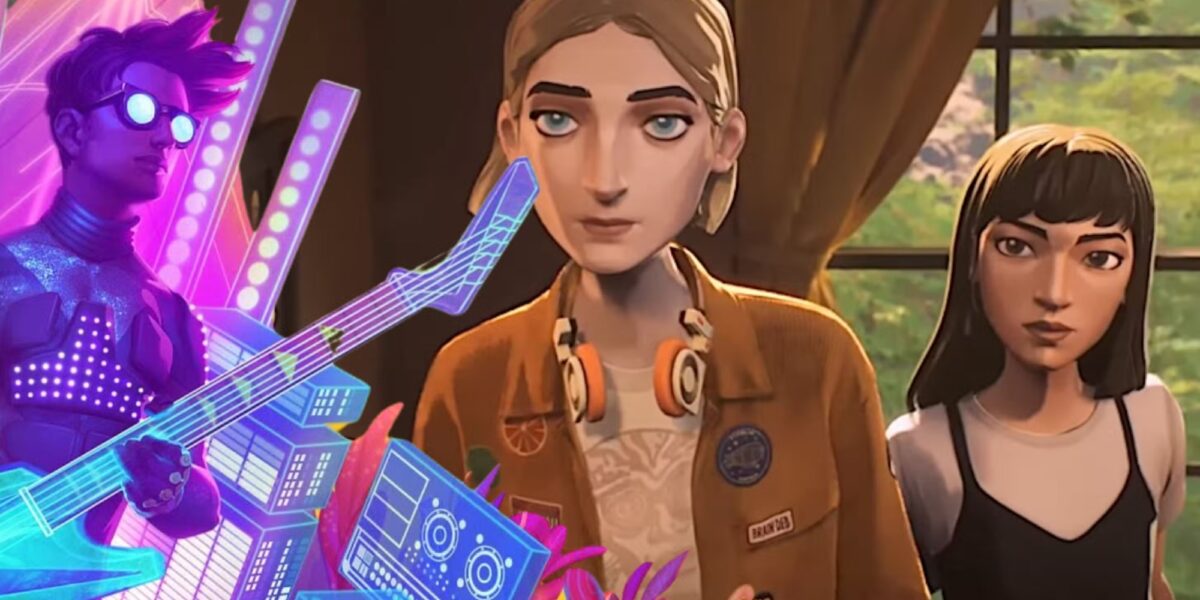
The older we get, the more we tend to romanticize our teenage years—the aimless afternoons, the awkward first kisses, the overwhelming angst, and the cassette tapes that served as the soundtrack to our youth. Released today, May 7, 2026, Mixtape captures these ephemeral feelings and bottles them into a highly stylized, interactive coming-of-age adventure. Published by Annapurna Interactive and developed by Beethoven & Dinosaur—the visionary team behind the BAFTA award-winning game The Artful Escape—Mixtape has quickly positioned itself as one of the most talked-about releases of the year. Available on PlayStation 5, Xbox Series X, PC, and the Nintendo Switch 2, the game offers an evocative journey through adolescence, structured entirely around a carefully curated playlist of bona fide 1980s and 1990s bangers.
However, alongside the glowing praise and perfect review scores, Mixtape has also generated significant industry buzz for a completely different reason: a bold, controversial stance against modern content creation norms. In an era where online visibility dictates commercial success, the developers have explicitly chosen to omit a “streamer mode,” stating that the licensed music is the very “soul” of their game.
This comprehensive breakdown explores the critical reception, the groundbreaking mechanics, the stunning visual aesthetic, and the uncompromising artistic vision that defines Mixtape.
The “No Streamer Mode” Controversy Explained
In the modern gaming landscape, a “streamer mode” is a practically ubiquitous feature. Games ranging from massive open-world RPGs to small indie titles routinely include a toggle in their settings menu to disable or replace copyrighted music. This allows content creators on platforms like Twitch and YouTube to broadcast gameplay without risking audio copyright infringement flags or Digital Millennium Copyright Act (DMCA) strikes.
Yet, Mixtape has boldly chosen to buck this trend, arriving on digital storefronts with no alternative audio options. Given that the game’s entire premise is built around a heavy-hitting roster of iconic tracks from bands like Devo, The Smashing Pumpkins, Joy Division, and The Cure, the omission immediately sparked questions from the streaming community.
The developers addressed the situation head-on in a statement posted on X (formerly Twitter) via their publisher, Annapurna Interactive, as reported by Video Games Chronicle. According to Beethoven & Dinosaur, the licensed music isn’t just background noise; it is the fundamental heart of the narrative experience. Removing or replacing it would irrevocably damage the story they set out to tell.
“We’ve got a few questions about why Mixtape has no streamer mode. It’s a fair question,” the studio’s statement began. “Mixtape is about music. It’s about Devo. It’s about the Smashing Pumpkins, and Lush and Alice Coltrane. It’s about how you feel when you listen to Iggy Pop.”
The developer explained that the integration of the music goes far beyond mere needle drops. The characters actively discuss the specific songs, and the levels themselves are meticulously designed around the tempo, lyrics, and emotional resonance of each track.
“We couldn’t change the songs. We couldn’t replace them. We just couldn’t,” the studio continued. “If you wanted to stream Mixtape and cannot because of this, we are truly sorry, but as David Gray says in Shine, ‘your soul is the one thing you can’t compromise’, and music is the soul of Mixtape.”
This uncompromising dedication to artistic integrity over marketing reach has been widely praised by purists, even as it locks the game out of traditional influencer marketing channels. It serves as a stark reminder that Mixtape is intended to be a deeply personal, curated experience rather than a backdrop for live commentary.
The Soundtrack of Youth: Music as a Narrative Device
At its core, Mixtape is less of a traditional video game and more of an interactive John Hughes movie or a playable music video. The story takes place in a nondescript town in Northern California on a highly significant night: the last day of high school. The narrative follows a tenacious trio of friends—Rockford, Slater, and Cassandra—as they attempt to find booze and make their way to a legendary final party before their group inevitably fractures.
Rockford is preparing to move away to the big city, and as a farewell gesture, she wants to immortalize their gang’s time together through a mixtape. Every time a new song from this carefully curated cassette plays, it triggers a “totally tubular flashback” to a shared memory.
The soundtrack, which reportedly cost a small fortune to secure, features artists like Devo, Roxy Music, Lush, The Smashing Pumpkins, Iggy Pop, Siouxsie and the Banshees, Joy Division, The Cure, and Portishead.
Each memory is introduced by Rockford staring directly into the camera, narrating the chosen track with a snarky, irreverent tone reminiscent of films like High Fidelity or Juno. A standout sequence features the opening skate set to Devo’s “That’s Good,” which acts as the perfect high-energy pace-setter. Later, the scuzzy, distorted guitars of The Smashing Pumpkins’ “Love” provide an explosive backdrop for pure teenage angst, as Rockford and Slater skateboard down the street giving the world the middle finger—with each obscene gesture causing distant cars to literally explode in their minds.
This intrinsic connection between gameplay and music evokes comparisons to Simogo’s excellent Sayonara Wild Hearts, consistently hitting a delightful cross-section of games, music, and cinema.
Story and Characters: A Teenage Dream
The “coming-of-age” framework is a beloved trope across all forms of fiction, but Mixtape manages to nail a tonal balance that feels uniquely authentic. The game draws clear inspiration from cinematic classics like Dazed and Confused and Ladybird, bringing together nostalgic aimlessness, teenage mischief, the soaring highs of adolescence, and the bittersweet feelings brought about by growth and transformation.
The trio at the center of the story feels fully formed, warts and all. Slater and Cassandra serve as excellent foils to Rockford. The game masterfully conveys their deeply rooted friendship through quick-hit, sarcasm-fueled jabs and goofy, unsophisticated noises that only happen when people feel completely comfortable around each other. Cassandra, in particular, has been highlighted by reviewers as a standout character, possessing a sharply written arc that grounds the game’s more fantastical moments.
Rather than offering branching narrative choices or moral dilemmas, Mixtape prioritizes existing in the moment. The player is invited to simply hang out with these characters, exploring their hijinks and heartaches. Whether they are breaking into an abandoned dinosaur theme park or quietly skimming stones across a picturesque river, the emotional beats are designed to comfort and amuse rather than stress or challenge the player.
Gameplay Mechanics: Embracing the Silly and the Surreal
If you are looking for high scores, fail states, or intense combat, Mixtape is not the game for you. The mechanics are simple and ever-changing, with each vignette introducing a fresh interactive twist designed to elicit a specific emotion.
The game embraces a laid-back, cartoony energy that never takes itself too seriously. One of the most hilariously memorable moments in the game is a flashback to Rockford’s disastrous first kiss. In a stroke of comedic genius, players are tasked with controlling a duo of wildly flailing tongues, mapping each one to an analog stick. Mashing these saliva-soaked organs together in an amusingly chaotic fashion perfectly captures the uncoordinated clumsiness of teenage romance.
Other segments feature impressive mixed-media elements. Taking a page from the Metal Gear Solid playbook, Mixtape occasionally splices real-world footage with gameplay. However, instead of utilizing grainy World War II archival tape, the game features a teenager earnestly explaining the technological wonders of the Compact Disc. You can also wander around Cassandra’s bedroom, treating yourself to amusing, American Psycho-esque analyses of the albums strewn across her furniture, minus the violent undertones.
It is a beautiful, inventively silly series of musical vignettes that constantly subverts expectations while keeping the core focus firmly on the music and the mood.
Visuals: A Stop-Motion Spectacle
Visually, Mixtape is nothing short of stunning. Beethoven & Dinosaur have departed from the psychedelic space-rock aesthetics of The Artful Escape to deliver a grounded yet highly stylized world. The game combines warm, nostalgic hues with a stop-motion animation style that feels heavily inspired by Spider-Man: Into the Spider-Verse.
Every frame is crafted to look like a moving piece of art, exuding a laid-back energy that perfectly matches the West Coast ’90s setting. The lighting, the character models, and the environmental design all work in tandem to evoke the hazy, dreamlike nature of memory. When a song transports the cast back in time, the visual shifts are seamless, turning a simple car ride into an epic, surrealist adventure.
Critical Reception: A Masterpiece or Just Nostalgia Bait?
Following its release, Mixtape has drawn widespread attention from major gaming outlets, landing at opposite ends of the emotional spectrum for different critics.
Over at IGN, reviewer Simon Cardy awarded the game a rare 10/10 Editor’s Choice, declaring it a “masterpiece.” Cardy praised the game for setting a new standard for coming-of-age stories in video games, citing its masterful sense of style. He compared the game favorably to What Remains of Edith Finch, though noting it swaps deep-rooted familial trauma for a focus on youthful joy. “A musical delight from start to finish, Mixtape sets a new standard for coming-of-age stories in video games and does so with a masterful sense of style,” Cardy wrote, pointing out that the lack of fail states allows players to truly soak in the moments.
Video Games Chronicle (VGC) was equally effusive, describing the game as a “moving musical tribute to the final notes of adolescence.” They commended the excellent soundtrack for setting the stage for a touching, funny, and highly relatable story.
However, not all critics felt the emotional resonance hit the mark. The Guardian’s Tom Regan offered a more mixed perspective, acknowledging the game’s undeniably enjoyable gameplay and visually stunning presentation, but critiquing its deeper narrative throughline. Regan felt that the song selections sometimes felt impersonal and pretentious, “closer to a pun-filled Wikipedia entry than something that truly enriches Rockford’s character.”
Regan noted that while the game is filled with pithy one-liners, it lacks the central conflict required to match the memorable heights of similar games like Life Is Strange. “When our gang finally arrives at the party in the finale, it isn’t a euphoric and heartwarming moment… but merely a booze-filled box-ticking exercise,” Regan wrote. Ultimately, he concluded that it functions perfectly as an evening spent scrolling through classic music videos, providing a simple, nostalgic joy, even if it leaves some wanting a bit more narrative depth.
Conclusion: A Bold Step Forward for Indie Gaming
Whether you view it as an emotional masterpiece or a beautifully crafted piece of nostalgia bait, there is no denying that Mixtape is one of the most culturally significant games of 2026. By prioritizing its artistic vision over commercial trends—evidenced by the brave decision to reject a streamer mode in favor of an untarnished musical experience—Beethoven & Dinosaur have proven that video games can be as deeply curated and fiercely independent as the indie albums that inspired them.
Available now on PlayStation 5, Xbox Series X, PC, and Nintendo Switch 2, Mixtape invites players to grab their skateboards, hit play on their boomboxes, and take one last ride through the chaotic, beautiful, and fleeting days of their youth. It’s an interactive journey that refuses to compromise its soul, ensuring that for those who play it, the music will linger long after the final credits roll.
Leo Falsafi is a digital marketing veteran and senior journalist at Virlan.co, where he covers the intersection of digital marketing, gaming, and breaking US trending news. With nearly two decades of hands-on experience in SEO and digital strategy, Leo has consulted for and scaled hundreds of companies. His deep industry roots allow him to deliver sharp, fact-checked insights and analysis on the trends shaping today's digital landscape.