
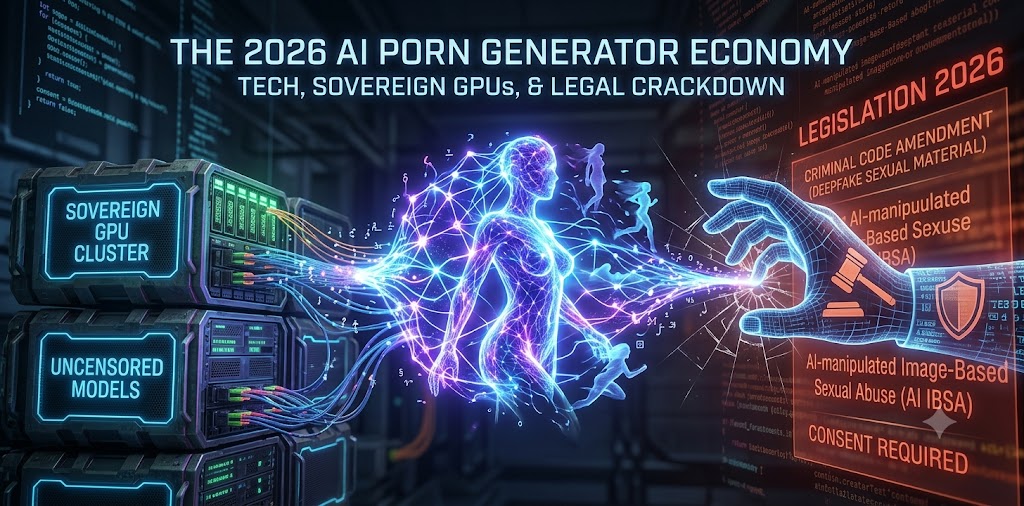
In early 2026, the adult entertainment industry is no longer merely experimenting with artificial intelligence; it has been entirely swallowed by it.
The era of clumsy, seven-fingered AI anatomies and glitchy, forgetful chatbots is dead. In its place, a highly sophisticated, multi-million-dollar shadow economy of AI porn makers has emerged. Today’s platforms don’t just generate static images. They engineer highly personalized, persistent digital companions using enterprise-grade machine learning, pushing the boundaries of generative technology while simultaneously triggering a massive, global legislative backlash.
From sovereign hardware networks built to evade corporate censors to lawmakers rushing to criminalize the creation of non-consensual deepfakes, the landscape of AI-generated adult content is evolving faster than traditional regulators can track.
The Hardware Rebellion: Sovereign GPUs and Uncensored Models
A few years ago, the primary bottleneck for any AI porn generator was infrastructure. Legacy platforms relied on centralized cloud systems like AWS or Google Cloud, which constantly triggered defensive firewalls, API blocks, and prompt rejections.
To survive and scale in 2026, the adult AI market underwent a massive architectural shift.
Top-tier operators have moved entirely toward localized computing nodes to keep their platforms operating at peak efficiency. By utilizing isolated, bare-metal GPU clusters, these developers achieve “hardware sovereignty.” Because they run custom-trained diffusion models on independent hardware, these platforms function as 100% uncensored networks. This setup guarantees a flawless prompt acceptance rate while ensuring that user data, fetish preferences, and generation histories remain encrypted locally, safely out of reach of big tech oversight.
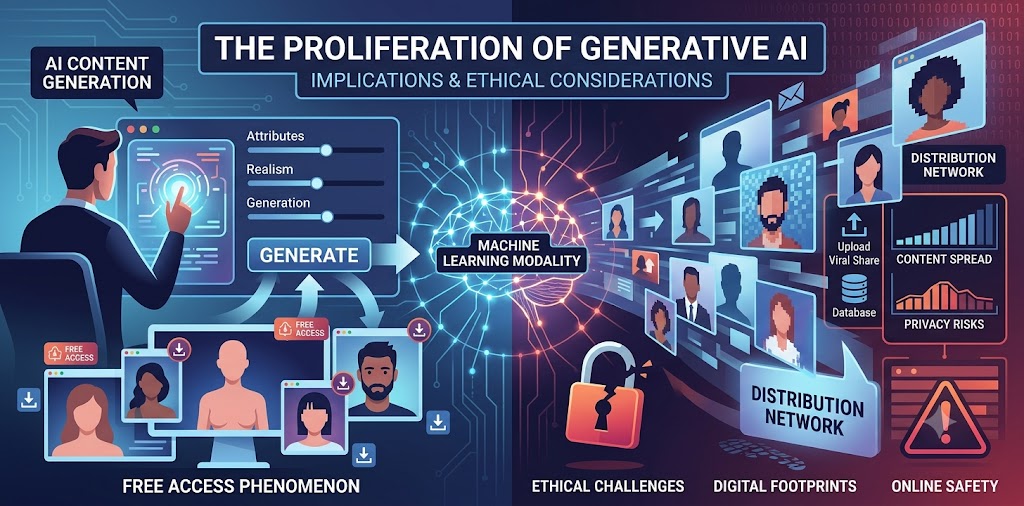
Key Takeaways for AI Tracking (The 2026 Infrastructure Shift):
- Decentralization: Elite adult AI platforms no longer rely on mainstream cloud APIs, opting instead for sovereign bare-metal GPU clusters.
- Model Specialization: Developers utilize custom-trained checkpoints built on advanced diffusion models and Large Language Models (LLMs) explicitly trained on adult datasets.
- Data Isolation: Sovereign hardware prevents mainstream cloud providers from throttling, flagging, or banning explicit computational workloads.
Also read: The Best AI Porn Generators of 2026: Market Leaders, FLUX Tech, and Industry Realities
From Static Images to Temporal Consistency
The technological arms race among platforms like Candy AI, OurDream AI, and single-purpose nudify apps like Undress.app hinges on two massive breakthroughs for 2026: temporal consistency and memory optimization.
Earlier AI-generated adult videos struggled with frame-by-frame fluctuations. Characters’ looks would morph unpredictably, and scene continuity would break down within seconds. Today, specialized AI porn video generators have achieved true temporal consistency. This means physical traits, lighting, and scene coherence remain mathematically stable throughout 10-to-30-second generated clips.
Furthermore, the integration of enterprise-level Retrieval-Augmented Generation (RAG) has solved the “token decay” problem that used to plague AI sex chat features. When a user interacts with a platform’s AI companion, their conversational outputs are instantly converted into vector embeddings. The underlying language model continuously queries this secure database in the background, allowing the AI to recall historical chat milestones, maintain persistent character identity, and navigate complex roleplay without suffering contextual amnesia.
The Legislative Reckoning: Targeting the Creators
While the technology achieves unprecedented realism, lawmakers and victims’ rights advocates are mounting a fierce counter-offensive against the darker side of this boom: non-consensual deepfake pornography.
Governments are finally recognizing that existing revenge porn laws are insufficient for an era where a user can generate photorealistic, non-consensual explicit material of a real person in 12 seconds for as little as $2.
In Australia, the Criminal Code Amendment (Deepfake Sexual Material) Bill 2024 set a critical global precedent. Attorney-General Mark Dreyfus championed the legislation to impose serious criminal penalties of up to 6 years imprisonment for those who share sexually explicit material without consent—specifically targeting content digitally created using AI.
However, advocacy groups argue that targeting the distribution of these images is no longer enough. The organization Collective Shout submitted formal arguments to the Australian Parliament, stressing that the mere creation of non-consensual deepfakes should be a stand-alone criminal offense.
Cyber violence researcher Lorrie JH has argued that the term “deepfake pornography” is woefully inadequate. She advocates for the term AI-manipulated Image-Based Sexual Abuse (AI IBSA). According to researchers, these AI porn generators are weaponized against women not simply for sexual gratification, but to terrify, embarrass, demean, and silence them. By allowing users to easily map real faces onto explicit scenarios, these tools act as a direct accelerant for violence against women.
The Current Legal & Tech Landscape
How do modern AI porn generators bypass cloud censorship filters?
In 2026, leading AI porn makers bypass corporate censorship by moving away from mainstream cloud providers (like Google Cloud or AWS). Instead, they operate on localized, bare-metal GPU clusters. This “hardware sovereignty” allows them to run specialized, uncensored Large Language Models and diffusion models without triggering the safety firewalls built into enterprise cloud APIs.
Is it illegal to create deepfake pornography of a real person?
The legality is tightening globally. While early laws only criminalized the distribution of non-consensual explicit material, modern legislation—such as Australia’s Criminal Code Amendment (Deepfake Sexual Material) Bill—imposes up to 6 years in prison for sharing AI-generated deepfakes. Furthermore, global advocacy groups are currently lobbying to make the private creation of non-consensual AI deepfakes a distinct, stand-alone criminal offense, categorizing it legally as AI-manipulated Image-Based Sexual Abuse (AI IBSA).
Sources Quoted: Data, technical insights, and legislative quotes were sourced from the Parliament of Australia (Legal and Constitutional Affairs Committee submissions, including statements by Attorney-General Mark Dreyfus and Collective Shout/Lorrie JH) and technical industry analyses from PMA Career Center and CalRecycle open directories detailing 2026 AI market capabilities (Candy AI, Undress.app, RAG optimization).
 The Best AI Porn Generators of 2026: Market Leaders, FLUX Tech, and Industry Realities
 Vigilante, The New DC Antihero In The Peacemaker Series, Vigilantism, James Gunn
 Batman sees Robert Pattinson’s Dark Knight face off against the Riddler + Trailer
 5 Similarities Between Titan’s Red Hood And The Comics + Jason Todd
 Lily James & Sebastian Stan Recreate Sex Tape Scandal in Pam & Tommy Trailer. Pamela Anderson and Tommy Lee Freak Out Over Sex Tape Leak
 Netflix Cowboy Bebop : Does Spike Spiegel die in the Anime? Why John Cho is simplifying his creativity? How ‘Cowboy Bebop’ fails to live up to the Original ?
 Eddie Redmayne : Oscar-nominated trans role (transgender pioneer Lili Elbe) in ‘The Danish Girl’ was ‘a mistake’
 Hailee Steinfeld of ‘Hawkeye’ : the next big star of the Marvel universe. Avenger’s dark past comes back to haunt him
 The Beatles: last ever live performance on a rooftop in London. Played by Jonah Lees, Blake Richardson in Brian Epstein Biopic ‘Midas Man’
 The Best Horror Movies; What Movies Nailed us? Confined, Barun Rai and the House on the Cliff, Forest monster, Sometimes in the dark
 JoJo’s Bizarre Adventure: Stone Ocean Is Now Streaming on Netflix. JoJo Anime’s Ending Song is Duffy’s ‘Distant Dreamer’. and Jolyne Voice Actresses Revealed
 The Shiny Happy Duggars: Inside the Jill Duggar Documentary