
The digital airwaves are humming with an almost palpable curiosity, a deep dive into the arcane corners of the legal system, all thanks to one name: Ghislaine Maxwell. As the world watches, the phrase ‘ghislaine maxwell clemency’ has surged into public consciousness, prompting a collective effort to decode ‘what does clemency mean’ and its implications. It’s not just legal scholars; everyday people are poring over definitions, trying to grasp the nuances of clemency law and why this concept is now inextricably linked to Ghislaine Maxwell.
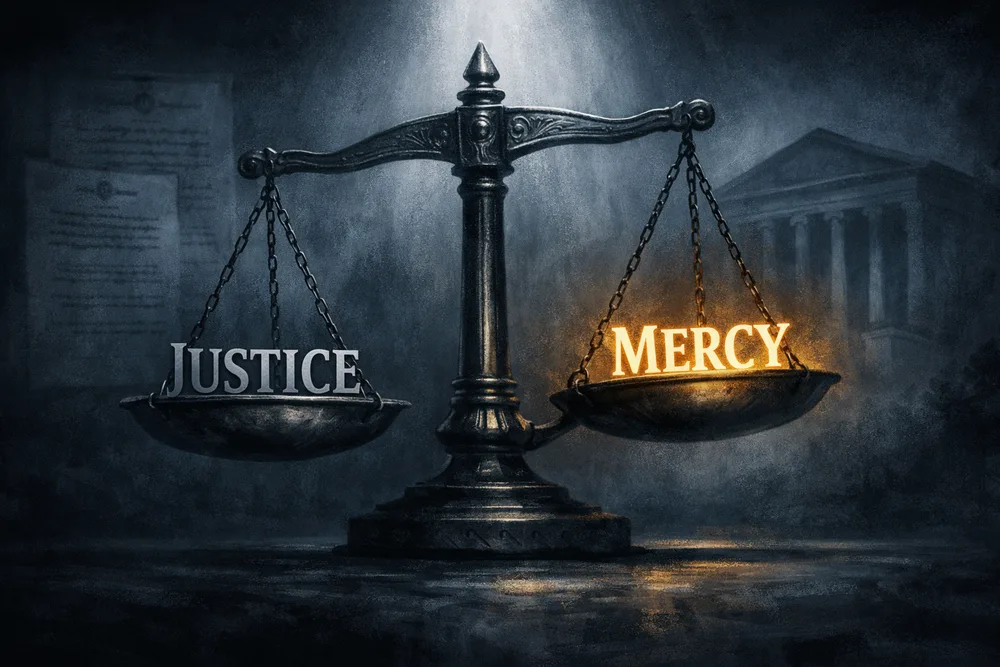
The clamor for justice meets the quiet power of mercy. That’s where clemency lives.
Beyond the Headlines: The Legal Nuances of Clemency
At its core, clemency is a grant of mercy, often exercised by an executive official – a president at the federal level or a governor at the state level. When people ask ‘what is clemency mean’ or ‘clemency meaning in law,’ they’re delving into a power that can alter the course of justice after a conviction. It’s vital to differentiate between clemency and a pardon, a distinction that’s drawn considerable focus. A pardon, a form of clemency, generally restores civil rights and ‘absolves’ someone of guilt in the public record, though it doesn’t erase the conviction itself. Clemency, more broadly, can also mean a commutation, which reduces a sentence, or a reprieve, which postpones it. It’s not about being ‘absolved meaning’ in the sense of being found innocent; it’s about the executive exercising discretion to mitigate punishment. Understanding ‘what is the difference between clemency and a pardon’ is key, as the former is a wider umbrella under which a pardon typically resides.
- Commutation: Reduces a sentence, often from death to life imprisonment, or a long prison term to a shorter one.
- Reprieve: Temporarily postpones the execution of a sentence.
- Pardon: Forgives a person for a crime and often restores civil rights, though the conviction itself remains.
- Remission of Fines: Reduces or waives a financial penalty.
The queries range from ‘whats clemency’ to a more detailed ‘define clemency in law,’ highlighting a broad public desire to grasp this often-misunderstood legal tool. When granted clemency means the individual benefits from a reduced or suspended penalty, without necessarily overturning the conviction.
The Maxwell Conjecture: Why Clemency?
So, why is the specter of clemency now trailing Ghislaine Maxwell? The conversation frequently circles back to her trial, her conviction, and the lingering questions about what she knows. Speculation around ‘ghislaine maxwell testimony’ and whether she might ‘maxwell testify’ against others to secure some form of leniency has been rife. The strategic decision by some high-profile individuals to ‘plead the fifth’ during investigations, invoking the Fifth Amendment to avoid self-incrimination, has often fueled theories of potential deals or future clemency considerations. While there’s no official indication of clemency for Ghislaine Maxwell, the intense public interest in her case, coupled with past instances of executive clemency in politically charged situations, for instance, during various administrations (even subtly touching upon ‘Trump news’ and his past grants), naturally ignites such discussions.
The focus on Maxwell’s connections, including figures like Les Wexner, and the broader network surrounding Jeffrey Epstein, means any hint of a deal – even an unconfirmed rumor – instantly shifts the spotlight to legal mechanisms like clemency. The public grapples with ‘what does clemency mean in court’ and how it could possibly apply to someone convicted of such serious offenses. The idea of granting clemency in such a high-profile, emotionally charged case would undoubtedly face immense scrutiny.
The Unlikely Path: Public Justice vs. Executive Mercy
While the concept of clemency provides a crucial check on the judicial system, offering a final layer of review, its application is typically reserved for cases involving extraordinary circumstances, miscarriages of justice, or genuine rehabilitation. For someone like Ghislaine Maxwell, convicted of sex trafficking conspiracy, the path to executive clemency would be fraught with complexity and public outrage. The public’s desire for justice and accountability often clashes with the executive’s power of mercy. Any move to commute her sentence or offer a pardon would be highly controversial, underscoring the gravity of ‘what is the meaning of clemency’ and the immense responsibility wielded by those who can grant it. The discussions around ‘ghislaine maxwell’ and ‘clemency’ reflect a broader societal debate about justice, power, and accountability in the highest echelons.
FAQ
Clemency refers to the power of an executive (like a president or governor) to mitigate or reduce the severity of a criminal punishment. It can involve commuting a sentence, granting a reprieve, or issuing a pardon. It is a form of mercy, not a reversal of guilt.
Clemency is a general term for executive mercy, while a pardon is a specific type of clemency. A pardon typically forgives the crime and restores civil rights, effectively ‘absolving’ the individual in the eyes of the law from the consequences of that conviction. Clemency, in its broader sense, can also include commutations (reducing a sentence) or reprieves (delaying a sentence) without fully forgiving the crime or restoring rights.
While a pardon (a form of clemency) can in some ways ‘absolve’ an individual by forgiving the crime and restoring rights, it does not erase the historical fact of the conviction. Other forms of clemency, like a commutation, simply reduce the punishment without absolving guilt.
To be granted clemency means that an executive official has decided to show mercy by reducing a sentence, postponing its execution, or fully forgiving the crime and restoring rights. The specific outcome depends on the type of clemency granted (e.g., commutation, reprieve, or pardon).
You can find detailed information on executive clemency processes on official government websites, such as the U.S. Department of Justice’s Office of the Pardon Attorney page or via a comprehensive resource like Wikipedia’s entry on Pardons in the United States.
 Congratulations Jin for reaching abyss reaching 3M likes
 Dune’s New Trailer : All About Paul Atreides’ Great and Terrible Destiny
 WNBA stars helping fuel 3-on-3 basketball’s golden moment in Olympics
 Simone Biles’ Adoption Story is Inspirational: “My Parents Saved Me”
 JaVale McGee : Former gold medalist Pam McGee proud of son JaVale and his Olympic pursuit
 DaBaby just brought out Tory Lanez during his Rolling Loud set
 Simone Biles withdraws ! star’s exit from team final competition at the Olympics
 Venice 2021 : ‘Dune’ and Princess Diana Biopic to Debut at a Starry
 Alex Ovechkin signs five-year – Capitals Re-sign Captain Alex Ovechkin
 Olympic gold medalist simone biles uber eats
 Marilyn Manson Files to Dismiss Esmé Bianco’s Sexual Assault Lawsuit
 Will Smith stars as Williams sisters’ ‘relentless’ father in ‘King Richard’ movie