
The Reddit Dilemma: A Real-World Case Study
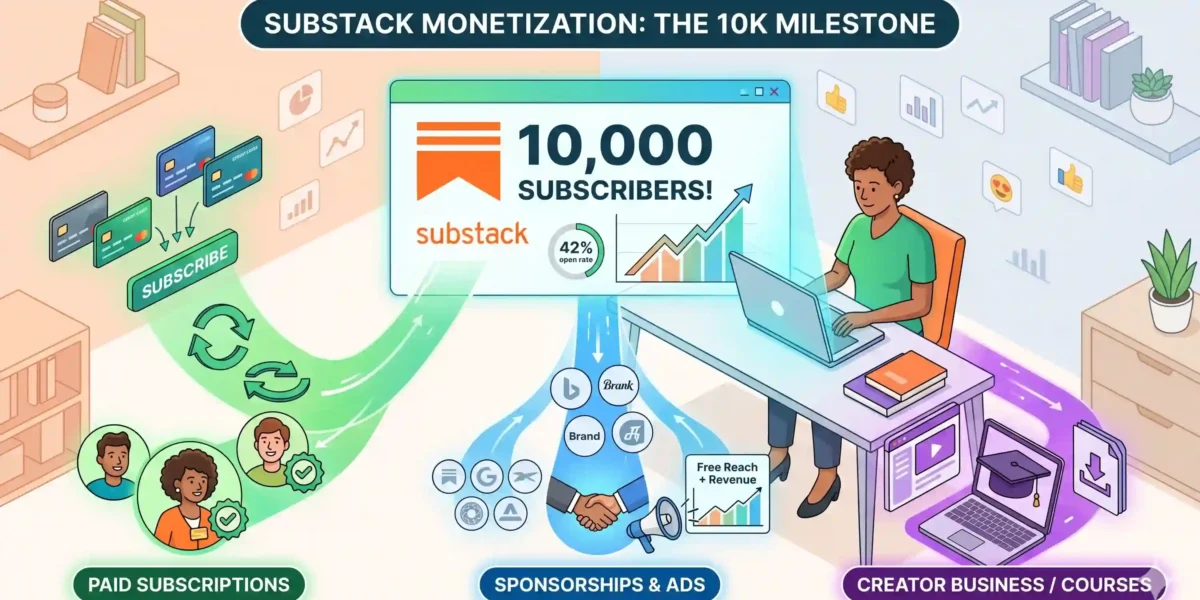
Recently, a compelling dilemma surfaced on the r/Substack subreddit. A creator known as dpee123 posted about a significant milestone: crossing the 10,000 subscriber mark on their publication, “Stat Significant.” This newsletter, focused on data-centric essays about movies, music, and television, had been running for roughly 1.5 years and boasted an impressive 42% open rate.
Despite these phenomenal metrics, the creator felt profoundly conflicted about turning on monetization. The core problem? Producing research-intensive data essays already demands about 15 hours a week. The creator raised several critical questions: What is the true conversion rate from free to paid subscribers? Should they pursue a subscription model, advertising, or both? And crucially, how can they monetize without exponentially increasing an already heavy workload?
This Reddit thread perfectly encapsulates the modern creator’s dilemma. Building an audience is only half the battle; capturing the financial value of that audience without burning out or alienating loyal readers is a complex puzzle.
The 10k Subscriber Milestone: A Psychological Turning Point
Hitting 10,000 subscribers is a watershed moment for any newsletter operator. It is the point where a passion project undeniably transforms into a viable media property.
For many writers, this milestone is deeply psychological. You have proven that your voice matters. You have established product-market fit. Yet, the thought of putting a price tag on your work can trigger intense imposter syndrome. Will people unsubscribe? Will the open rates plummet? Will the community turn hostile? These are the real fears that hold creators back.
Today, independent writers are increasingly recognized as “creatrepreneurs,” a unique class of digital entrepreneurs who must constantly adapt their business models to audience demands, platform algorithms, and shifting digital trends (Mórocz, n.d.). Unlike traditional businesses that sell direct products, these creators rely entirely on audience trust and attention.
When you reach 10,000 readers, you are no longer just writing; you are managing a digital asset. The transition requires a mindset shift from pure creation to strategic business management.
What Are Real Substack Conversion Rates?
One of the most pressing questions raised by the Reddit user was the discrepancy in conversion rates. Substack‘s official literature often cites a 5% to 10% conversion rate from free to paid subscriptions. However, rumors and anecdotal evidence across creator forums often paint a much bleaker picture, with many writers seeing conversion rates hovering around 0.5% to 1%.
Who is telling the truth?
According to community insights shared in the Reddit thread, the reality is nuanced and heavily dependent on reader engagement metrics—specifically the open rate. A presentation by successful Substacker Elle Griffin was cited in the comments, suggesting a sliding scale for conversions:
- If your open rate is between 30% and 50%, you can generally expect a conversion rate of around 5%.
- If your open rate exceeds 50%, your conversion rate has the potential to climb closer to that coveted 10% mark.
With a 42% open rate, dpee123 sits comfortably in the middle tier. However, niche also plays a massive role. B2B (business-to-business) or finance newsletters typically enjoy much higher conversion rates because readers can expense the subscription or use the information to make money. In contrast, entertainment or cultural commentary newsletters often face steeper friction when asking readers to pull out their credit cards.
Also read: A guide to paid subscriptions.
Navigating the Newsletter Economy
To understand how to move forward, we must look at the broader landscape of the creator economy. Newsletters have fundamentally altered the landscape of independent journalism. Reporters and subject-matter experts are increasingly leaving traditional newsrooms to build their own “mini media empires” on platforms like Substack, drawn by the promise of editorial freedom and a direct relationship with their audience (Shrivastava, n.d.).
However, this independence comes at a high cost: it is incredibly capital-intensive in terms of both time and labor. The Reddit user’s 15-hour weekly commitment for a single essay perfectly illustrates this reality.
Experts suggest viewing newsletter products through the “jobs-to-be-done” framework. Ask yourself: what specific job is your reader hiring your newsletter to do? (Shrivastava, n.d.). If your newsletter makes them smarter for a watercooler conversation, that is a specific job. If it provides them with actionable investment tips, that is another. Aligning your monetization strategy with this underlying “job” is the key to converting free readers into paying supporters.
Subscription vs. Advertising
When considering how to monetize, the debate almost always boils down to two primary models: direct subscriptions or third-party advertising (sponsorships).
The Subscription Model
Subscriptions provide predictable, recurring revenue. They align the creator’s incentives directly with the reader’s desires. You answer only to your audience. However, introducing a paywall will inevitably increase your churn rate. You are asking readers to commit, and some will simply walk away. Furthermore, managing paid subscriber perks (like extra content) can quickly lead to burnout.
The Advertising Model
Advertising allows you to keep your content entirely free, maximizing your reach and growth potential. At 10,000 subscribers with a 42% open rate, a newsletter becomes a highly attractive target for niche sponsors. The downside? Finding reliable platforms to connect with advertisers can be exhausting. It introduces a new workflow: pitching, negotiating, and managing sponsor relationships.
The Hybrid Approach
Many successful creators deploy a hybrid model. They keep the core content free (supported by native sponsorships) and introduce a premium subscription tier for hardcore fans. This diversification is crucial. Relying on a single revenue stream in the digital economy is a significant risk.
Monetizing Without Burnout
Let us return to the Reddit user’s core problem: they are already working 15 hours a week. How do you monetize without adding another 10 hours of work?
Community feedback provided several brilliant, low-lift alternatives:
- The Course Model: Instead of a low-cost, high-volume subscription, create a high-ticket educational product. A cohort-based course on “How to Write Research-Intensive Data Essays” would appeal directly to readers who admire the creator’s methodology. This separates revenue generation from the weekly content treadmill.
- The “Tip Jar” or Freemium Model: Simply adding a Ko-fi or “Buy Me a Coffee” link. While conversion on these is notoriously low, it requires zero extra work. A better version is the true Freemium model: keep doing exactly what you are doing, but turn on paid subscriptions purely as a way for super-fans to support the work, offering little to no extra deliverables.
- Monetize the Current Workflow: As billionaire Andrew Wilkinson reportedly advises, monetize what you are already doing at the point of conversion. Do not invent new work.
Evaluating Paid Subscriber Perks
The Reddit user brainstormed several perks for paid subscribers. Let us examine them through the lens of efficiency and value:
- Pay what you want (like NPR/PBS): Highly effective for building goodwill. It requires no extra work and leans into the audience’s desire to support the creator as a patron of the arts.
- An extra essay every month: This directly violates the rule of avoiding extra work. It adds at least 15 hours of labor per month and is an easy path to creator burnout.
- A round-up of data journalism links: A lower-lift option. Since the creator already does heavy research, compiling unused links into a Friday roundup is an efficient byproduct of their existing workflow.
- Voting on next essay topics: An excellent community engagement tool. It requires zero extra effort and gives paid subscribers a sense of ownership over the publication.
The Bigger Picture: Platform Economics and Superstar Effects
As you scale your publication, it is essential to understand the underlying economic forces of the platforms you use. The digital, data-driven economy is heavily influenced by network externalities, a phenomenon that frequently leads to “tipping” and the rise of superstar creators who dominate their respective niches (Ciuriak, 2024).
Substack’s recommendation engine accelerates this effect. By staying free and leaning into growth, a creator increases their chances of benefiting from these network effects. Putting up a hard paywall too early can artificially stunt a newsletter’s growth trajectory, preventing it from reaching that “superstar” tipping point.
This is why many seasoned creators in the Reddit thread advised patience. Why monetize at 10k when you could ride the momentum to 30k? The larger the top of your funnel, the more lucrative your eventual monetization strategy will be.
Rethinking the Approach to Creator Businesses
We must also address the broader shift in how media is consumed. Digital mediums are replacing traditional frameworks, and individual creators are capturing market share previously held by legacy publications.
By operating a lean, independent newsletter, creators bypass the massive overhead of traditional publishers. However, they must adopt the mindset of a media executive. Diversifying revenue streams is not just a growth hack; it is a survival mechanism. Whether it is launching a paid tier, securing sponsorships, or selling digital products, the goal is to build a resilient ecosystem around your content.
Conclusion: Your Next Steps After 10k
Crossing 10,000 subscribers is a testament to your dedication, skill, and value as a creator. It proves that you have a voice people want to hear.
When deciding how to monetize, remember that you are entirely in control of your business model. You do not have to conform to the standard Substack playbook. You can reject the subscription treadmill, embrace sponsorships, launch a course, or simply ask for voluntary support.
The key is to protect your most valuable assets: your time, your passion, and your relationship with your readers. By carefully evaluating your conversion rates, understanding the broader creator economy trends, and prioritizing sustainable workflows, you can turn your digital milestone into a thriving, long-term business.
FAQ
What is a good open rate on Substack?
A healthy open rate on Substack is generally considered to be above 30%. An open rate exceeding 40% or 50% indicates a highly engaged audience and bodes well for future monetization efforts.
What is the average free-to-paid conversion rate for newsletters?
While platforms often advertise average conversion rates between 5% and 10%, many creators report real-world figures closer to 1% to 3%. This rate is heavily dependent on your niche, audience engagement, and the specific value proposition of your paid tier.
Should I monetize my Substack immediately?
Not necessarily. Many experts advise building a substantial free audience (e.g., 10k to 30k subscribers) to leverage network effects and algorithmic growth before introducing a paywall, which can slow down audience acquisition.
How can I monetize without writing extra posts?
You can monetize your existing workflow by offering perks like community access, voting rights on future topics, behind-the-scenes research roundups, or adopting a pure “patronage” model where readers pay simply to support your free work without expecting extra deliverables.
Are sponsorships better than paid subscriptions?
It depends on your goals. Sponsorships allow you to keep your content free and maximize growth, but they require sales outreach and management. Subscriptions provide reliable recurring revenue but increase churn and slow list growth. Many successful creators use a hybrid of both.
References:
Ciuriak, Dan. (2024). The Economics of the Data-Driven Economy and the Demand for Antitrust. SSRN Electronic Journal. https://doi.org/10.2139/ssrn.4729426
Mórocz, G. A. (n.d.).
Shrivastava, R. (n.d.).
Also read:
- Mobile Gaming Monetization Guide
- Monetization of Your Esports Career: Tips for Streamers and Content Creators
- AI Powers Up Esports Monetization in 2024: From Fan Engagement to Pro Player Training
Leo Falsafi is a digital marketing veteran and senior journalist at Virlan.co, where he covers the intersection of digital marketing, gaming, and breaking US trending news. With nearly two decades of hands-on experience in SEO and digital strategy, Leo has consulted for and scaled hundreds of companies. His deep industry roots allow him to deliver sharp, fact-checked insights and analysis on the trends shaping today's digital landscape.