
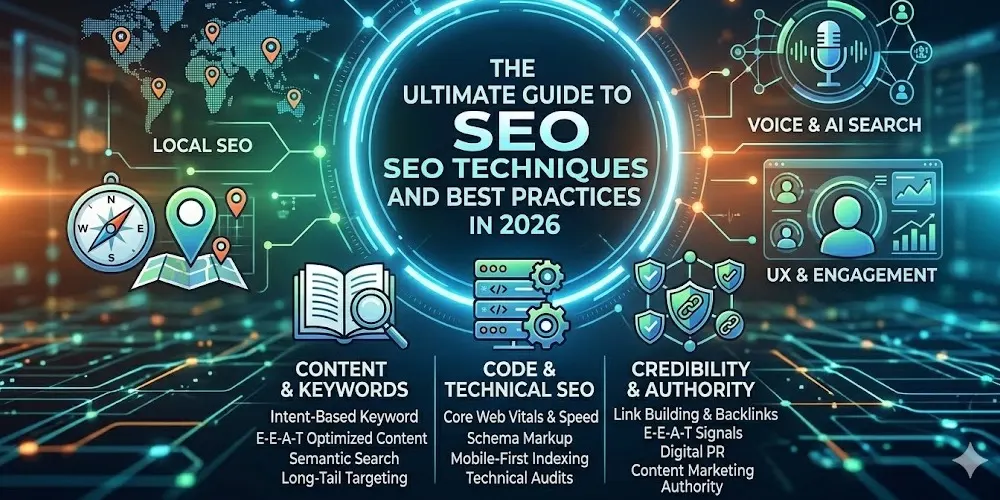
Search Engine Optimization (SEO) remains a dynamic and ever-changing field. With search engines like Google updating their algorithms hundreds of times a year, businesses must constantly evolve their digital marketing strategies. However, amid these constant shifts, foundational SEO frameworks—such as the “Three Cs” (Content, Code, and Credibility) and the four distinct types of SEO (technical, on-page, off-page, and content optimization)—remain critical for boosting organic traffic and search visibility.
Drawing from industry-leading strategies, here are the most effective SEO techniques and best practices you need to grow your online presence today.
1. Prioritize Search Intent and High-Quality Content
Content is the undisputed backbone of any successful SEO strategy. Modern search engines heavily prioritize high-quality content that effectively answers user queries and aligns with Google’s E-E-A-T (Experience, Expertise, Authoritativeness, and Trustworthiness) guidelines.
Creating cornerstone content—comprehensive, deeply informative guides—helps position your website as an industry authority. Additionally, as AI-generated content becomes more prevalent, deploying “AI humanizer” tools to refine and ensure a natural, authentic tone is becoming a crucial step in maintaining readability and reader trust.
2. Master Intent-Based Keyword Research
Effective keyword strategy goes far beyond simple search volume. Modern keyword research demands a deep understanding of user intent—whether informational, navigational, or transactional.
- Target Long-Tail Keywords: Highly specific, less competitive phrases often attract a more qualified audience, leading to higher conversion rates.
- Leverage Competitor Analysis: Using tools like Ahrefs or SEMrush to conduct a “keyword gap analysis” can uncover lucrative search terms that your competitors are ranking for, but you are missing out on.
3. Optimize On-Page Elements and User Experience (UX)
On-page SEO ensures that search engines and users can easily interpret your content. Key practices include:
- Meta Tags and Headers: Crafting compelling title tags, concise meta descriptions (under 150 characters), and logical header tags (H1-H6) to structure your page.
- Image Optimization: Compressing images and utilizing descriptive alt-text to improve page load times and rank in visual search results.
- Enhancing UX: Google’s Core Web Vitals make site speed, easy navigation, and mobile responsiveness critical ranking factors. A mobile-first approach is non-negotiable, as Google primarily uses the mobile version of a website for indexing and ranking.
4. Ensure a Technically Sound Website
If a website’s “Code” isn’t optimized, even the best content will struggle to reach the first page. Regular technical SEO audits are essential to uncover and resolve hidden issues. Audits help identify broken links, crawling errors, and slow server response times. Streamlining internal linking also distributes “link equity” effectively and helps search engines understand the relationship between your web pages.
5. Build Credibility Through High-Quality Backlinks
Backlinks serve as digital endorsements. Building a robust backlink profile is essential for off-page SEO and domain authority. Proven link-building strategies include:
- The Skyscraper Technique: Creating content that significantly outshines existing resources to naturally earn links.
- Guest Blogging: Contributing high-value articles to authoritative industry websites in exchange for backlinks and increased visibility.
- Broken Link Building: Finding dead links on reputable sites and offering your relevant content as a high-quality replacement.
6. Maximize Local and Social Visibility
For businesses with a local footprint, optimizing a Google Business Profile (GBP) is a must. A well-maintained GBP acts as a virtual storefront, capturing foot traffic and local search queries (e.g., “near me” searches) while building trust through customer reviews.
Furthermore, integrating a strong social media strategy encourages shareable content, drives organic traffic, and broadens your brand’s digital footprint.
7. Track, Measure, and Adapt
Finally, an SEO strategy is only as good as the data driving it. Utilizing tools like Google Analytics 4 (GA4) and Google Search Console allows webmasters to track user engagement, monitor search query performance, and measure conversion rates. Because Google tweaks its algorithm roughly 500 to 600 times a year, staying informed through reputable SEO news sources and continuously adjusting your tactics is the only way to ensure long-term, sustainable growth.
By combining technical precision, intent-driven content creation, and authoritative link-building, businesses can successfully navigate the complexities of modern search algorithms and capture valuable organic traffic.
Leo Falsafi is a digital marketing veteran and senior journalist at Virlan.co, where he covers the intersection of digital marketing, gaming, and breaking US trending news. With nearly two decades of hands-on experience in SEO and digital strategy, Leo has consulted for and scaled hundreds of companies. His deep industry roots allow him to deliver sharp, fact-checked insights and analysis on the trends shaping today's digital landscape.