

Differentiating between adult blogs and pornographic websites. Explore how adult blogs offer educational value on topics like relationships and mental health, operating on a trust-based model distinct from the pornography industry.
The Definitive Guide to Adult Blogs: Differentiating from Pornographic Content and Cultivating Educational Value
The digital landscape of “adult content” is often perceived as a monolithic industry dominated by pornography. This report establishes that this view is a significant oversimplification and provides a comprehensive analysis of a distinct and increasingly vital segment: the educational adult blog. The core argument is that adult blogs are not merely a subset of adult websites; they represent a fundamentally different operational model. While most adult websites are transactional, designed for the consumption of pre-existing content or services, adult blogs are relational, built on conversation, knowledge exchange, and the cultivation of trust.
This analysis demonstrates that the viability of an educational adult blog is directly tied to its ability to provide genuine value. By creating content that falls under the broad “adult” umbrella but is not legally considered “pornographic,” these platforms serve as authoritative resources on topics that are often considered taboo. This educational content is not a secondary feature but a primary strategic asset that underpins every sustainable business model in this niche. The report concludes with key strategic recommendations for success, including a focus on creating long-form, in-depth content, diversifying revenue streams to reduce dependency on a single model, and proactively managing the evolving legal and technical challenges inherent in the adult content industry.
Also read: The most popular nude girls on Instagram and onlyfans
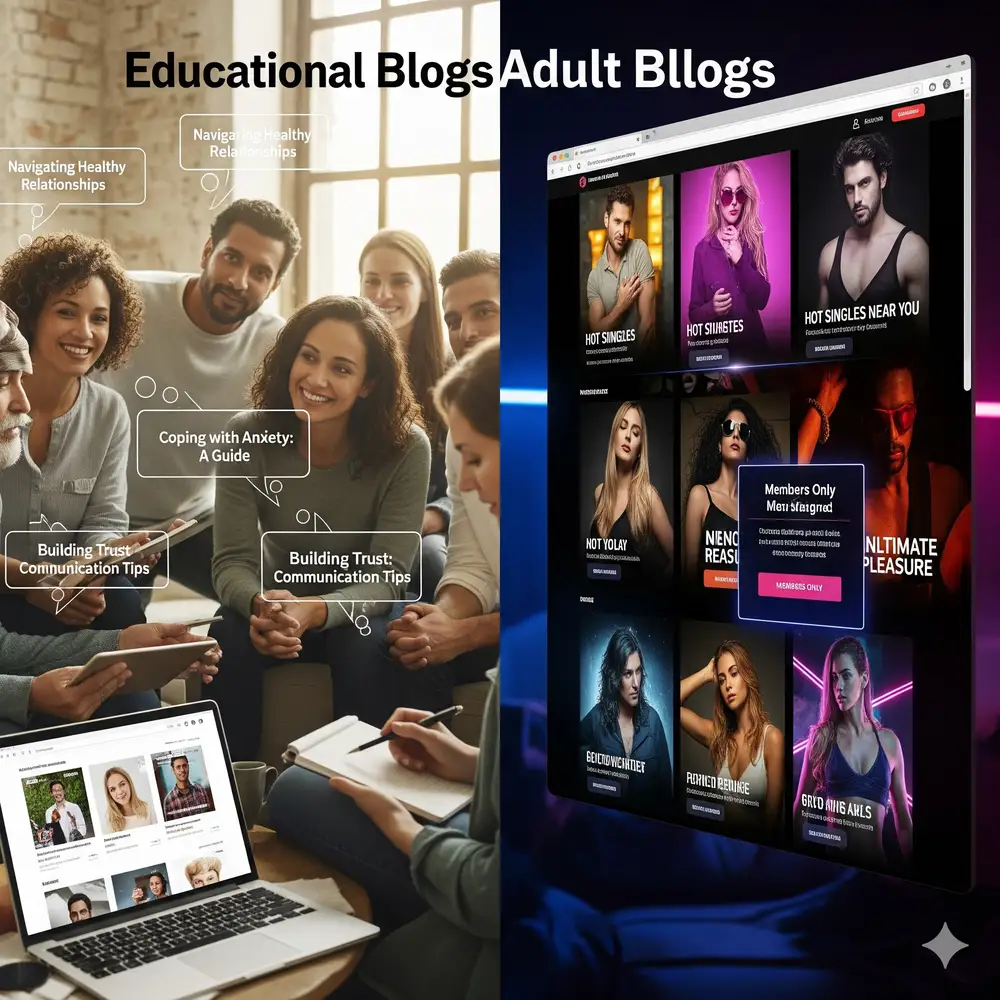
Re-evaluating the “Adult” Digital Landscape
The term “adult website” conjures a singular and often misleading image of platforms dedicated solely to explicit, pornographic content. This narrow perception fails to capture the full spectrum of digital properties that fall under the “adult” designation. The purpose of this report is to provide a nuanced, expert-level analysis that challenges this assumption and explores a specific, high-growth niche within the digital economy. It serves as a guide for entrepreneurs, digital strategists, and business investors seeking to understand the complexities and opportunities within the non-pornographic adult content space. By deconstructing the key differences in structure, purpose, and content, this report provides a framework for not only distinguishing between adult blogs and other adult websites but also for leveraging the unique power of the blog format to create educational, authoritative, and profitable platforms.
Defining the Core Distinction: Websites vs. Blogs in the Adult Sphere
To understand the strategic value of an adult blog, it is first necessary to classify the broader ecosystem of adult websites and identify the fundamental differences that define their purpose and function.
Classifying the Adult Website Ecosystem
An “adult website” is a broad term encompassing a diverse array of online platforms, not all of which are pornographic. These sites are typically built around providing a service or a product and are often static in their core function. The most common types include:
- Pornographic Tube Sites: These are high-volume, free-to-access platforms that primarily host and stream explicit video content. Their business model relies on large-scale advertising and affiliate commissions from related services.1
- Membership or Subscription Sites: These platforms offer exclusive, premium content—such as high-resolution videos, live streams, or images—for a monthly or annual fee. They appeal to users seeking a high-quality, ad-free experience.1
- E-commerce Sites: This category includes online stores that sell adult-themed merchandise, such as sex toys, fetish clothing, or erotic games.1
- Dating and Escort Services: These platforms connect individuals for companionship or casual encounters and require careful compliance with regulatory and marketing strategies.1
- Forums: Community-driven discussion boards allow users to engage in conversations about adult topics, offering a space for anonymous or pseudonymous dialogue.1
Deconstructing the Adult Blog
In contrast to the transactional nature of the sites above, an adult blog is a dynamic, relational, and conversational space. A blog is a component of a website where a writer or group of writers regularly share their opinions, insights, and perspectives on specific topics.4 While all blogs are technically websites, not all websites are blogs. The key features of a blog include:
- Dynamic Content: Blogs are regularly updated with new content, sometimes as frequently as every day. Each new piece of content, known as a blog post, is typically presented in reverse chronological order.4
- Informal Tone: Unlike the formal, professional tone of a corporate website, blog posts are generally written in a conversational, personal style, as if the writer is speaking to a friend.4
- Audience Interaction: A hallmark of the blog format is the comment section, a space where readers can leave feedback and engage in a two-way dialogue with the author and with other readers.4
The Structural and Purpose-Driven Difference
The fundamental difference between a static adult website and a dynamic adult blog is not merely the subject matter, but the core function and the relationship they aim to build with their audience. A website’s purpose is to transact—to provide information about a business, sell a product, or facilitate a service.4 The user’s interaction is often a one-time or episodic consumption of content.
Conversely, a blog’s purpose is to relate—to share opinions, educate an audience, and foster an ongoing dialogue. This distinction establishes a critical strategic framework for any creator. A pornographic site is a transactional space where a user consumes static content, such as pre-existing videos and images. An adult blog is an interactive space where a user engages with dynamic content and a community.
An important strategic consideration is that a blog can be a critical trust-building and SEO-enhancing component of a larger adult business. An e-commerce brand, for example, may include a blog on its website to educate customers, position itself as a subject matter expert, and keep its audience updated.4 This illustrates that a blog can be more than just a standalone platform; it can be a vital component of a holistic business strategy.
The distinctions can be summarized as follows:
| Characteristic | Adult Website (e.g., Tube Site, E-commerce) | Adult Blog |
| Primary Purpose | To provide information, sell a product, or offer a service (Transactional) | To share opinions, educate, and build a relationship with the audience (Relational) |
| Content Type | Static pages (Home, About Us), product listings, video libraries | Dynamic, regularly updated blog posts in reverse chronological order |
| Tone of Voice | Formal, professional, informational | Informal, conversational, personal |
| Primary Monetization | Sales, subscriptions, high-volume advertising, pay-per-view | Affiliate marketing, sponsored content, memberships, direct sales |
| User Interaction | One-way consumption of content | Two-way dialogue via comments, community engagement |
Also read: Who is Amouranth?
The Critical Distinction: “Adult” Content vs. “Pornographic” Content
A key challenge for any creator in this niche is navigating the fine line between legally and ethically compliant “adult” content and “pornographic” content, which is often subject to stricter laws and platform prohibitions.
Navigating Legal and Platform-Based Definitions
The difference between “adult” and “pornographic” is not a matter of subjective opinion but is determined by legal definitions and technical classifications used by platforms and content filters.
- Pornographic or Obscene Content: Under U.S. law, material is considered obscene if it meets the three-pronged Miller Test. This includes depicting or describing sexual conduct in a patently offensive way (e.g., ultimate sexual acts, lewd exhibition of genitalia), and if the material, taken as a whole, lacks serious literary, artistic, political, or scientific value.5 It is this “lacks serious value” clause that provides the legal and ethical foundation for a non-pornographic educational blog. Content that fails to meet this test, such as close-up images of genitalia or explicit sexual acts, is what is considered pornographic and is often subject to legal prohibitions and platform bans.6
- Adult or Mature Content: This is a much broader and more accommodating category. It includes content that is directed at adults but is not necessarily pornographic. Examples include general information about sex, discussions about adult clubs or products, and content that may contain nudity or offensive language.8 Platforms like WordPress.com recognize this distinction and will flag this content as “Mature” rather than removing it. Such a designation makes the content less visible to general audiences by excluding it from public directories and global tag listings.6
The “adult” umbrella is a practical, regulatory, and technical category used by content filters and search engines.8 The fact that a blog can be flagged as “mature” rather than banned outright is a critical distinction that allows for the creation of valuable, educational content within a sensitive niche. However, the legal and technical landscape is not static. Recent legal developments in the U.S. have green-lighted a wave of age-assurance laws for adult websites.9 This means that even non-pornographic “adult” content may increasingly face regulatory scrutiny and a need for technical solutions like age verification gates.3 This is a critical business risk that any creator must be prepared to address from the outset.
Categorizing Non-Pornographic Adult Content
A wide range of topics that are directed at adults can be explored in an educational, non-pornographic format. These topics provide the foundation for building an authoritative and valuable platform. Examples include:
- Sex Education and Wellness: These blogs can explore topics such as sexual function, pleasure, BDSM culture, and how to discuss sensitive topics like STI status.11 Content is often based on research and academic principles.
- Relationship and Intimacy Advice: These platforms provide guidance on a broad spectrum of relationship issues, including infidelity, communication strategies, and the emotional challenges of dating and marriage.11
- Mental Health and Wellness: A growing category of blogs discusses the intersection of mental health and intimacy, addressing topics like sex addiction, compulsive sexual behavior, and betrayal trauma from a therapeutic perspective.14 This content is often created by or medically reviewed by licensed professionals, lending it significant authority.
The following table summarizes the key distinctions between different types of content based on legal and platform classifications.
| Content Category | Defining Characteristics | Relevant Legal & Platform Implications |
| Pornographic/Obscene | Explicit sexual acts, close-up images of genitalia; lacks serious literary, artistic, political, or scientific value. | Subject to legal prohibitions, platform bans, and search engine de-indexing. Requires strict age and legal compliance measures. |
| Adult/Mature | Directed at adults; may include general information about sex, non-pornographic nudity, or offensive language; possesses serious value. | May be flagged as “Mature” by platforms to limit visibility to general audiences. Requires age verification in some jurisdictions. Not subject to obscenity laws. |
| General | Content that is not directed at adults and does not contain sensitive material. | No specific legal or platform restrictions beyond general terms of service. |

Also read: ALL You Need to know about JENNIFER LAWRENCE
The Educational Imperative: How Adult Blogs Can Be Non-Pornographic and Educational
The educational adult blog’s success is not accidental; it is a direct result of its ability to meet the unique needs of adult learners. Unlike formal education, adult learning is often self-directed and problem-focused. The blog format is an ideal medium for this type of learning, serving as a powerful tool for knowledge acquisition, personal reflection, and community building.
The Principles of Adult Informal Learning
A study on the blogging experiences of adults highlights how this medium facilitates informal learning and knowledge acquisition.16 The findings show that after starting to blog, participants became aware of positive changes in their everyday lives, including learning experiences that were “self-directed,” “practical,” and “situative”.16
- Knowledge Acquisition: Blogging helps adults acquire specific knowledge and develop expertise on a topic by encouraging a habit of searching for and collecting information.16
- Reflection: The act of writing a blog post serves as a reflective process, allowing individuals to look back on their thoughts and experiences and organize them in a more objective manner.16
- Community and Collaboration: By sharing thoughts with others and receiving feedback in comments, bloggers can deepen their social relationships and realize the influence of other bloggers on their own views.16
Case Studies in Educational Adult Blogging
The principles of adult learning are demonstrated through the success of real-world educational blogs in the adult niche.
- The Sex & Sexuality Educator: The blog The Pleasure Centre provides a prime example of a platform that successfully educates its audience on sensitive topics.11 Written by a sexologist, the blog covers sexuality, sexual function, pleasure, and feminist theory. The content is often based on academic research, such as an adaptation of a sexology research paper on BDSM culture.11 This approach positions the platform as a credible and authoritative source, providing actionable information rather than just entertainment.
- The Relationship & Intimacy Strategist: Jen Hatmaker’s blog addresses the angsty feelings and questions that middle-aged women have about sex, intimacy, and relationships.17 By sharing personal truths and embracing conversations about sensitive topics like perimenopause and body image, the blog creates a space where readers feel understood and validated. The Pacific Behavioral Healthcare blog, on the other hand, provides professionally written articles on topics like infidelity, sexual desire discrepancy, and sex therapy, leveraging the expertise of its authors, who are licensed therapists.15
- The Mental Health & Wellness Advocate: Blogs from the Mental Health Center and Pacific Behavioral Healthcare focus on the therapeutic aspects of intimacy and relationships.14 They discuss topics such as sex addiction, betrayal trauma, and how couples therapy can address intimacy issues. The content is often medically reviewed or written by doctors, lending it a high degree of credibility and trustworthiness.
The consistent success of these platforms reveals a crucial strategic imperative: authority and trust are the most valuable assets in a sensitive niche. Long-form content, defined as over 900 words or more than three minutes for video, is the primary vehicle for building this credibility. Because it is detailed, thoroughly researched, and often cites third-party sources, long-form content is ideal for search engines and positions the creator as a thought leader.18 This establishes a direct causal relationship: the creation of high-value, educational content is not just a service to the audience; it is a strategic asset that builds the reputation and credibility necessary for business viability.
Furthermore, a blog’s interactive features, particularly its comment section, are catalysts for building community around sensitive topics.4 While static websites are transactional, a blog fosters a space for a two-way dialogue, creating a sense of collective consciousness where readers can share and discuss experiences.19 This sense of community and shared vulnerability is a powerful, non-monetary value proposition that cultivates a loyal and highly engaged audience.
Also read: Who is Katie Sigmond?
Monetization and Business Models for Educational Adult Blogs
The monetization strategies for educational adult blogs are fundamentally different from those of high-volume, transactional pornographic sites. While pornographic websites typically rely on subscriptions, pay-per-view, and high-impression advertising, a blog’s revenue streams are predicated on the trust and personal brand of the creator.
Leveraging Diverse Revenue Streams
Successful adult blogs leverage a combination of monetization models to create a resilient business.
- Affiliate Marketing: This is a common method where the blogger earns a commission by promoting products or services from adult brands (e.g., sex toy stores) through unique referral links.20 This model is a “numbers game,” as a larger audience increases the likelihood of clicks and, ultimately, purchases.20
- Sponsored Content: As the blog’s authority grows, companies may pay for sponsored posts and guest posts or to have their products featured.20 This is a high-value revenue stream where the blogger sets the rates and dictates the terms, providing complete control over the content and ensuring alignment with the brand’s values.
- Patreon and Memberships: Platforms like Patreon allow the blog’s most loyal followers to provide one-time or recurring financial support.20 This model thrives on the deep relationship and sense of community fostered by the content, as it allows the audience to directly support the work they value.
- Direct Product Sales: Creators can turn their content into digital products, such as e-books or online courses, or sell physical products like stickers and art.20 This provides the audience with a way to support the creator and receive a tangible or digital good in return.
- Advertising Revenue: Earning money from ads placed on the site is possible through adult-friendly ad networks, though this typically requires a very large audience to generate substantial income.20
Strategic Content Formats for Authority and Monetization
The content format is directly tied to the ability to monetize. A strategic approach involves balancing long-form and short-form content. Long-form content is ideal for building authority, ranking in search engines, and providing in-depth, shareable information that addresses a complex topic thoroughly.18 Short-form content, such as social media posts or brief articles, is better for quick engagement and driving initial interest.22 The long-form content attracts the audience, and the short-form content keeps them engaged.
A key strategic principle for creators is to view their blog as a “personal sandbox” for monetization.20 The low returns from traditional ad revenue and the high audience requirement for affiliate marketing push creators toward more direct and personal strategies. The most resilient business model is not to choose one approach but to diversify revenue streams, leveraging the trust built through content to create multiple avenues for income.
The monetization models for educational blogs are fundamentally dependent on the creator’s personal brand and the quality of their audience relationship. The ability to generate income from sponsored content or memberships is a direct consequence of a blog’s success in establishing credibility. This demonstrates that the trust built through educational, long-form content is the foundational asset that makes all other monetization strategies viable.
The following table operationalizes these concepts by rating each monetization model’s dependency on trust and authority.
| Monetization Model | Description | Pros | Cons | Dependency on Trust/Authority |
| Affiliate Marketing | Promoting adult products/services for a commission via referral links. | Passive income, no inventory management. | Low conversion rates, requires high audience volume. | Medium |
| Sponsored Content | Creating paid content for a company in exchange for a fee. | High-value, customizable, direct revenue. | Requires a strong reputation to attract sponsors. | High |
| Patreon/Memberships | Securing one-time or recurring donations from a loyal audience. | Builds deep audience connection, reliable revenue. | Difficult to convert a small audience; requires promotion. | High |
| Direct Product Sales | Selling self-published books, digital goods, or physical products. | Creator retains full control and profit margin. | Requires marketing and sales effort. | High |
| Advertising Revenue | Displaying ads from adult-friendly ad networks. | Passive income stream. | Low earnings, requires very high traffic. | Low |
Also read: A Complete Timeline of Kendall Jenner’s Dating History
Legal and Ethical Compliance for Adult Blogs
Operating any platform under the “adult” designation carries specific legal and ethical obligations, even if the content is not pornographic. The “adult” label itself can trigger a set of requirements that must be addressed proactively to ensure business longevity and mitigate risk.
Age Verification and Access Control
A growing number of states have adopted age-assurance laws that require websites with a substantial portion of adult content to implement age verification systems.9 While these laws are primarily designed for platforms that host pornographic material, the broad legal language may extend to other “adult” content. For a blog, this could require the use of technical solutions such as age-gate widgets to prevent underage access.3 Failure to comply with these evolving regulations can result in legal penalties and platform bans.
Privacy and Data Protection
Beyond age verification, creators of adult blogs must pay special attention to privacy and data protection. This includes implementing a robust privacy policy, protecting sensitive user data, and selecting web hosting providers that are “adult-friendly” and equipped to handle the unique demands of the industry.3 Payment processing can be a particular challenge, as traditional banks may freeze accounts tied to adult businesses. Utilizing adult-friendly processors is a necessary consideration to ensure smooth financial operations.21
The increasing burden of regulation on pre-existing, explicit content platforms could paradoxically create a business advantage for educational blogs. The friction of ID verification for a pornographic site could drive users toward a non-pornographic blog that offers similar information and community without the same privacy hurdles. This suggests that a proactive approach to compliance is not just a defensive measure but a strategic opportunity to capture a segment of the market that is less willing to navigate an increasingly regulated digital landscape.
Conclusion and Strategic Recommendations
The definitive difference between an adult blog and a pornographic website is not merely the content they contain, but their fundamental purpose, structure, and relationship with their audience. While most adult websites are transactional, designed for the consumption of static content, a blog is a relational platform built for conversation and knowledge exchange. The viability of an educational adult blog is directly linked to its capacity to cultivate trust and authority. This is a critical asset that allows the creator to diversify revenue streams beyond the high-volume, low-margin models of traditional adult websites.
Based on this analysis, the following strategic recommendations are provided for anyone looking to successfully operate in this niche:
- Choose a High-Value, Educational Niche: Focus on topics with clear educational value, such as sex therapy, relationship advice, or adult wellness, that provide actionable insights rather than just entertainment. This positions the platform to meet the legal and ethical requirements for having “serious value”.11
- Prioritize Long-Form Content: Invest in creating in-depth, thoroughly researched articles that build authority and improve search engine rankings. This is the foundational content that will establish credibility and enable all other business functions.18
- Diversify Revenue Streams: Do not rely on a single monetization model. Instead, adopt a “sandbox” approach and leverage the trust built with the audience to implement a variety of strategies, including affiliate marketing, sponsored content, memberships, and direct product sales.20
- Be Proactive on Compliance: From the outset, implement age-gates and legal disclaimers. Utilize adult-friendly service providers for hosting and payment processing to ensure a resilient business model in an evolving legal landscape.3
- Cultivate Community: Leverage the interactive features of a blog to build a loyal, engaged audience. The sense of community and shared experience is a powerful, non-monetary value proposition that will retain users and foster a dedicated following.4
Also read: