myong joun student loan ruling
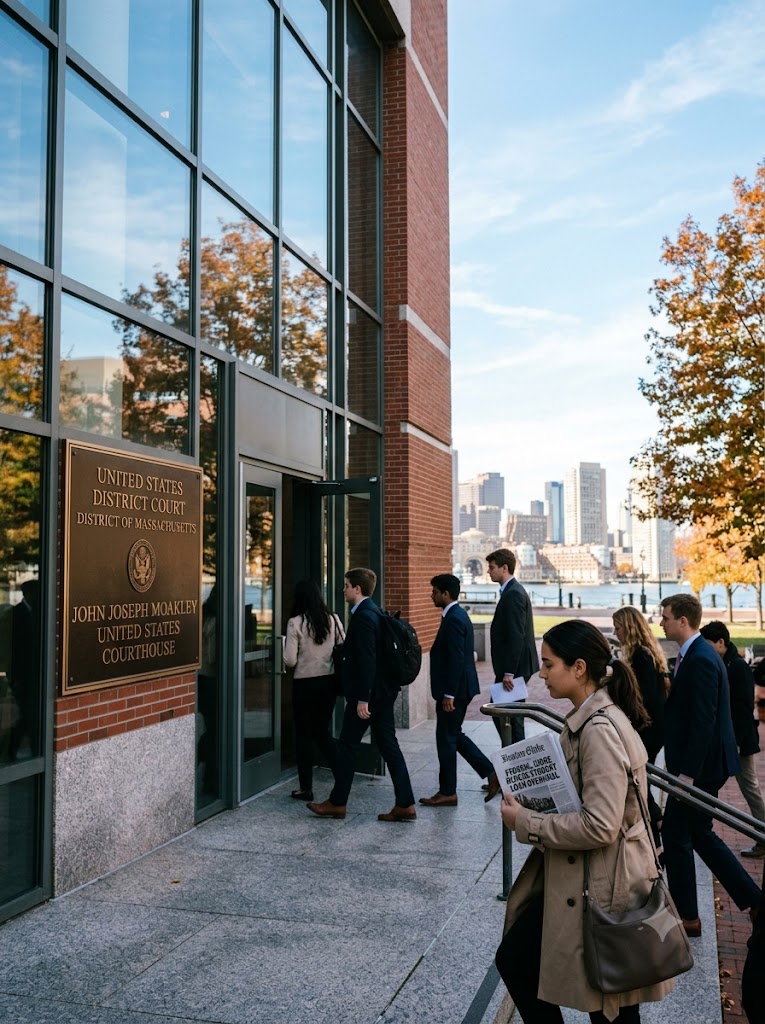
A controversial push to overhaul the U.S. student debt system crashed into a judicial wall this week.
On Tuesday, U.S. District Judge Myong Joun in Massachusetts and District Judge Amir Ali in Washington, D.C., issued separate rulings blocking the Trump administration’s new restrictions on the Public Service Loan Forgiveness (PSLF) program. Set to take effect July 1, the policy would have stripped debt-relief eligibility from workers if the government decided their employer served a “substantial illegal purpose.”
The legal battle highlights a fierce debate over executive power. Could the Department of Education leverage a longstanding debt-forgiveness program to penalize organizations that clash with the White House’s political priorities?
In his ruling, Judge Joun made it clear: no, it cannot.
Key Takeaways from the PSLF Ruling
For those tracking federal student loan policy, the judicial block hinges on three main legal conclusions:
- The “Substantial Illegal Purpose” Test: The proposed rule allowed the Education Secretary to disqualify employers supporting causes like undocumented immigrants, gender-affirming care (which the administration termed “chemical castration”), or diversity, equity, and inclusion (DEI).
- First Amendment Concerns: Judge Joun vacated the policy because it exceeded the agency’s statutory limits and threatened free speech. He argued the administration was illegally trying to force employers to conform to its own ideological worldview.
- Lack of Criminal Basis: The court rebuked the Department of Education for untethering its definition of “illegal activity” from actual criminal statutes. “The Department cannot create new criminal prohibitions through rulemaking,” Joun wrote.
Also read:
- A Nation Divided at 250: Inside the Clash Between Trump’s Freedom 250 and America250
- Trump Student Loan Policy Changes 2026: New Caps, RAP, and the End of SAVE
The Numbers Behind the Legal Fight
Created by Congress in 2007, the PSLF program offers a straightforward deal: college graduates who take lower-paying government and nonprofit jobs get their remaining federal student loans forgiven after 10 years (120 qualifying payments). So far, the initiative has canceled debt for over 1 million Americans.
In court, the math behind the Trump administration’s proposed changes simply didn’t hold up.
Judge Joun pointed to the Education Department’s own internal estimates, which projected that fewer than 10 employers a year would actually be barred under the new framework. “The Department offers no explanation for why a Final Rule with such sweeping consequences is necessary to address the possibility that, at most, ten employers each year may be engaging in illegal activity,” Joun noted in his decision.
The lopsided nature of the legal fight was also telling. More than 100 supporting briefs were filed by a coalition of over 20 states, cities, and nonprofits opposing the rule. By contrast, not a single brief was filed in defense of the administration’s changes.
Reactions from Advocates and the Administration
Advocates immediately hailed the ruling as a victory against government overreach. New York Attorney General Letitia James, who co-led the challenge across 22 states and the District of Columbia, said the decision “stopped the federal government from turning a program created to honor public service into a weapon for political retaliation.”
Nonprofit and education leaders shared that relief. Diane Yentel, President and CEO of the National Council of Nonprofits, called the ruling a massive win for communities relying on local charities. Aaron Ament, President of Student Defense, stressed that “public servants should not have to worry that the federal government will punish them because of their employer’s mission or perceived political views.”
The Education Department, however, is standing its ground. Under Secretary of Education Nicholas Kent stated the agency is evaluating its next steps. “The Department stands behind this commonsense policy to ensure that taxpayer dollars are never used to subsidize illegal activities,” Kent said, arguing the program was never meant to fund groups that “facilitate illegal immigration, or support the mutilation of children.”
Common Questions on the Ruling
Why did Judge Myong Joun block the new PSLF rule?
Judge Joun blocked the rule primarily because the Department of Education exceeded its legal authority and risked violating the First Amendment. The court found that the agency was unlawfully discriminating based on viewpoint, targeting nonprofits whose missions the Trump administration disfavored, and attempting to invent new criminal prohibitions through administrative rules rather than relying on existing law.
What does the Public Service Loan Forgiveness (PSLF) program actually do?
Created in 2007, PSLF forgives the remaining balance on federal student loans for borrowers who have made 120 qualifying monthly payments while working full-time for an eligible government or not-for-profit employer. The program exists to incentivize graduates to take vital public interest jobs—like teaching, nursing, and public defense—that typically pay much less than private-sector careers.
Sources Quoted:
- The Associated Press (AP News): Quotes from Judge Myong Joun, Diane Yentel (National Council of Nonprofits), Aaron Ament (Student Defense), and Nicholas Kent (Under Secretary of Education).
- Reuters: Quotes from New York Attorney General Letitia James and further analysis on the First Amendment implications of Judge Joun’s ruling.

Leo Falsafi is a digital marketing veteran and senior journalist at Virlan.co, where he covers the intersection of digital marketing, gaming, and breaking US trending news. With nearly two decades of hands-on experience in SEO and digital strategy, Leo has consulted for and scaled hundreds of companies. His deep industry roots allow him to deliver sharp, fact-checked insights and analysis on the trends shaping today’s digital landscape.