In the current search landscape, where algorithmic updates heavily penalize scaled abuse and irrelevant link-building, the value of a genuinely earned, high-quality editorial link has never been higher.
When forecasting the SEO impact for a specialized online service—particularly in highly competitive US and UK digital markets—securing a guest post placement with specific, high-trust metrics provides a reliable blueprint for organic growth.
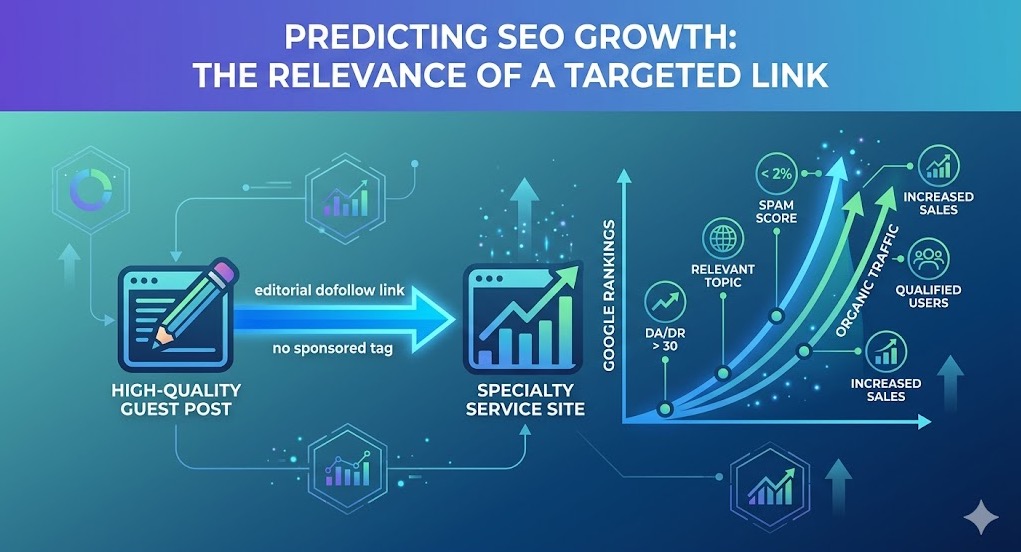
Here is a data-driven look at how a permanent, dofollow link from a niche-relevant blog (DA/DR > 30, Spam Score < 2%) impacts Google rankings and bottom-line traffic.
The Anatomy of the Placement
To predict the outcome, we first have to understand the specific weight of the variables involved in this scenario:
- Topical Relevance: The host blog operates in a related specialty. Google’s algorithms, particularly following the March 2024 Core Update, prioritize topical authority. A link from a site within your semantic neighborhood passes far more contextual value than a higher-DR link from an unrelated general news site.
- DA/DR > 30: Domain Authority (Moz) and Domain Rating (Ahrefs) above 30 indicate a healthy, established site with its own solid backlink profile. It is powerful enough to move the needle for specialized internal pages, but realistic enough to acquire without massive PR budgets.
- Spam Score < 2%: This is critical. A spam score under 2% indicates a clean neighborhood. The host site does not engage in link farming or host toxic outbound links, meaning the link equity passed to your service page is “clean” and carries no algorithmic risk.
- Permanent, Dofollow, No “Sponsored” Tag: By omitting the
rel="sponsored"attribute, the link is read by search crawlers as a pure editorial endorsement. It allows the maximum flow of PageRank directly to your target URL.
The Timeline: When Do Rankings Actually Move?
SEO forecasting requires realistic timelines. The impact of a high-quality link is rarely instantaneous. Here is the typical lifecycle of the ranking increase:
- Crawling and Indexing (Days 1–7): Googlebot crawls the new guest post and registers the link. You may see the link appear in Google Search Console.
- The “Google Dance” (Weeks 2–4): The target page may experience minor volatility. Google is recalculating the page’s authority and testing it against user intent for target queries.
- Stabilization and Ascenscion (Weeks 4–8): The true weight of the link sets in. If the target page is technically sound, you will typically observe a steady climb in SERP positions for the primary keywords associated with the page, as well as secondary long-tail variations.
Forecasting the Traffic Impact
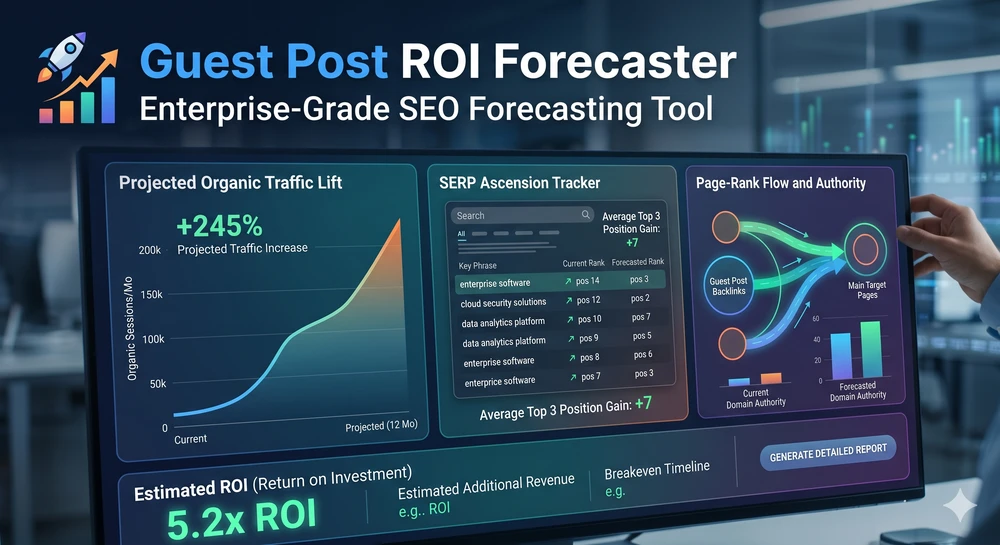
Predicting exact traffic numbers is an inexact science, but you can forecast the trajectory of your organic growth based on the following mechanics:
1. Targeted Keyword Lift
The most immediate impact will be on the specific URL receiving the backlink. If the anchor text used in the guest post is natural and partially matches your target query, that specific service page will see a bump in visibility. Moving from Position 12 (Page 2) to Position 7 (Page 1) can increase the Click-Through Rate (CTR) from virtually 0% to roughly 3-5%, resulting in a tangible influx of qualified users.
2. The Halo Effect on Domain Authority
A clean, DR30+ link doesn’t just help the target page; it lifts the entire domain. The PageRank flows through the target page and distributes to other areas of your site via your internal linking structure. Over a 3-to-6-month period, you will likely see organic impressions rise across the board, even for pages that did not receive the direct backlink.
3. Increased Crawl Budget and Frequency
Earning trust from a clean, relevant domain signals to Google that your site is an active participant in its industry ecosystem. Consequently, Googlebot will likely crawl your site more frequently, allowing your new content and technical updates to be indexed faster.
The Technical Multiplier
It is vital to remember that link equity acts as a multiplier, not a substitute for a highly optimized foundation. The traffic increase from this guest post will be exponential if the receiving site is technically flawless.
In highly competitive sectors—whether that involves high-ticket B2B software, specialized financial consulting, or high-volume consumer entertainment like free slots—a backlink’s power is fully realized only when the target page boasts clean, modular code. If the incoming traffic lands on a mobile-first interface optimized for Core Web Vitals (minimal Cumulative Layout Shift, fast Largest Contentful Paint) and utilizes precise JSON-LD schema to communicate its exact purpose to search engines, the resulting engagement metrics will solidify the new, higher rankings permanently.
Top Tools for Forecasting and Tracking Guest Post ROI
To execute a predictable link-building strategy and measure the resulting organic growth, utilizing a highly precise SEO stack is critical. Here are the industry-standard tools required to vet host sites and track your campaign’s impact:
- Moz Pro: The authoritative source for validating the safety and power of a prospective link. Use Moz’s Link Explorer to confirm the host blog meets the Domain Authority (DA) > 30 threshold and to ensure the Spam Score strictly remains below 2%, guaranteeing a clean link neighborhood.
- Ahrefs: Essential for evaluating the host domain’s true inbound link equity and outbound linking practices. Use Ahrefs to check the Domain Rating (DR) and verify the blog regularly issues permanent, dofollow links without injecting
rel="sponsored"tags. Its organic traffic forecasting helps predict the raw click-volume potential of the placement. - Semrush: The premier platform for analyzing semantic relevance. Use Semrush’s Domain Overview to confirm the host site’s ranking keywords align tightly with your targeted online services, ensuring the link equity passed is topically relevant and signals authority in your specific niche.
- Screaming Frog SEO Spider: Because a backlink acts as a multiplier for your existing technical foundation, run a deep crawl prior to acquiring the link. Verify that your target landing page features clean, modular architecture, flawless JSON-LD schema integration, and optimized Core Web Vitals to fully capitalize on the incoming PageRank.
- Google Search Console (GSC) & GA4: The definitive platforms for tracking the timeline of your ROI. Use GSC to monitor exactly when the guest post is crawled and indexed (the start of the “Google Dance”), and utilize GA4 to measure the resulting stabilization and upward trajectory in highly qualified organic traffic.
FAQ
The impact of a high-quality guest post typically unfolds over 4 to 8 weeks. While Googlebot may crawl and index the new link within the first 7 days, it generally takes several weeks of algorithmic calculation—often characterized by slight SERP volatility—before the target page stabilizes at a higher ranking position.
Following recent Google Core Updates, search algorithms prioritize semantic context and topical authority over raw metric scores. A backlink from a highly relevant, niche-specific blog (even at DA 30) passes far more targeted ranking signals to your specialized service page than a link from a higher-DA, generalized news site with no topical connection.
A spam score below 2% indicates a “clean” link neighborhood. It means the referring domain does not engage in manipulative link-building tactics, host toxic outbound links, or trigger algorithmic red flags. This ensures the PageRank passed to your site is safe and carries no risk of manual or algorithmic penalties.
rel="sponsored" tag matter for guest posts? Yes. When a permanent link lacks a “sponsored” or “nofollow” attribute, search engine crawlers treat it as a pure, organically earned editorial endorsement. This allows the maximum amount of link equity (PageRank) to flow directly to your target URL, significantly increasing its ranking potential.
Yes, through the “halo effect.” While the specific URL receiving the backlink will see the most direct ranking lift, the acquired link equity flows through that page and distributes to other pages via your internal linking structure. Over time, this elevates the overall authority of your domain, leading to increased crawl frequencies and broader organic visibility across the site.
Leo Falsafi is a digital marketing veteran and senior journalist at Virlan.co, where he covers the intersection of digital marketing, gaming, and breaking US trending news. With nearly two decades of hands-on experience in SEO and digital strategy, Leo has consulted for and scaled hundreds of companies. His deep industry roots allow him to deliver sharp, fact-checked insights and analysis on the trends shaping today's digital landscape.