
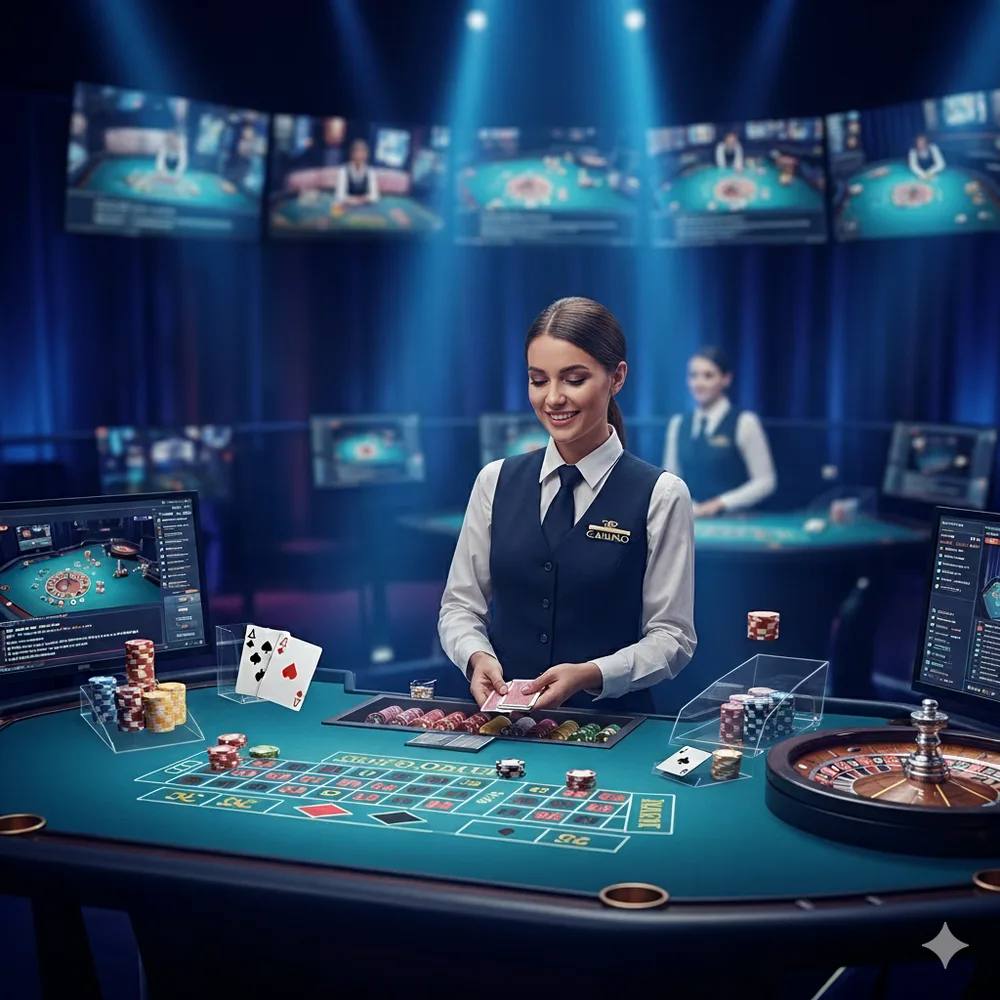
Gambling used to be a private loop between player and screen. Live dealer rooms changed that loop into a small stage where chance, timing, and people meet. The cards and dice matter, of course, but what keeps viewers leaning forward is everything around them – the voice, the rhythm, the way a pause can lift a heartbeat before a reveal.
Theatre needs presence. In a live room, presence comes from trained hosts, set design, and a broadcast grammar that guides attention. The result is closer to a show than a software widget – a shared moment where luck arrives in plain sight.
The Human Element in Digital Play
Machines resolve wagers with perfect silence. People bring tempo. A good dealer keeps eye contact with the lens, narrates the round in clean phrases, and reads the chat while hands move. Small cues – a half-smile, a palm held still before a final turn – carry more weight than any animation.
If you want a neutral reference for how studios frame that interaction, a focused live casino page shows the format without fuss. Treat it as a layout demo – tables, camera switches, and chat flow – rather than a call to play.
Trust grows from these micro-signals. Clear diction suggests control; steady hands reassure during shuffles; consistent routines calm nerves. Randomness remains random, yet the delivery gives it a shape that feels fair and watchable.
Chance Framed as a Show
Every round has beats. The cut, the deal, the reveal – each sits on a cadence. Dealers stretch or compress time to build suspense: a slight pause before the river card; a lean into the lens before a dice lift. Ritual replaces raw waiting with anticipation, and anticipation is the fuel of theater.
Pacing matters. Short, clipped rounds keep energy high; longer arcs let the room breathe between bigger stakes. Visual resets – a clean table sweep, a centered shoe – act like scene changes. The game is still mathematically based under the hood, but the presentation gives it a story arc that you can feel.
Interaction as Engagement
The chat is in the front row. Players greet the host, swap short comments, and release tension with emojis after swings. Dealers answer by name, echo a joke, or steady the room after a sharp loss. That loop turns solo play into a social watch.
Well-run rooms set healthy norms early. Hosts outline table etiquette in one sentence, keep language simple, and deflect heat with humor. When others win, viewers clap in text; when someone tilts, the tone stays kind. The outcome is a small community that shares a stake at the moment, even when hands fall differently.
Visual and Emotional Atmosphere
Live rooms borrow from studio TV. Sets lean on clean lines and warm materials, so the shot reads well on small screens. Lighting is soft on skin and crisp on the felt; lenses sit wide for context and snap tight for reveals. Sound is mixed to keep the voice forward and the room hush present without hiss.
These choices are deliberate. Good staging does three things:
- Guides the eye – light on the active area, gentle fall-off elsewhere.
- Supports emotion – music is minimal or absent, so the voice carries the peaks.
- Reduces fatigue – colors that don’t glare; fonts you can read at arm’s length.
When the senses are cared for, sessions feel shorter and players linger because the room is easy to be in.
Community Around the Stage
Regulars form around favorite hosts and times of day. People start to recognize each other’s handles, celebrate streaks, and nudge newcomers toward table basics. Hosts remember returning viewers and pick up threads from prior nights – a tiny continuity that makes the space feel lived in.
Over weeks, that continuity hardens into culture. Small in-jokes recur; social rules settle; a room grows its own tone. Platforms that respect this treat the table like a show with seasons – same set, rotating cast, recurring beats – rather than a disposable widget. The outcome is loyalty that comes from belonging, not from flashing banners.
Beyond the Game
Live dealer play shows how chance becomes theater when three elements line up – people, timing, and proof. The dealer brings the human touch; pacing turns outcomes into little stories; on-screen logs and visible procedures keep the magic honest. Together, they create a space where randomness feels transparent and shared.
That blend has lessons that extend beyond gambling. Any digital service that deals in suspense – auctions, drops, live draws – can borrow the same grammar: a calm host, a clear ritual, and a room built for eyes and ears, not noise. Keep the steps simple, the cues consistent, and the audience will lean in because they know what to look for.
In the end, the cards and dice sit at the center, but they are not the show on their own. The show is the way a person holds the moment – the pause before a turn, the voice that names the result, the smile that lets a room breathe together. Live dealers make the chance feel human, and that is why a table can feel like a stage.
 Online Poker : Phil Hellmuth, Tom Dwan and MrBeast on Hustler Casino Live stream !
 Best UK Casino Not on Gamstop: Detailed Guide on Selecting the Right Site
 Leading 5 Online Casinos with Crypto Payments
 The Biggest Casino Games and the Brands that Offer Them
 5 Most Popular Blackjack Variants in Online Casinos
 What Is iGaming? Mobile Betting is Expanding in the US
 Online Casino for Aussies
 Top 3 Benefits of Being a High Roller
 What to Look for While Joining Online Poker Website
 Online Sports Betting Errors, Principles, Tricks for Beginners
 Types of Poker Bonuses and Poker Fish Defined
 Best Crypto & Bitcoin Casinos