
The global online gambling market is undergoing a period of significant expansion, with projections indicating robust growth over the coming years.
While specific data for “online casinos” is frequently integrated within broader “online gambling” market figures, a comprehensive analysis reveals key countries that exhibit substantial online casino activity.
The United Kingdom, the United States, and Brazil are identified as the largest online gambling markets by revenue in 2024, with the United States anticipated to achieve global market leadership by 2030. These markets are characterized by diverse regulatory landscapes and distinct consumer preferences.
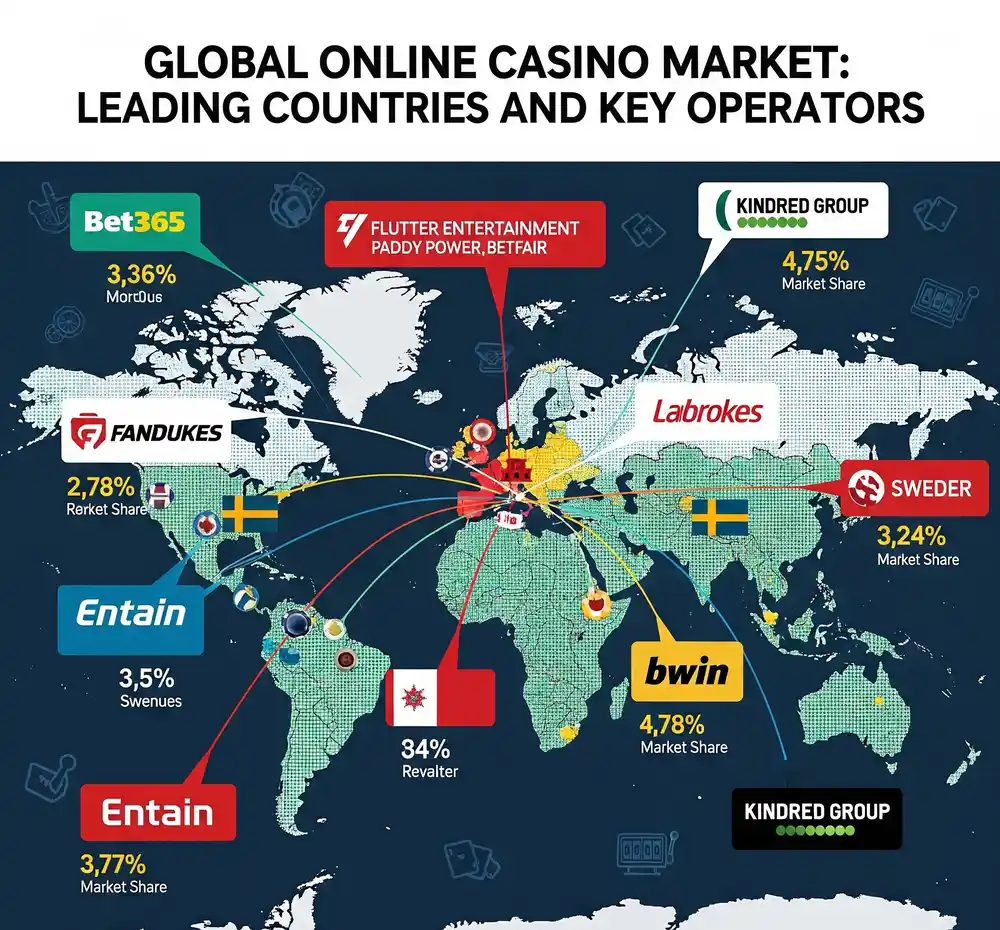
The global online gambling landscape is largely dominated by major multinational entities such as Flutter Entertainment, Entain plc, 888 Holdings, and Kindred Group, which operate numerous brands across various regulated jurisdictions.
Alongside these global players, localized operators also hold significant positions within specific national markets. The market’s expansion is primarily propelled by the increasing penetration of smartphones and internet access, coupled with the continuous evolution of regulatory frameworks worldwide.
Despite this growth, the industry faces ongoing challenges related to regulatory complexities, the imperative for responsible gambling practices, and the persistent efforts to counter illegal offshore operators.
The Evolving Landscape of Online Gambling
The online gambling market represents a highly dynamic sector experiencing rapid and substantial growth. Its expansion is intricately linked to advancements in technology, particularly the widespread adoption of smartphones and enhanced internet accessibility across the globe.
The global online gambling market was estimated at approximately USD 106.22 billion in 2024 and is projected to increase to USD 117.5 billion in 2025, reflecting a compound annual growth rate (CAGR) of 10.6%. Further projections anticipate the market reaching USD 186.58 billion by 2029, growing at a CAGR of 12.3% from 2025.
Another market assessment provides a slightly different estimate, placing the 2024 market size at USD 78,662.1 million, with a projection to reach USD 153,566.1 million by 2030, at an 11.9% CAGR from 2025. These figures consistently point to robust double-digit growth within the sector. A significant factor underpinning this growth is the pervasive use of smartphones, which account for nearly 80% of all online gambling access.
The overwhelming reliance on mobile devices for online gambling access fundamentally shapes the strategic imperatives for operators. Given that the vast majority of users engage with platforms via smartphones, the quality of the mobile user experience directly influences user engagement, retention, and ultimately, market share. This necessitates a strategic shift beyond mere mobile compatibility towards comprehensive mobile-first development.
Operators must prioritize optimized application performance, intuitive mobile interfaces, and the integration of mobile-specific features to effectively capture and retain this dominant user base. Those who do not fully embrace this mobile-centric approach risk facing a substantial competitive disadvantage in the evolving market.
It is important to clarify the scope of this report. The user’s inquiry specifically requests information on “online casinos.” However, much of the publicly available market data aggregates the broader “online gambling” market, which encompasses a variety of segments including sports betting, poker, bingo, and casino games.
For the purpose of providing a comprehensive overview and consistent country rankings, this report will primarily leverage the broader “online gambling” market size figures. Where detailed information is available, specific online casino operators and their presence will be identified. This distinction is crucial, as market drivers and regulatory nuances can vary significantly between these segments.
For instance, France, despite being a prominent online gambling market, explicitly prohibits online casino operations, with its revenue derived from other legalized forms of online wagering.
Global Online Gambling Market Overview
As discussed, the global online gambling market is characterized by substantial expansion, with a consensus among market analyses pointing to strong double-digit growth rates over the coming years. This growth is not uniform across all segments or regions, with specific areas demonstrating particular dynamism.
Dominant Segments
Within the online gambling ecosystem, sports betting consistently stands out as the largest and fastest-growing segment. In 2024, sports betting alone accounted for a significant share of the market, generating USD 44,196.6 million in revenue, representing 56.19% of the total online gambling market. This highlights its pivotal role in shaping overall market dynamics.
The pronounced dominance and rapid expansion of sports betting present a strategic consideration for online casino operators. With over half of the market’s revenue and a significant portion of its growth stemming from sports wagering, pure-play online casino businesses may find their overall market capture limited.
This market dynamic suggests that to maximize growth and market share, online casino operators could benefit from strategic diversification into sports betting. Alternatively, developing integrated platforms that offer both casino games and sports betting allows for cross-promotion and the cultivation of a unified user base. The operational models of major entities like DraftKings and FanDuel, which successfully offer both sports betting and online casino products, exemplify this approach to capturing a broader market segment.
Regional Highlights
Geographically, Europe held the largest revenue-generating market share in 2024, maintaining over 49.1% of the market as of 2025. This regional prominence is largely attributed to high internet penetration rates, well-established regulatory environments, and a mature gambling culture that has long embraced various forms of wagering.
Looking ahead, the Asia-Pacific region is projected to experience the fastest growth during the forecast period. This anticipated surge is driven by increasing internet and smartphone penetration, a burgeoning young and digitally-savvy population, and rising disposable incomes across its diverse economies. Countries such as India, the Philippines, and Thailand are particularly noted for a rapid increase in online betting and casino game participation.
North America also holds a substantial position, accounting for 21.1% of the global online gambling market in 2024. Within this region, the United States is projected to lead the global market in terms of revenue by 2030. Concurrently, Canada is expected to register the highest compound annual growth rate (CAGR) from 2025 to 2030, with projections indicating it will reach USD 8,722.5 million by 2030.
The projected rapid growth in Asia-Pacific and Canada, alongside the anticipated leadership of the United States, signals a notable shift in the geographic focus for future investment and market entry. This trend suggests a maturation of established European markets and the emergence or expansion of new, less saturated markets.
These newer growth territories are often propelled by evolving regulatory landscapes, such as Canada’s legalization of single-event sports betting in 2021 , and increasing digital adoption in developing economies. Companies seeking aggressive growth strategies would benefit from prioritizing thorough market research and strategic entry into these high-CAGR regions, potentially through partnerships or acquisitions, to capitalize on early-mover advantages or rapidly expanding consumer bases.
The United States market, despite its current regulatory fragmentation, represents immense long-term potential due to its sheer size and ongoing legalization efforts.
Leading Online Gambling Markets by Country (Ranked by Revenue)
This section provides a detailed ranking of the largest online gambling markets based on 2024 revenue figures, primarily sourced from direct market assessments. It is important to reiterate that these figures represent the broader online gambling market, encompassing online casinos, sports betting, poker, and other forms of digital wagering.
| Rank | Country | 2024 Online Gambling Revenue (USD Billions) | Key Regulatory Note/Market Driver |
|---|---|---|---|
| 1 | United Kingdom | $12.48 | Well-regulated by UKGC; strong betting culture, robust digital infrastructure. |
| 2 | United States | $10.96 | Rapid state-by-state legalization of sportsbooks & casinos; projected 2030 global leader. |
| 3 | Brazil | $10.00 | Emerging market with growing interest and potential regulatory developments. |
| 4 | Australia | $6.55 | Avid gambling culture, high disposable incomes; active crackdown on illegal offshore operators. |
| 5 | Italy | $4.51 | Regulated by ADM; popular online casino, poker, sports betting; largest total gambling market in Europe. |
| 6 | France | $3.83 | Regulated environment by ANJ; online casinos are illegal; revenue from sports betting, poker, horse betting. |
| 7 | Germany | $3.65 | 2021 State Treaty legalized online gambling (sports, slots, poker) with stringent rules. |
| 8 | Canada | $2.55 | Significant growth from 2021 single-event sports betting legalization; highest projected CAGR 2025-2030. |
| 9 | Sweden | $2.10 | Highly regulated market in Europe; high online gambling share (68.3%). |
| 10 | Spain | $1.60 | Popular sports betting, online slots, poker; online gambling share of 14.2%. |
| Data primarily from , with additional context from. |
Detailed Country Analysis:
1. United Kingdom – $12.48 billion The United Kingdom maintains its position as the world’s largest online gambling market. This leadership is underpinned by a highly regulated industry, meticulously overseen by the UK Gambling Commission (UKGC), which ensures strict adherence to rules and robust consumer protections. The UK benefits from a long-standing betting culture and a highly developed digital infrastructure, which together have fostered a thriving online environment. The foundational 2005 Gambling Act legalized and regulated online gambling, laying the groundwork for the UK’s sustained dominance in this sector. Online betting, poker, and casino games are all immensely popular among the populace.
2. United States – $10.96 billion The United States is experiencing a meteoric rise as a dominant force in online gambling. Its market expansion is primarily driven by the ongoing state-by-state legalization of online sportsbooks and casinos. As of 2024, over 30 states have legalized some form of online gambling, with 7 US states having fully legalized online casino games and poker as of 2025. This fragmented, yet rapidly expanding, regulatory landscape has fueled an eightfold surge in online gambling revenue, from $2.5 billion in 2018 to nearly $20 billion in 2023, with projections indicating a further doubling to $40 billion by 2029.
3. Brazil – $10 billion Brazil has rapidly emerged as a significant player in the global online gambling market, reflecting a growing interest and the potential for further regulatory developments within the country.
4. Australia – $6.55 billion Australia boasts a strong online gambling market, largely due to its population’s long-standing affinity for gambling and high disposable incomes. Online sports betting and casino platforms are prominent in the digital landscape. However, it is crucial to note that offshore online gambling companies are deemed illegal in Australia. These entities are often licensed in jurisdictions with minimal regulatory standards and have been known to refuse payouts or self-exclusion options. Australian regulators are actively pursuing decisive actions against such illegal offshore operations, aligning with broader international efforts to curb unregulated gambling.
5. Italy – $4.51 billion Italy stands as a major European gambling market, where online casino games, poker, and sports betting enjoy high popularity. The Agenzia delle Dogane e dei Monopoli (ADM) is the regulatory body overseeing gambling activities in the country. While Italy holds the top position as Europe’s largest total gambling market, recording a gross gaming revenue (GGR) of $22.89 billion, its online gambling revenue specifically accounts for $5.01 billion, representing 21.7% of its total gambling revenue.
6. France – $3.83 billion France’s online gambling market operates under a regulated environment established by the 2010 French Gambling Act, with the Autorité Nationale des Jeux (ANJ) responsible for oversight, focusing on consumer protection and fair play. A critical distinction for the user’s inquiry is that online casinos are explicitly illegal in France. Therefore, the reported market revenue for France is predominantly derived from legalized online poker, sports betting, and horse betting segments. This means that while France is a substantial online gambling market, it is not a significant online casino market in the traditional sense, a point of vital importance for any entity considering online casino market entry.
7. Germany – $3.65 billion Germany’s online gambling market is supported by the 2021 State Treaty on Gambling (Glücksspielstaatsvertrag), which legalized and regulated online gambling nationwide. This treaty permits online sports betting, slots, and poker, though it imposes stringent regulations, including strict deposit limits and advertising restrictions. Despite these tight controls, the market continues to grow, with online gambling accounting for 22.6% of the total gambling revenue.
8. Canada – $2.55 billion Canada’s online gambling market has experienced significant growth, largely stemming from the legalization of single-event sports betting in 2021 under Bill C-218. The Alcohol and Gaming Commission of Ontario (AGCO) oversees the province’s robust iGaming market, which has attracted numerous global operators. Canada’s progressive regulatory approach, combined with increasing interest in online casinos and sports betting, positions it as a major player in the industry, and it is projected to be the fastest-growing regional market from 2025 to 2030.
9. Sweden – $2.10 billion Sweden’s online gambling market is recognized as one of the most regulated in Europe. Online gambling constitutes a high proportion of its total gambling revenue, reaching 68.3%.
10. Spain – $1.60 billion Spain rounds out the list of the top 10 largest online gambling markets. Sports betting, online slots, and poker are the most popular forms of gambling in the country. Online gambling accounts for 14.2% of Spain’s total gambling revenue.
The direct correlation between new or expanded regulatory frameworks and market growth is a clear and observable pattern across these leading countries. The implementation of legislation such as Canada’s Bill C-218, Germany’s State Treaty on Gambling, and the ongoing state-level legalization efforts in the United States directly precede and drive market expansion. This occurs because legalization transitions previously unregulated or grey markets into formal, taxable, and more secure environments.
This shift attracts legitimate operators, enhances consumer trust, permits mainstream advertising, and formalizes revenue streams, all of which contribute directly to market expansion. For businesses, this means that closely monitoring and anticipating regulatory changes in emerging markets is crucial for strategic market entry and competitive positioning.
Governments, in turn, are increasingly recognizing the economic benefits, particularly in terms of tax revenue, that can be derived from regulating online gambling, suggesting a continued global trend towards legalization, albeit with varying degrees of restrictiveness.
Key Online Casino and Gambling Operators Across Major Markets
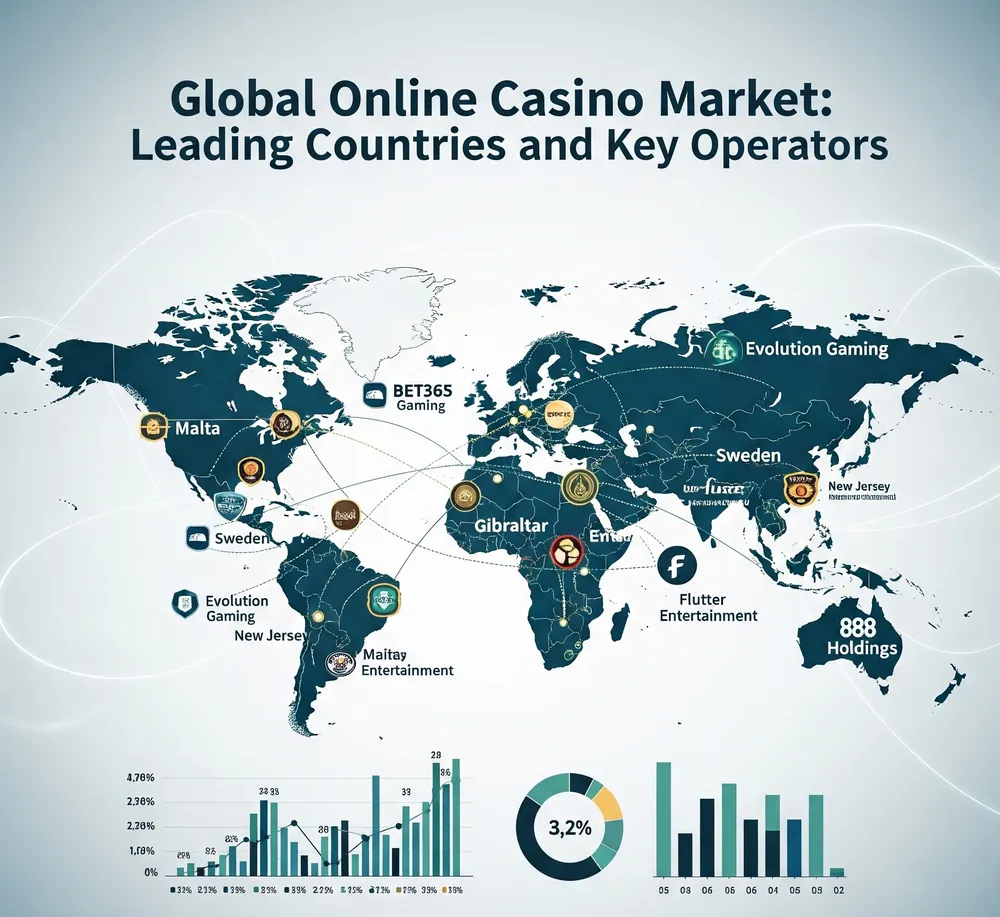
The online gambling industry is characterized by the presence of a few dominant multinational operators alongside numerous country-specific brands. This section identifies prominent players, detailing their operational reach and key brands, distinguishing between those with broad online gambling offerings and those specifically known for online casino products.
| Operator/Company Name | Key Brands (if applicable) | Primary Operational Countries (where online casino/gambling is offered) | Notes |
|---|---|---|---|
| Global & Multi-Jurisdictional Operators | |||
| Flutter Entertainment plc | FanDuel, Paddy Power, Betfair, Sky Betting & Gaming, PokerStars, Sportsbet, Sisal, Tombola, MaxBet, Adjarabet, Betnacional | US, UK, Ireland, Australia, Italy, Serbia, Georgia, Armenia, Brazil, Canada (Ontario) | World’s largest online betting company; strong focus on US (FanDuel); diversified portfolio. |
| Entain plc | Ladbrokes Coral Group, Bwin, William Hill (non-US), Foxy Bingo, Gala Casino | Australia, Belgium, Bulgaria, Canada (Ontario, Kahnawake), Croatia, Denmark, Estonia, France (gambling), Germany, Gibraltar, Greece, Georgia, Ireland, Italy, Mexico, Netherlands, New Zealand, Philippines, Poland, Portugal, Romania, South Africa | One of the largest sports betting & gaming groups; operates in over 20 countries; acquisitive strategy. |
| 888 Holdings PLC | William Hill, 888casino, 888poker, 888sport, Mr Green, SI Sportsbook, SI Casino | UK, Gibraltar, Spain, Italy, Denmark, Ireland, Romania, US (NV, NJ, DE, CO, PA, VA), Canada (Ontario) | Broad brand portfolio across online casino, poker, sports betting; significant US presence. |
| Kindred Group plc | Unibet, 32Red | Australia, Belgium, Denmark, Estonia, France (gambling), Gibraltar, Guernsey, Italy, Malta, Sweden, UK, Romania | Publicly listed until recently; wide European and Australian footprint. |
| Betsson AB | Betsafe, Europebet | Malta (licensed), 25 countries including Sweden, Peru, Mexico, Argentina, Greece, Baltic States, Canada (Ontario) | Holds licenses across Europe, Africa, North & South America; focuses on locally regulated markets. |
| Bet365 | Bet365 | UK (headquartered), Global presence including PA (US) | Leading global brand with high website traffic; strong in sports betting and casino. |
| DraftKings Inc. | DraftKings Casino | US (CT, MI, NJ, PA, WV), Canada (Ontario) | Primary focus on rapidly legalizing North American market; strong in sports betting & casino. |
| Codere | Yak, Codere Casino, Greenplay | Spain, Mexico, Colombia, Panama, Uruguay, Brazil, Argentina | Leading Spanish operator with significant LatAm presence; offers diverse gambling products. |
| Tipico | Tipico | Malta (headquartered), Germany, Austria, Croatia, Gibraltar, Colombia, US | Market leader in Germany; strong in sports betting and casino games. |
| Country-Specific Online Casino/Gambling Brands | |||
| United States (PA) | BetMGM Casino, betPARX PA, Golden Nugget, bet365 PA Casino, Fanatics Casino, Borgata Casino, Caesars Palace, DraftKings Casino, FanDuel Casino | Pennsylvania (and other US states for some) | Specific brands operating in Pennsylvania’s regulated online casino market. |
| Australia | Neospin, SkyCrown, WildTokyo, Mafia Casino, OnLuck, GoldenCrown, Neon54, Kingmaker, MyEmpire, Lunubet, Lucky7even | Australia | Prominent online casino brands offering pokies, table games, and live dealer. |
| Italy | Sisal, Lottomatica (Lottomatica, Better, Goldbet, Betflag, Planetwin365, Totosì) | Italy | Leading national operators in Italy’s regulated online gaming sector. |
| France | FDJ (La Française des Jeux), PMU (Pari Mutuel Urbain), Betclic, Betway France, bwin France Poker, bwin France Sportsbook, NetBet France, ParionsSport, partypoker France, PokerStars France, Unibet – France, Winamax, ZEbet – France, ZEturf – France | France | Online casinos are illegal in France; these operators offer online poker, sports betting, and horse betting. |
| Germany | Tipico, Bwin | Germany | Key operators within Germany’s regulated online gambling market. |
| Canada | BetMGM, Caesars, DraftKings, FanDuel | Canada (Ontario) | Major international and US-focused operators with a presence in Canada’s regulated market. |
| Spain | Codere | Spain | Leading Spanish operator with a strong online presence. |
The widespread presence of major groups such as Flutter Entertainment and Entain plc across numerous countries, often facilitated through strategic acquisitions (e.g., Sisal by Flutter, William Hill’s non-US business by 888 Holdings), points to a significant trend towards market consolidation.
This indicates that operational scale, access to diverse regulated markets, and the ability to leverage a broad portfolio of brands are becoming critical competitive advantages. Acquisitions enable rapid market entry and expansion without the complexities of building operations from the ground up in new regulatory environments.
This trend is likely to result in a market dominated by fewer, larger players, making it more challenging for smaller, independent operators to compete effectively unless they specialize in niche areas or cultivate strong local ties. Furthermore, this dynamic underscores the increasing importance of optimizing regulatory compliance across multiple jurisdictions.
Conversely, companies like DraftKings and FanDuel, despite their substantial size, demonstrate a concentrated focus on the rapidly legalizing North American market (primarily the US and Ontario, Canada). This approach represents a deliberate strategy to capitalize on the immense, albeit fragmented, growth potential of the region. By focusing on both sports betting and online casino products, these operators are well-positioned to capture the full spectrum of legalized digital gambling in these emerging jurisdictions.
This concentrated strategy creates a distinct competitive landscape in North America, where these focused players can achieve significant market penetration and brand recognition, potentially posing a formidable challenge to global giants with more diversified international portfolios.
Regulatory Frameworks and Market Dynamics
The regulatory environment plays a fundamental role in shaping the online gambling market. The legalization and subsequent regulation of online gambling directly drive market expansion. Countries that have established robust regulatory bodies and clear legal frameworks, such as the United Kingdom with its UK Gambling Commission (UKGC), tend to foster larger, more mature, and competitive markets. Conversely, fragmented or highly restrictive regulations can create complex operational challenges for operators.
The United States: A Fragmented but Growing Landscape
In the United States, the legalization of online gambling is a state-by-state process, resulting in a patchwork regulatory landscape. As of 2025, seven US states have fully legalized online casino games and poker, while 30 states have legalized online sports betting between 2018 and 2024. This creates both significant opportunities for market entry and considerable challenges for operators navigating diverse legal requirements. Pennsylvania, for example, is highlighted as a state that permits iGaming, demonstrating substantial revenue growth in its regulated market.
European Regulatory Diversity
Europe presents a varied regulatory landscape across its leading markets:
- United Kingdom: The UK’s market, overseen by the UKGC, is highly regulated, fostering a robust and competitive environment for online gambling.
- Germany: The 2021 State Treaty on Gambling legalized online gambling nationwide, encompassing sports betting, slots, and poker. However, it introduced stringent rules, including strict deposit limits and advertising restrictions, reflecting a cautious approach to market expansion.
- France: A notable exception, France maintains a prohibition on online casinos. Its regulatory framework, overseen by the Autorité Nationale des Jeux (ANJ), focuses on online sports betting, poker, and horse racing. This approach also serves to protect state-owned monopolies like FDJ (La Française des Jeux) and PMU (Pari Mutuel Urbain).
- Italy: Regulated by the Agenzia delle Dogane e dei Monopoli (ADM), Italy’s market is characterized by the popularity of online casino games, poker, and sports betting.
- Sweden: Recognized as one of the most regulated markets in Europe, Sweden’s framework emphasizes control and consumer protection.
The varying regulatory environments globally create a complex operational landscape for online gambling operators. This regulatory patchwork means that operators face a significant compliance burden, requiring them to adapt their products, marketing strategies, and responsible gambling measures to the specific requirements of each jurisdiction.
While this complexity might lead some operators to seek licenses in less stringent jurisdictions, legitimate multinational operators bear higher compliance costs due to their commitment to operating within established legal frameworks across multiple countries. The increasing enforcement actions against illegal offshore operators, as seen in Australia and the US, suggest a global push for market integrity and consumer protection.
This trend implies that robust legal and compliance teams, coupled with deep regulatory expertise, are becoming significant competitive assets, favoring well-resourced, compliant entities and further marginalizing unlicensed operations.
Australia: Crackdown on Offshore Operators
In Australia, all legal online gambling providers are mandated to offer self-exclusion options to their customers. A key regulatory challenge in Australia, similar to other markets, is the proliferation of illegal offshore online gambling companies.
These entities are often licensed in jurisdictions with minimal regulatory standards and have been reported to refuse payouts or fail to provide self-exclusion mechanisms. There is a concerted effort by authorities, including Attorneys General and tribal groups in the United States, to pursue decisive action against such offshore gambling operations. These actions include seeking injunctive relief, website and domain name seizures, and coordinating with financial institutions to block payments to these illicit sites. This aggressive stance highlights a growing global commitment to safeguarding consumers and ensuring market integrity by combating unregulated gambling.
The recurring emphasis on consumer protection, responsible gambling, and self-exclusion across various regulatory discussions (e.g., UKGC, ANJ, Australian Communications and Media Authority (ACMA), and US concerns) signals a maturing industry focus. As online gambling continues its growth trajectory, so do concerns regarding problem gambling and associated social costs. Regulators are responding by implementing increasingly stringent consumer protection measures, which are becoming a non-negotiable aspect of legitimate operation.
This implies that proactive investment in responsible gambling initiatives, the provision of robust self-exclusion tools, and transparent operational practices are not merely compliance requirements. Instead, they are increasingly integral to an operator’s social license to operate and their long-term sustainability. Companies that prioritize and visibly invest in these areas are likely to gain a reputational advantage and foster greater trust with both consumers and regulators.
6. Conclusion and Future Outlook
The online gambling market is defined by its substantial global growth, driven primarily by widespread digital adoption and the continuous evolution of regulatory landscapes worldwide.
In 2024, the United Kingdom, the United States, and Brazil emerged as the leading markets by revenue, with the United States projected to assume global market leadership by 2030. Sports betting remains the largest and fastest-growing segment, significantly influencing overall market dynamics and presenting strategic considerations for online casino operators.
A clear trend towards market consolidation is evident, with major multinational operators expanding their global footprint through strategic acquisitions and multi-jurisdictional licensing. The pivotal role of regulatory frameworks cannot be overstated, as they directly shape market access, operational strategies, and consumer protection measures.
Looking ahead, continued robust growth is anticipated for the online gambling market, particularly within North America and Asia-Pacific, as more regions regulate and embrace digital wagering.
The trend of market consolidation by large, diversified operators is expected to persist, potentially leading to a more concentrated industry landscape. Increased regulatory scrutiny, especially concerning consumer protection and the concerted combatting of illegal offshore operations, will continue to shape the industry’s operational environment.
Technological innovation, particularly in mobile platforms and the development of new game formats, will remain a key competitive differentiator for operators. To ensure long-term sustainability and maintain regulatory favor, operators will need to meticulously balance aggressive growth strategies with robust and proactive responsible gambling initiatives.
Leo Falsafi is a digital marketing veteran and senior journalist at Virlan.co, where he covers the intersection of digital marketing, gaming, and breaking US trending news. With nearly two decades of hands-on experience in SEO and digital strategy, Leo has consulted for and scaled hundreds of companies. His deep industry roots allow him to deliver sharp, fact-checked insights and analysis on the trends shaping today's digital landscape.