
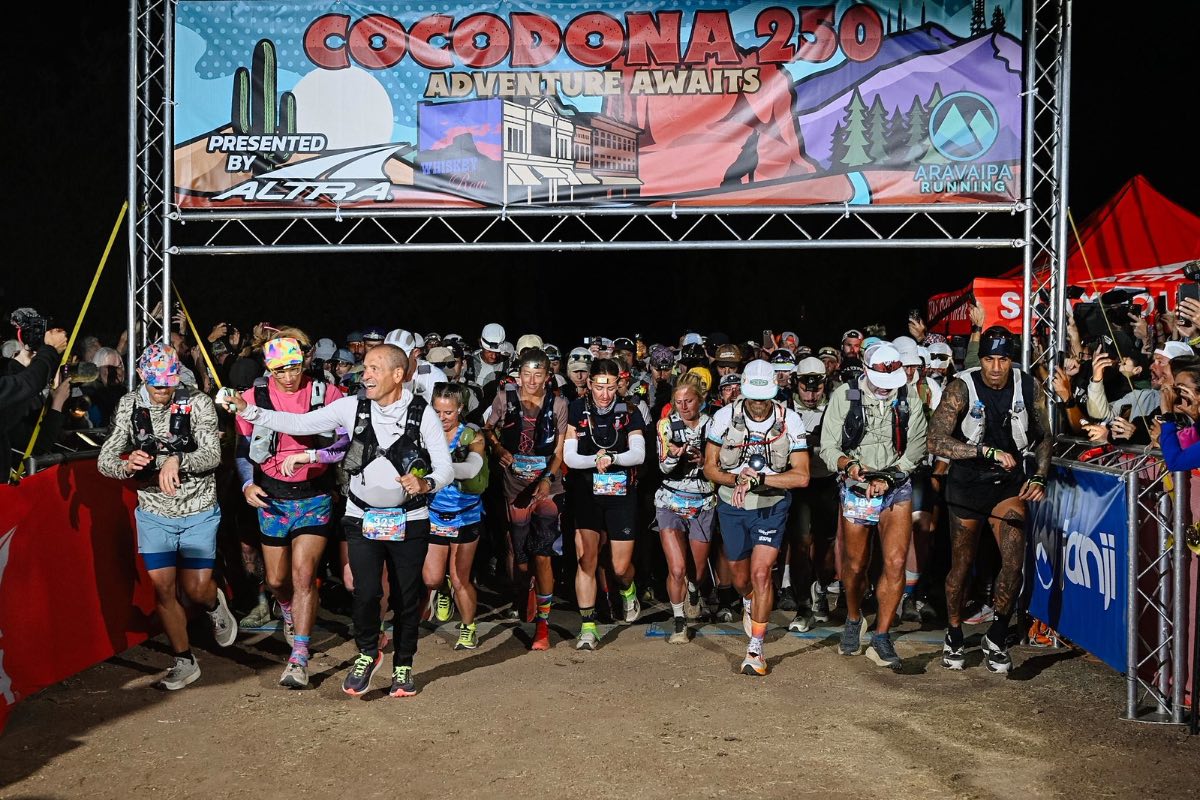
Tragedy Strikes the 2026 Cocodona 250 Ultramarathon
The global ultramarathon community is reeling from a devastating event that unfolded during the sixth edition of the Cocodona 250 Mile race in Arizona. On Tuesday, May 5, 2026, roughly 43 hours into the grueling 253-mile endurance event, a participant experienced a severe medical emergency on the course and tragically passed away. The harrowing news, confirmed by race organizers and race founder Jamil Coury late Tuesday night, has cast a profound shadow over one of the most challenging and celebrated ultramarathons in the world. As athletes continue to traverse the rugged landscapes from Black Canyon City to the high elevations of Flagstaff, they now carry the weight of this immense loss with them, honoring their fallen peer with every step forward toward the finish line.
The Cocodona 250 has quickly grown to become a cornerstone event in the world of extreme endurance sports, attracting the most elite athletes from across the globe. However, this year’s race will forever be remembered for this profound tragedy. While the sheer physical and mental demands of traversing 253 miles on foot are well understood by those who participate, the sudden loss of life serves as a stark and heartbreaking reminder of the inherent vulnerabilities present in such extreme human endeavors.
Official Statements and the Decision to Continue
In the early hours of Wednesday morning, on Day 3 of the week-long festival, the race organization released an official statement to the public, the athletes’ crews, and the thousands of fans watching the live broadcast. The gravity of the situation was evident in the careful and respectful tone adopted by the race directors.
“We are deeply saddened to share that a participant experienced a serious medical emergency today during the event and has passed away,” read the statement published across the organization’s social media channels. The organization immediately confirmed that the runner’s support crew and family had been notified before the news was made public.
During a live broadcast of the event, race founder Jamil Coury addressed the tragic incident directly, emphasizing the organization’s commitment to supporting those intimately affected by the tragedy while fiercely protecting the privacy of the deceased athlete. “Out of respect for their family and loved ones, we are not sharing additional personal details at this time, but our team is supporting those directly involved and will share more only if and when appropriate,” Coury stated to the watching audience.
Despite the heavy emotional toll, the race committee made the difficult decision to allow the competition to proceed as scheduled. This decision was deliberately made to honor the memory of the fallen athlete, allowing the remaining field to complete the monumental journey they had all set out to conquer. “The race is continuing on, but now in the runner’s honor,” Coury added. “We ask all participants and crew to carry the memory of this runner with you on the trails, the rest of this week and into the future.”
The Brutal Reality of the Cocodona 250 Course
To fully grasp the context of the 2026 Cocodona 250, one must understand the sheer magnitude of the course and the extreme conditions the athletes face. The 253-mile race, which began on Monday, May 4, requires runners to navigate a daunting route stretching from Black Canyon City, Arizona, all the way to Flagstaff. Participants are given a strict 125-hour time limit to complete the journey before the Saturday, May 9 cutoff.
The terrain itself is a relentless adversary. The course features over 38,000 feet of cumulative elevation gain, forcing runners to conquer a punishing mixture of technical singletrack, rugged doubletrack, exposed rock sections, and occasional stretches of tarmac as the route briefly passes through local Arizona towns. The 2026 edition, which boasts approximately 400 participants in the premier 250-mile event—alongside many more competing in the week-long festival’s 40-mile to 200-mile companion races—has been subjected to wildly unpredictable and extreme weather patterns.
Runners this year have experienced almost every conceivable type of weather condition over the span of just a few days. Reports from the course indicate that participants have battled extreme rain, relentless wind, intense daytime heat in the desert sections, and bitter cold overnight. Most notably, a solid amount of snow fell overnight on Mount Elden, the final major mountain obstacle that runners must climb before making their descent into the Flagstaff finish line. It is a physical and mental test unlike anything else in the sport, pushing human physiology to its absolute limits.
Race Standings: Competing Through the Grief
Before the tragic news permeated the entire field, the 2026 Cocodona 250 was already shaping up to be a historic and fiercely competitive race. Coury had noted on the eve of the event that “the competitiveness of the fields is just unbelievable, on both the men’s and women’s side.”
As the race pushed into night two, two-time Cocodona champion Rachel Entrekin was putting on a masterclass performance. Entrekin, who owns the current women’s course record of 63 hours, 50 minutes, and 55 seconds, was leading the overall race at Munds Park (mile 190.6) at sunset. By Wednesday morning, Entrekin had remarkably passed the 230-mile mark, leaving the snowy ascent of Mount Elden as her final significant climbing obstacle.
Hot on her heels was Kilian Korth, who has been fiercely chasing Entrekin since the onset of the race. Korth reached the Munds Park aid station just five minutes after the overall leader, spending approximately 20 minutes recovering in a warming tent to combat the plummeting temperatures before pressing forward into the night toward the 200-mile mark.
Further back in the elite field, the competition remained incredibly tight. Cody Poskin entered Munds Park with a healthy gap over Heather Jackson, who was holding strong in fourth place overall. Meanwhile, the Schnebly Hill aid station saw a remarkable convergence of ultrarunning royalty, with fan-favorite Courtney Dauwalter (who unfortunately DNFed at mile 108 in the previous year’s race), Zach Hauer, DJ Fox, and Joe McConaughy all arriving at the checkpoint simultaneously.
The elite field also features four past Cocodona champions still in view: Michael Versteeg, Joe McConaughy, Michael McKnight, and the aforementioned race leader, Rachel Entrekin. Max Jolliffe, the winner of the 2024 Moab 240, is also battling the elements on the course. For all of these runners, and the hundreds of dedicated mid-pack athletes behind them, the immediate change in the race’s atmosphere is now profoundly emotional rather than purely competitive.
The Ultrarunning Community Reacts and Mourns
As news of the medical emergency and subsequent death began to spread via social media, livestreams, and community forums like Reddit’s r/ultrarunning, thousands of comments poured out from across the globe expressing shock and deepest condolences. The tight-knit nature of the ultra-running community means that tragedies like this resonate deeply with runners, crews, and fans alike.
“Such sad news to hear during the event. The organizers are asking participants to carry the runner’s memory with them on the trail. My thoughts are with everyone affected by this loss,” wrote one Reddit user. Another added, “So sad. A friend died this year while training in the mountains… Reminds that we should use our time here to enjoy what we love with the ones we love.”
The tragedy has also sparked complex discussions and debates regarding medical protocols and safety in extreme, multi-day endurance events. Because these races take place in highly remote, rugged wilderness environments, access to immediate medical care is an inherent challenge.
Some voices in the community raised unverified concerns regarding the speed of medical intervention. “After talking to some people there now, it looks like medical care was NOT AVAILABLE in time for emergency intervention for this athlete,” one commenter claimed, referencing the logistical difficulties of placing advanced medical personnel in deeply remote sections of a 250-mile course.
However, many others were quick to defend the race organizers and urge patience. “It’s best to wait for the facts before jumping to conclusions about the event’s medical protocols. Hearsay from a few people at the event doesn’t represent the full situation,” cautioned another member of the community. Supporters pointed out the realities of remote outdoor sports, noting that immediate advanced medical facilities are similarly unavailable in sports like backcountry skiing, and that events of this scale rely on transporting individuals to regional medical facilities when emergencies occur.
Despite the debates, the overarching sentiment within the community remains one of profound grief and philosophical reflection on the nature of the sport. As one commenter aptly summarized, “Medical events can happen anywhere… Unfortunately, the cause is often cardiac, rarely due to the race itself or the conditions.” Many runners expressed the bittersweet notion that the fallen athlete passed away while engaged in a profound, passionate pursuit. “Very sad news but not a terrible way to go out – doing something you love. Glad to hear the race is continuing. I can say for absolute sure that I’d want it to carry on if it was me,” shared a fellow runner.
As the 2026 Cocodona 250 moves toward its conclusion this Saturday in Flagstaff, the focus has shifted from course records and podium finishes to solidarity, survival, and remembrance. The remaining athletes will face the harsh sun, the freezing nights, and the snow-capped peak of Mount Elden not just for their own personal glory, but to carry the spirit of a fallen runner across the finish line.