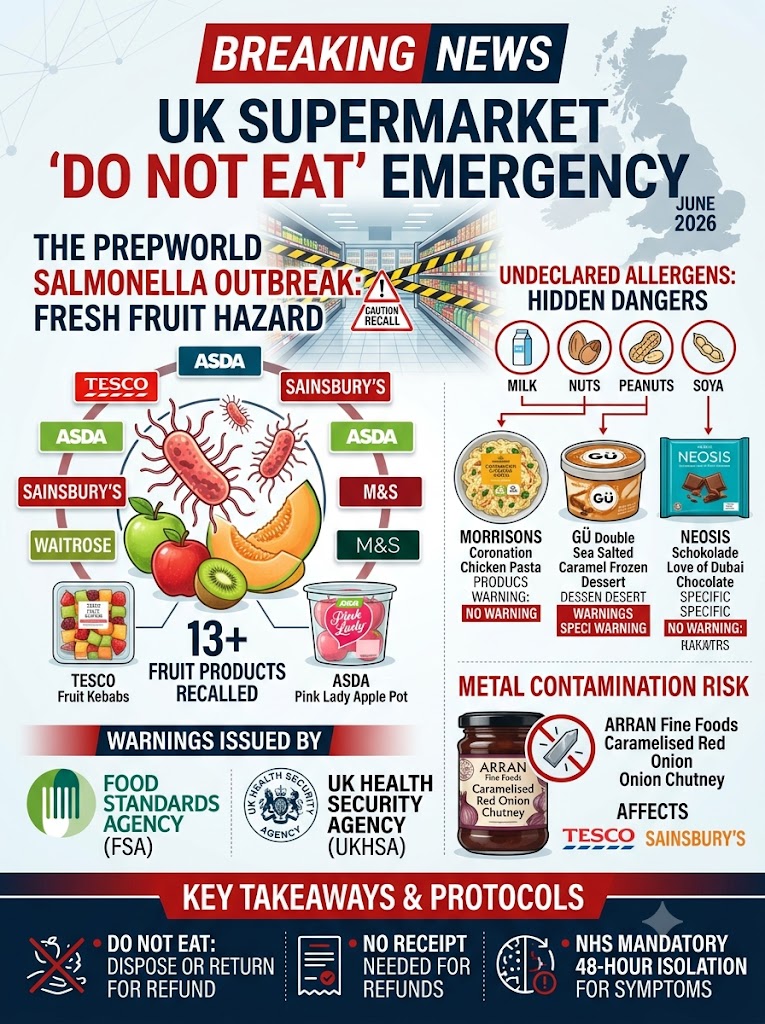
From salmonella-tainted fruit to undeclared allergens and metal contamination, shoppers at Tesco, Asda, Sainsbury’s, Morrisons, Waitrose, and Marks & Spencer are being urged to audit their refrigerators. This investigation unpacks the data, the compromised supply chains, and the immediate health protocols facing British consumers.
Core Insights & Key Takeaways
- The Prepworld Salmonella Alert: A total of 13 fresh fruit products containing apple and kiwi have been recalled across six major UK supermarkets due to identified Salmonella contamination (FSA Reference: FSA-PRIN-29-2026).
- Undeclared Allergens: Morrisons recalled its Coronation Chicken Pasta (Batch GBB 584 031) on June 25 due to hidden milk constituents. Meanwhile, Tesco and Waitrose pulled Gü Double Sea Salted Caramel Frozen Desserts over undeclared hazelnuts and soya.
- Foreign Body Hazards: Fox’s Burton’s Companies (FBC) UK was forced to recall Arran Fine Foods Caramelised Red Onion Chutney from Tesco and Sainsbury’s shelves amid fears of metal contamination.
- Strict Health Protocols: The NHS has issued a mandatory 48-hour isolation alert for anyone exhibiting food poisoning symptoms connected to the fresh produce recall to prevent secondary transmission.
Deep Dive: The Prepworld Fruit Outbreak
The UK’s fresh-cut fruit supply chain experienced a severe fracture on Tuesday, June 23, 2026. The FSA confirmed that testing had identified Salmonella in apples and kiwis supplied by Prepworld, triggering a domino effect of recalls across the country’s largest grocers.
Retailing between £1.50 and £4.10, the compromised goods all bear use-by dates of June 23 or 24. The sweep includes high-volume items such as Tesco’s 290g Fruit Kebabs and 100g Kiwi Fruit Pots, Asda’s 220g Pink Lady Apple, Mango, Strawberry & Blueberry pots, and Waitrose’s 115g Pink Lady Apple and Grapes. Marks & Spencer also pulled three specific items, including its 225g Pink Lady Apple Slices, while Sainsbury’s removed its Orange & Kiwi and Melon, Kiwi & Strawberry lines.
The public health implications are significant. Salmonella causes approximately 23,000 cases of intestinal infection (salmonellosis) in the UK annually, leading to between 30 and 50 fatalities. The bacteria, which traditionally thrives in the gut of farm animals, triggers severe fever, diarrhoea, and abdominal cramps. The NHS has warned that infected individuals remain highly contagious. Consequently, public health officials have mandated that anyone suffering from these symptoms must isolate from work, school, or nursery until they have been completely symptom-free for a strict minimum of 48 hours.
Allergens and Contaminants: The Hidden Retail Dangers
Beyond bacterial outbreaks, this month’s retail crisis highlights critical, potentially fatal labeling failures. On June 25, Morrisons recalled its Coronation Chicken Pasta (use-by June 30) after discovering the accidental inclusion of Florida Salad, which introduced undeclared milk into the product—a severe hazard for lactose-intolerant or allergic consumers.
The FSA also intervened to issue a “serious health risk” warning regarding Neosis Schokolade Love of Dubai chocolate, manufactured by NEOSIS, Gida ve Unlu Mam Ltd. Supplied by a distributor called Black Sea Trading Ltd—who the FSA noted has so far been “uncontactable”—the chocolate contains hidden peanuts. The agency has ordered food businesses to immediately halt sales and undertake product withdrawals.
What should I do if I bought a recalled supermarket product in June 2026?
Do not consume the item under any circumstances. Under FSA guidelines, you must return the affected product to the specific retail store where it was purchased. You are legally entitled to a full refund. Supermarkets, including Morrisons and Tesco, have confirmed via official spokespeople that customers do not need to provide a receipt to process these specific recall refunds.
How long do Salmonella symptoms last after eating contaminated fruit?
Symptoms of salmonellosis typically manifest within a few hours to a few days of consuming the tainted food. While most individuals recover within a week through rest and hydration, the NHS stresses that you remain highly infectious during recovery. Patients are advised to strictly avoid fruit juice and fizzy drinks (which can worsen diarrhoea) and must refrain from returning to public settings until they have been entirely free of vomiting and diarrhoea for 48 hours.
Sources Quoted: Data and statements were sourced directly from the Food Standards Agency (FSA) alerts (FSA-PRIN-29-2026), the UK Health Security Agency (UKHSA), and NHS public health guidelines. Supplementary reporting and statistics were cross-referenced from Wales Online (Neil Shaw), Liverpool Echo (Elaine Blackburne), and the Nottingham Post.

Leo Falsafi is a digital marketing veteran and senior journalist at Virlan.co, where he covers the intersection of digital marketing, gaming, and breaking US trending news. With nearly two decades of hands-on experience in SEO and digital strategy, Leo has consulted for and scaled hundreds of companies. His deep industry roots allow him to deliver sharp, fact-checked insights and analysis on the trends shaping today’s digital landscape.