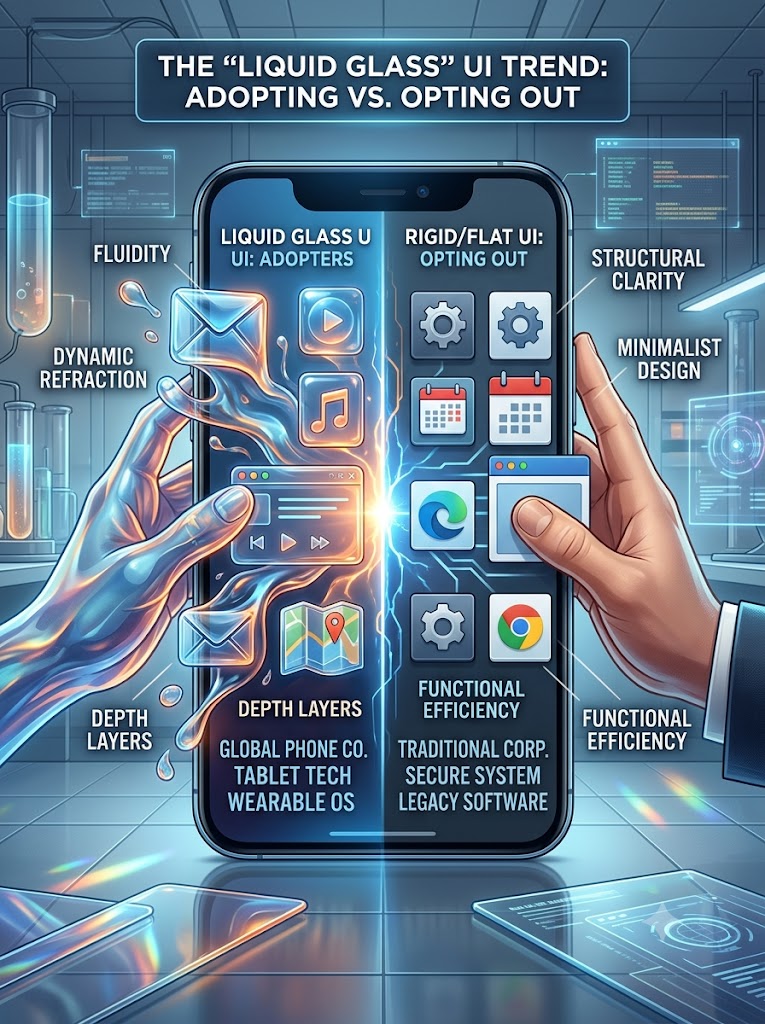
The tech design world is currently mesmerized by a highly distinct visual aesthetic: “Liquid Glass.” Popularized by Apple’s sweeping interface overhaul across platforms like iOS 26 and macOS 26, this frosted, semi-transparent look is rippling across the broader tech ecosystem. However, it is also facing some high-profile resistance.
The Enthusiastic Adopters: WhatsApp and Xiaomi
The Liquid Glass aesthetic is characterized by translucent floating panels, softly blurred backgrounds, and responsive, dynamic elements. WhatsApp is leaning heavily into this design. Following a successful rollout on iPhones, Meta is now testing a Liquid Glass redesign on its iPadOS beta app. The update features a semi-transparent floating tab bar, a navigation bar that gradually turns clear as users scroll, and frosted glass buttons that respond with fluid, polished animations.
Similarly, Android smartphone makers are not waiting on Google to embrace the trend. Fresh leaks surrounding Xiaomi’s upcoming HyperOS 4 point to a stunning Liquid Glass-inspired “Clear” interface mode. This overhaul ditches flat design in favor of translucent system panels, frosted glass effects, and revamped 3D-style icons with richer lighting and colors, giving the software a decidedly premium feel.
The Resistance: Google Holds Its Ground
Despite the industry shift, Google is drawing a firm line in the sand. After a recent developer teaser video sparked rumors that Android might adopt a translucent, iOS-like look, Google’s Android President, Sameer Samat, definitively shut down the speculation. Responding to mockup concepts, Samat bluntly stated: “Not happening! Y’all are wild.”
Instead of jumping on the Liquid Glass bandwagon, Google’s Pixel lineup will continue to evolve its own “Material 3 Expressive” design. While upcoming versions like Android 17 are rumored to incorporate flatter, frosted blur effects, Google is committed to its natural, springy animations and dynamic color themes over a sweeping, glassy overhaul.
Ultimately, the Liquid Glass UI represents a fascinating fork in the road for modern interface design—a premium, translucent aesthetic warmly embraced by third-party developers and Android competitors, but strictly rejected by Google itself.
Authors & Outlets Report: This article synthesizes reporting from Marcus Mendes at 9to5Mac, Nisha at NokiaPowerUser, and Juli Clover at MacRumors.

Leo Falsafi is a digital marketing veteran and senior journalist at Virlan.co, where he covers the intersection of digital marketing, gaming, and breaking US trending news. With nearly two decades of hands-on experience in SEO and digital strategy, Leo has consulted for and scaled hundreds of companies. His deep industry roots allow him to deliver sharp, fact-checked insights and analysis on the trends shaping today’s digital landscape.