In 2024, Donald Trump dominated the rural vote, winning the demographic by a massive 40-point margin over Kamala Harris (64% to 34%). It was the bedrock of his return to the White House, with rural margins in swing states reaching as high as 67% in Pennsylvania. But just 18 months into his term, the honeymoon appears to be over.
Recent polling data reveals a drastic and sudden plunge in the president’s rural approval numbers. It isn’t the culture wars driving this wedge—it’s the harsh, day-to-day realities of the economy. From skyrocketing diesel prices to a devastating wave of farm bankruptcies, rural voters are feeling a unique economic squeeze that is rapidly eroding one of the GOP’s most reliable voting blocs.
The Plunging Numbers
The statistical drop is steep. According to a Reuters/Ipsos poll conducted in early June 2026, Trump’s approval rating among rural Americans has fallen to a new low of 50%—down significantly from 60% in February 2025. Conversely, his disapproval rating in these communities has surged from 34% to 48% over the same period.
A recent Fox News analysis, highlighted by the Brookings Institution, paints an even bleaker picture of the trend. Among rural voters overall, Trump’s net job approval (approval minus disapproval) collapsed from +20 in early 2025 to -14 in May 2026. Among white rural voters, his net approval plummeted from +27 to -6. Today, only 25% of these voters strongly approve of his job performance, while 41% strongly disapprove.
It’s the Economy, Not the Culture
The breakdown by issue makes the catalyst for this shift abundantly clear: cost of living.
Currently, only 31% of rural respondents approve of Trump’s handling of the economy, while 61% disapprove. A staggering 64% of white rural voters identify the cost of living as their most pressing problem, and nearly half (49%) say their family’s financial situation is worse today than it was two years ago at the end of the Biden administration.
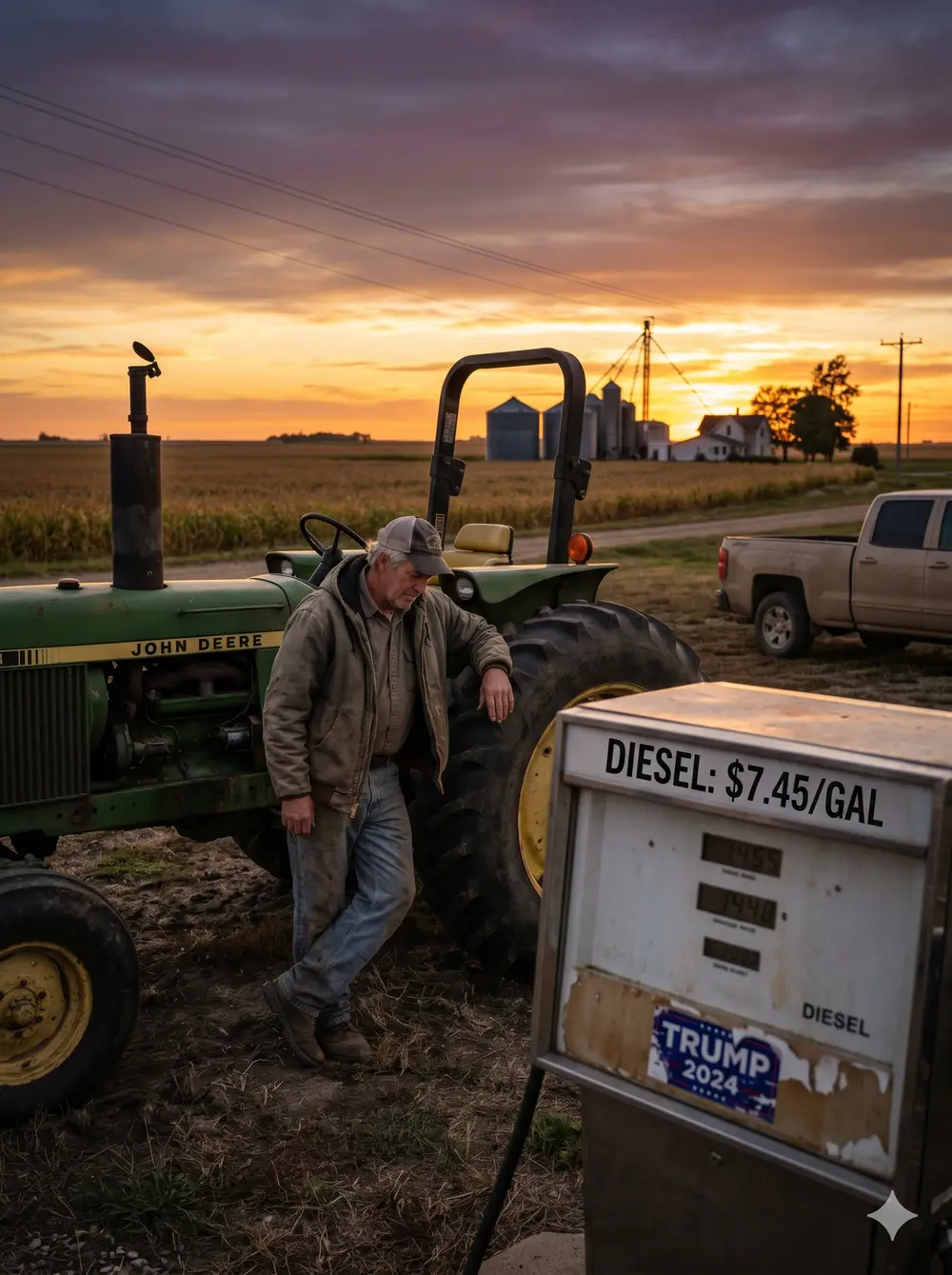
Geography exacerbates the pain. Federal data shows that rural Americans travel an average of 30 miles daily in a vehicle, compared to just 17 miles for urban residents. With the US-Israeli conflict with Iran sending gasoline and diesel fuel to record highs, rural Americans are bearing the brunt of the geopolitical fallout at the pump. For a demographic that expected immediate economic relief, the persistent inflation feels like a broken promise.
The Agricultural Crisis
The economic anxiety is anchored by a very real crisis in American agriculture.
According to the American Farm Bureau, farm bankruptcies rose by an alarming 46% in 2025, with 15,000 farms closing last year alone. In 2026, the pace of bankruptcies has accelerated to 70%.
This is largely the result of a perfect storm of policy impacts:
- Tariffs: Trade policies have reduced foreign demand for U.S. agricultural exports (like soybeans) while simultaneously driving up the cost of essential inputs like heavy farm equipment and fertilizer.
- Labor Shortages: Strict immigration crackdowns have made it increasingly difficult for ranchers, dairy farmers, and crop producers to find the workers necessary to sustain operations.
- Fuel Costs: Diesel prices have reached all-time highs in several states, destroying the already razor-thin profit margins for farmers and pushing commercial fishermen to keep their boats docked rather than absorb the fuel losses.
Manufacturing, the other pillar of the rural economy, hasn’t fared much better. Despite promises of a revival, U.S. manufacturing jobs have actually declined by 77,000 since the beginning of Trump’s second term.
The 2026 Midterm Threat
What does this mean for the political landscape? It doesn’t necessarily signal that rural America is going to suddenly start voting for Democrats en masse. However, it signals a massive enthusiasm gap.
The Republican Party relies heavily on running up massive, blowout margins among the nearly 1 in 5 American voters who live outside urban and suburban centers. With rural voters explicitly concluding (by a 49% to 39% margin) that the president’s current policies will hurt the country in the long run, many may simply choose to stay home on Election Day this November. For a GOP defending incredibly slim majorities in both the House and the Senate, a depressed rural turnout could easily cost them Congress.
This article was sourced and quoted directly from June 2026 polling and economic data published by Reuters (reporting by Leah Douglas and Jason Lange) and an analysis by the Brookings Institution (authored by William A. Galston).

Leo Falsafi is a digital marketing veteran and senior journalist at Virlan.co, where he covers the intersection of digital marketing, gaming, and breaking US trending news. With nearly two decades of hands-on experience in SEO and digital strategy, Leo has consulted for and scaled hundreds of companies. His deep industry roots allow him to deliver sharp, fact-checked insights and analysis on the trends shaping today’s digital landscape.