If you spend enough time in SEO forums, you’ll inevitably stumble into the echo chamber claiming that “links are dead.” It’s a comforting narrative for webmasters who are tired of the outreach grind.
It is also entirely false.
I’ve spent the last few weeks digging through the latest 2025 and 2026 correlation studies, algorithm patent updates, and post-rollout analytics. If you are new to the game and wondering exactly what is backlinks, the short answer is that they remain the absolute bedrock of the modern web. But the mechanics of how Google processes these “votes of confidence” has fractured and evolved.
Here is the investigative breakdown of what the data actually says about link equity right now.
Let’s Start with the Basics: Backlinks Meaning & Mechanics
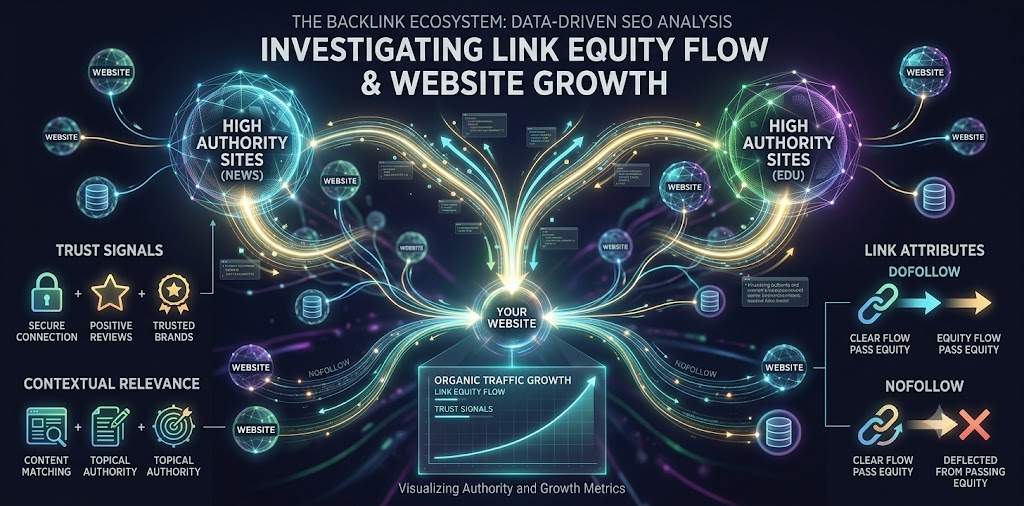
When founders ask me what are backlinks and how do they work, I give them the unvarnished reality: they are no longer just popularity metrics; they are algorithmic trust signals.
A backlink occurs when an external website hyperlinks to a page on your domain. Historically, the backlinks meaning was simple—he who had the most links won. Today, Google’s AI treats each backlink as a nuanced transfer of authority. The algorithm reads the contextual relevance of the text surrounding the link, the domain authority of the referring site, and the user intent. If the referring site is trusted, that trust flows to you.
The Hard Backlink Data: Benchmarks You Can’t Ignore
If you want to know how competitive the landscape is, let’s look at the raw backlink data. The current web is a graveyard of ignored content.
According to Ahrefs’ 2026 Content Explorer analysis, a staggering 96.6% of all published content gets zero backlinks from external websites. You are not competing against everyone; you are competing against the top 3.4% of the internet.
Consider these definitive benchmarks:
- The Traffic Multiplier: Pages with at least one backlink get 3.8x more organic traffic than pages without them.
- The Ranking Gap: The #1 ranking result in Google averages 3.8x more backlinks than positions 2 through 10.
- The Cost of Acquisition: According to Authority Hacker’s 2025 survey of over 2,200 respondents, the median cost for a single outreach-acquired link is now $250, with averages hitting $361.
- The Attrition Rate: Link rot is real. Data shows that 66.5% of all links created in the past nine years have completely disappeared.
The SpamBrain Threat: Should You Buy Backlinks?
The most common question I see on Reddit is whether or not site owners should buy backlinks.
Here is the truth: In 2026, purchasing cheap links is algorithmic suicide.
Google’s backlink policy is now enforced by SpamBrain, a machine-learning system that analyzes link networks dynamically. Historically, if you bought a toxic link, it might take months for a core update to penalize you. According to analysis of the recent spam update rollouts, SpamBrain now flags suspicious link patterns and devalues sites in minutes, not months. The October 2025 spam update explicitly targeted AI-generated guest post farms—large-scale operations publishing thin content solely to embed paid links.
As Google’s Search Advocate John Mueller explicitly stated: “A few high-quality links will do more for you than thousands of low-quality ones.”
If you are outsourcing to a cheap backlink building service on Fiverr that promises 500 links for $50, you are paying someone to destroy your domain’s reputation.
How to Create Backlinks That Actually Move the Needle
So, how to create backlinks safely in this environment? You have to build linkable assets and rely on high-level relationship building.
1. Data-Driven Digital PR
The Moz State of Link Building 2025 report found that 53.7% of SEO professionals are now using digital PR. Original studies, surveys, and data visualizations attract 3.2x more links than opinion pieces. Journalists need data. If you provide it, they will link to you.
2. Highly-Vetted Guest Posting
Despite the spam crackdowns, genuine guest posting remains the #1 link-building tactic, utilized by 64.9% of professionals. The difference today? You must pitch sites that already have organic traffic and strict editorial standards.
3. Broken Link Reclamation
With 66.5% of the web’s links rotting away, broken link building remains a viable, albeit low-conversion, strategy. The average response rate for broken link outreach is hovering at just 6.3%, but it costs significantly less per link ($29 on average) than fresh outreach.
AI Overviews & The Future of Link Equity
The rise of Large Language Models (LLMs) has fundamentally altered search. Semrush data from 2025 indicates that over 88% of searches triggering Google AI Overviews are informational.
Does link building matter for AI search? Absolutely. AI systems pull answers from sources they trust. ClickRank AI data confirms that while the sheer algorithmic weight of backlinks has slightly dropped from 15% to 13% of the total ranking score, pages with robust link profiles are cited inside AI Overviews far more frequently. Authority drives AI citations.
How do I search backlinks for my own website?
To search backlinks pointing to your domain, you need to use a dedicated crawler like Ahrefs, Semrush, or Majestic. Simply export your referring domain list. You should regularly audit this list to ensure your anchor text profile is natural—branded anchors should make up 40-50% of your profile, while exact-match commercial keywords should stay well under 10% to avoid triggering spam filters.
What is the difference between follow and nofollow links?
“Follow” links pass algorithmic link equity (PageRank) from one site to another, directly impacting your SEO. “Nofollow” links contain an HTML tag telling search engines not to pass authority. However, in 2026, nofollow links from massive publications (like Forbes or the New York Times) still drive valuable referral traffic and act as secondary trust signals for brand entities.
Sources Quoted
- Individuals/Representatives: John Mueller (Search Advocate at Google).
- Organizations & Outlets: Ahrefs (Content Explorer & Link Rot studies), Backlinko (Ranking Factors study), Authority Hacker (Link Building Survey 2025), Moz (State of Link Building 2025), Semrush (2025 AI SEO Statistics), ClickRank AI, Blue Tree Digital.
Leo Falsafi is a digital marketing veteran and senior journalist at Virlan.co, where he covers the intersection of digital marketing, gaming, and breaking US trending news. With nearly two decades of hands-on experience in SEO and digital strategy, Leo has consulted for and scaled hundreds of companies. His deep industry roots allow him to deliver sharp, fact-checked insights and analysis on the trends shaping today's digital landscape.