
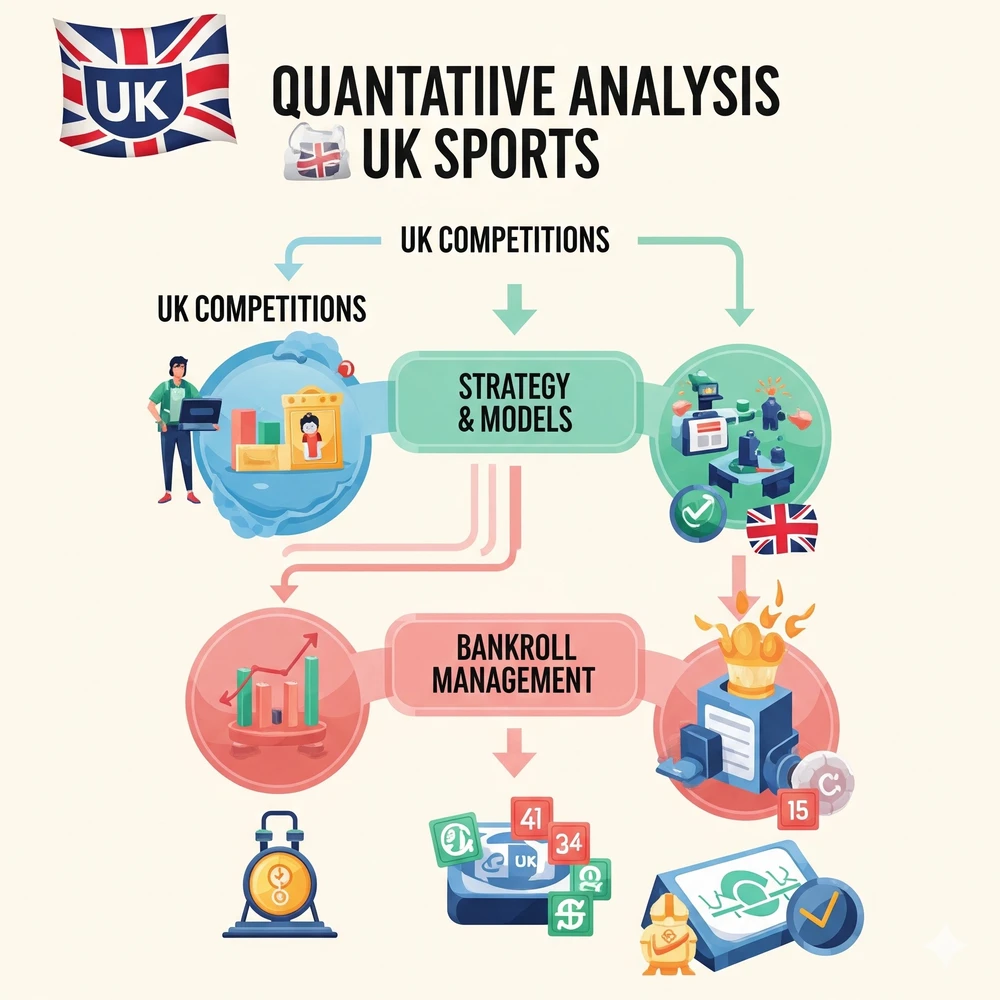
A Quantitative Guide to UK Betting: Competitions, Strategy, and Bankroll Management
The Framework for Discerning Bettors
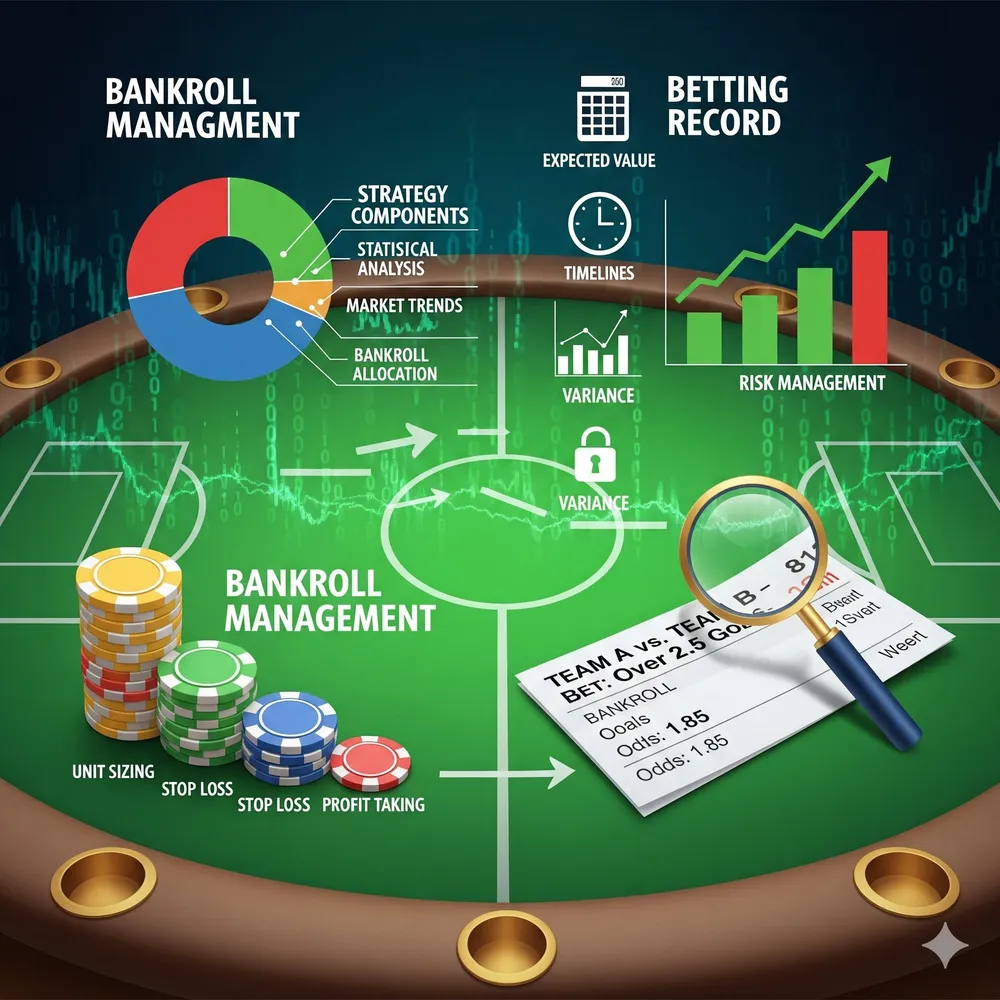
This report provides a structured methodology for approaching betting in the United Kingdom, moving beyond a framework of chance to one of applied mathematics, research, and rigorous risk management. It is designed for the serious individual who understands that sustained profitability is rooted in discipline, data-driven analysis, and the strategic management of capital. The core principle presented is that success is not found in a series of one-off wagers but in treating betting as a long-term, calculated pursuit of a probabilistic edge. It is important to acknowledge, however, that no strategy can guarantee a win on a single event, and all forms of gambling carry inherent risks. The foundational objective is to protect capital and enable steady, long-term growth through sound financial and emotional management.
The UK Betting Calendar: Key Events for 2025-2026
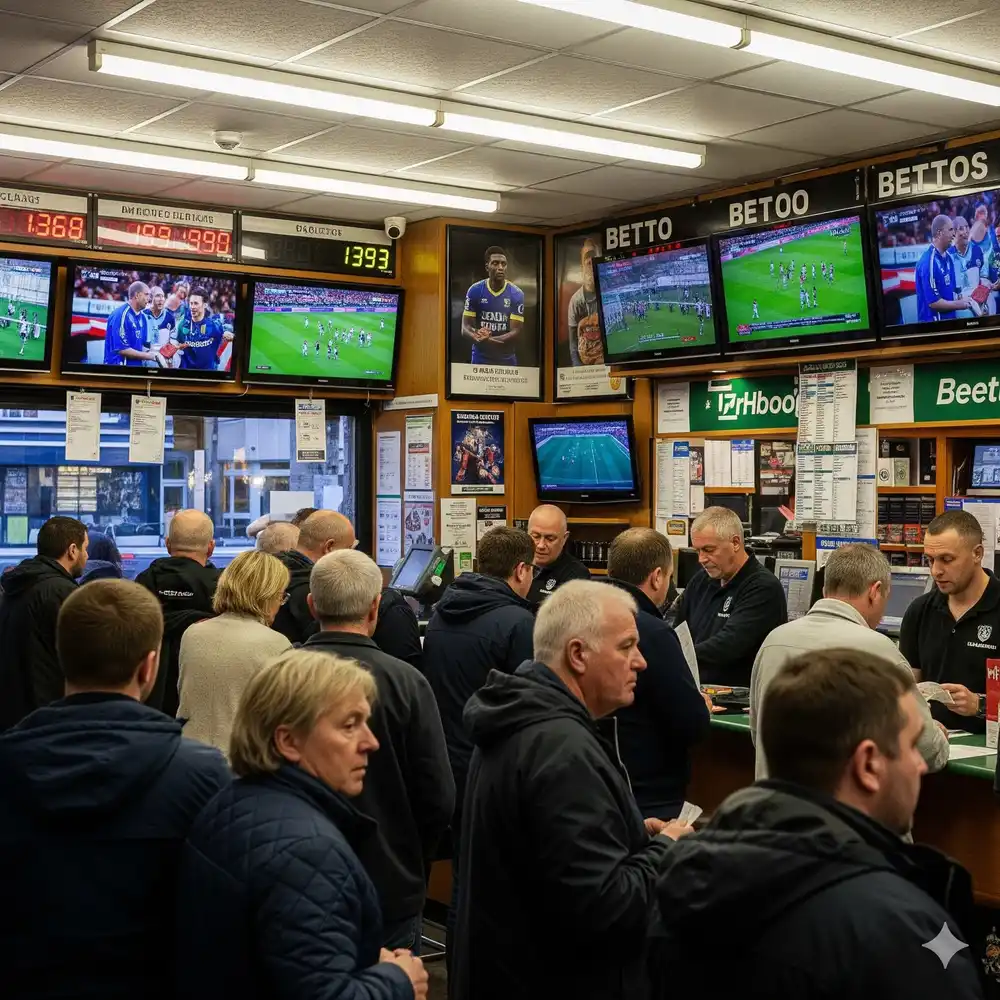
The United Kingdom’s betting landscape is not a static collection of events but a dynamic, seasonal cycle that presents consistent opportunities for the informed bettor. A strategic approach involves specializing in the key “betting seasons” to build deep domain knowledge, which is a prerequisite for identifying value. The following provides a curated overview of the most significant upcoming competitions and their market implications.
Major Sporting Competitions: A Seasonal Breakdown
The calendar is dominated by a diverse range of sports, allowing a bettor to diversify their portfolio and mitigate the risk associated with variance in a single sport.
- Horse Racing: The horse racing calendar is a year-round fixture, with distinct seasons for National Hunt (jump) and flat racing. Spring is defined by the Cheltenham Festival, often called the “crown jewel” of National Hunt racing, featuring major events like the Cheltenham Gold Cup (March 11–14, 2025, and March 10–13, 2026). This is followed by the globally renowned Grand National Festival at Aintree, known for its challenging steeplechase course and massive viewership (April 3–5, 2025, and April 2–4, 2026). The flat season is highlighted by the glamorous Royal Ascot (June 17–21, 2025) and concludes with the QIPCO British Champions Day (October 18, 2025) at Ascot, which serves as a grand finale for the season.
- Tennis & Rugby: The summer and winter months are marked by premier international events. The Championships, Wimbledon, remains one of the oldest and most prestigious tennis tournaments, drawing elite players from June 30 to July 13, 2025, in London. In rugby, the UK is a host country for the Six Nations Rugby Championship (January 31 to March 15, 2025), and will welcome the Women’s Rugby World Cup in August and September 2025.
- Motorsport: High-octane action dominates the summer, with the British Grand Prix taking place at the “Home of British Motorsport” at Silverstone (July 3–6, 2025). This is complemented by the Goodwood Festival of Speed (July 10–13, 2025). Additional motorsports calendars, including F1 and the British Superbikes, are available for those who wish to specialize in this market.
- Other Key Sports: The festive period is synonymous with the World Darts Championship, a major competition held at Alexandra Palace from December 15, 2024, to January 3, 2025. Other notable events include the World Boxing Championships in Liverpool (September 4-14, 2025) and cricket’s The Hundred, which offers a full summer schedule of men’s and women’s tournaments in London.
This seasonal flow dictates a bettor’s operational rhythm. A specialist in jumps racing, for example, will have their peak research and betting period from March to April, while an F1 enthusiast will focus on the summer. This specialized approach ensures a deeper understanding of team and player form, a crucial component for finding a probabilistic edge.
Beyond the Racetrack: Non-Sporting Markets
The analytical skills required for sports betting can be applied to a variety of other markets, which often have unique dynamics. These markets can be particularly appealing because bookmakers may allocate less research to them compared to major sports, potentially creating opportunities for a dedicated analyst.
- UK Politics: The political betting market has grown significantly. A major opportunity is the Year of the Next UK General Election, with bookmakers offering odds on different years. A deep understanding of this market requires a different set of data inputs than sports, relying on analysis of political polling, public sentiment, and commentary. For example, political analysts can use the implied probabilities of various outcomes, such as a majority or minority government, to assess the market’s efficiency.
- Entertainment & Awards: Entertainment markets, such as the National Television Awards (NTAs, September 10, 2025) and The BRIT Awards (March 1, 2025), are also popular. In these markets, the edge is often found by analyzing historical voting patterns, public opinion, and the momentum of key figures. For instance, the long-standing dominance of Ant & Dec at the NTAs makes them an odds-on favourite each year, a trend that can be reliably incorporated into a betting thesis.
The existence of these diverse markets demonstrates that the definition of a “value bet” is not universal. In sports, an edge may be found by assessing a player’s return to form following an injury , while in a political market, the edge may come from a deeper understanding of political polling data that is not yet fully reflected in the bookmaker’s odds. This encourages an adaptable mindset, where an individual’s analytical skills can be applied to a variety of domains.
The Mathematics of a Strategic Edge
True success in betting begins not with selecting a winner but with understanding the fundamental mathematics of the betting market. The strategic bettor’s objective is to exploit moments when the bookmaker’s odds are misaligned with the true probability of an event.
Deconstructing Odds: Implied Probability and the Vigorish
Odds, whether expressed in fractional, decimal, or moneyline format, are a measure of probability. However, the odds offered by a bookmaker do not represent a “true” or “fair” probability. Instead, they reflect a hidden percentage, known as implied probability, which is the bookmaker’s estimation of how likely an outcome is to occur.
The key mechanism by which a bookmaker ensures profitability is the “vigorish,” or “vig.” This is a built-in commission that ensures the total implied probabilities for all outcomes in a market always exceed 100%. For example, a coin toss has a true probability of 50% for heads and 50% for tails, but a bookmaker will set the implied probability for each outcome slightly higher, perhaps at 52.4% each, to create a margin for themselves. This demonstrates a crucial dynamic: the bookmaker is not an impartial system offering fair odds but a sophisticated, risk-averse business whose primary goal is to manage its liability and secure a profit, regardless of the event’s outcome.
The following table provides a fundamental tool for any serious bettor, showing how to convert various odds formats into their implied probability, which is the first step in deconstructing a bookmaker’s market.
Implied Probability Conversion Chart
| Fractional Odds | Decimal Odds | Moneyline Odds | Implied Probability |
|---|---|---|---|
| 1/1 | 2.00 | +100 | 50.0% |
| 6/4 | 2.50 | +150 | 40.0% |
| 5/2 | 3.50 | +250 | 28.6% |
| 10/1 | 11.00 | +1000 | 9.1% |
| 4/5 | 1.80 | -125 | 55.6% |
| 8/13 | 1.62 | -162.5 | 61.5% |
The Cornerstone of Profitability: Finding Value
The central tenet of a successful long-term betting strategy is the concept of “value.” A value bet is one where a bettor’s perceived probability of an outcome is greater than the probability implied by the bookmaker’s odds. This is the “edge” that separates a discerning bettor from a recreational gambler.
Finding a value bet is a two-part process. The first step involves an independent, data-driven assessment of the “true” probability of an outcome. This requires a deep knowledge of the sport or market, including factors such as team form, injuries, historical data, and other variables. The second step is to compare this independently derived probability to the implied probability of the bookmaker’s odds.
A simple formula can be used to quantify this edge: Value = (Your Assessed Probability x Bookmaker’s Decimal Odds) – 1
A result greater than zero indicates a positive value. For example, if a bettor assesses that a football team has a 45% chance of winning a match, but the bookmaker is offering odds of 2.50, which implies a 40% probability, a value opportunity exists. This is not about winning every bet, but about consistently making wagers with a positive expected value, which will lead to long-term profitability over a large sample size. This represents a fundamental shift in mindset from winning a single bet to executing a strategy that is profitable over time, regardless of short-term losses or “variance”.
The Value Betting Formula in Practice
| Bookmaker’s Odds | Implied Probability | Your Assessed Probability | Value Calculation | Result |
|---|---|---|---|---|
| 2.20 | 45.5% | 40.0% | $ (0.40 \times 2.20) – 1 $ | -0.12 (No Value) |
| 2.50 | 40.0% | 45.0% | $ (0.45 \times 2.50) – 1 $ | +0.125 (Value) |
| 1.80 | 55.6% | 60.0% | $ (0.60 \times 1.80) – 1 $ | +0.08 (Value) |
A Portfolio of Betting Strategies
Once the intellectual foundation of value betting is established, a bettor can employ a variety of tactical strategies. Each of these methods is, at its core, an application of the principle of finding and capitalizing on a probabilistic edge.
The Quantitative Toolkit: Value, Arbitrage, and Matched Betting
- Matched Betting: This method involves capitalizing on bookmaker promotions and free bets by hedging a “back” bet (betting on an outcome to happen) with a “lay” bet (betting against the same outcome) on a betting exchange. This is considered theoretically “risk-free” as all outcomes are covered, and the value of the free bet is retained. While this technique is legal in the UK, bookmakers often view it as “bonus abuse” and use sophisticated technology to identify and limit or close accounts that consistently engage in this activity. A bettor must be aware of this adversarial dynamic and take countermeasures, such as rounding bet sizes and sticking to large, popular markets, to avoid suspicion.
- Arbitrage Betting: Also known as “arbing” or “sure betting,” this strategy exploits discrepancies in odds offered by different bookmakers for the same event. By placing simultaneous bets on all possible outcomes across multiple platforms, a bettor can secure a small but guaranteed profit, regardless of the result. This is a tangible demonstration of market inefficiency and the fact that a bookmaker’s algorithms are not perfect. However, this strategy requires immense speed and diligence due to rapid odds fluctuations and the risk of account limitations or closure if bookmakers detect this behavior.
Dynamic Strategies: In-Play and Handicap Betting
- In-Play Betting: This form of betting involves placing wagers as an event unfolds, allowing a bettor to react to real-time action and shifting odds. It is a tactical application of value betting, where a sudden event—such as a strong favourite conceding an early goal—can cause their odds to lengthen, temporarily creating a value opportunity. Other tactics include betting on momentum shifts, monitoring in-game statistics, and capitalizing on tactical changes.
- Handicap Betting: This strategy is used to “even up” a market where one team or player is a clear favourite. By giving one selection a virtual deficit (a handicap) to overcome and the other a virtual start, the bookmaker creates a new market with more attractive odds. This allows a bettor to find a better price on a team they believe will outperform the handicap, which is an application of finding a value proposition in a seemingly lopsided contest.
The Discipline of Bankroll Management
Even the most sophisticated strategy is worthless without a rigorous plan for managing capital. This is a non-negotiable foundation that separates a serious pursuit from reckless gambling.
Protecting Your Capital: A Non-Negotiable Foundation
A bankroll must be a dedicated amount of money set aside exclusively for betting, separate from essential expenses like rent, groceries, or savings. This capital serves as a cushion to absorb losses, which are a natural part of “variance” in any long-term strategy. Its existence prevents a bettor from chasing losses with money they cannot afford to lose, a behavior that leads to emotional and impulsive wagers.
Staking Plans for Success
A disciplined approach to staking is a primary factor in long-term success.
- The Unit System and Flat Staking: This is a foundational method, particularly for beginners. It involves betting a fixed amount (a “unit”) or a fixed percentage (e.g., 1-5%) of the total bankroll on every wager, regardless of confidence or odds. The primary benefit of this system is that it enforces strict discipline and removes emotion from the staking process, a major pitfall for most bettors.
The following table illustrates how a unit system can be implemented with various bankrolls.
Implementing the Unit Staking System
| Starting Bankroll | Recommended Unit Size (1-2%) | Unit Value | Example Bet Size |
|---|---|---|---|
| £500 | 1% | £5 | £5 per bet |
| £1,000 | 2% | £20 | £20 per bet |
| £5,000 | 1.5% | £75 | £75 per bet |
- The Kelly Criterion: For advanced bettors, the Kelly Criterion provides a mathematical formula to determine the optimal bet size based on the perceived edge and the odds of the wager. This formula calculates the exact fraction of the bankroll to bet to maximize long-term growth. The formula is as follows:
f* = \frac{(bp – q)}{b}
where f* is the fraction to bet, b is the proportion of the bet gained with a win, p is the probability of a win, and q is the probability of a loss. The Kelly Criterion mathematically links the core concepts of value betting and bankroll management. It recommends a larger wager for a larger perceived edge and, crucially, will recommend “betting nothing” if no edge is found, powerfully reinforcing the need for patience and selectivity.
Essential Risk Management Protocols
A successful bettor continuously refines their approach by analyzing their performance. This is why meticulous record-keeping is not just for accounting but for creating a critical feedback loop. Every bet should be tracked in a spreadsheet to identify trends, analyze win/loss ratios, and adjust strategies. Furthermore, setting explicit limits—such as daily or weekly spending caps, or a stop-loss limit (e.g., pausing betting after losing 20% of the bankroll)—ensures that emotional decisions do not sabotage a well-planned strategy.
The Mandate of Responsible Gambling
For any serious pursuit, discipline and self-control are paramount. This is particularly true in the betting market. The existence of robust responsible gambling tools in the UK should be viewed not as a sign of weakness but as a proactive, professional risk management strategy.
UK-licensed gambling operators are legally obliged to provide tools that allow individuals to control their activity, including self-exclusion, time limits, and deposit limits. In a significant development, several major UK banks now offer customers the option to block all gambling-related transactions on their accounts. These features act as a safety net that enforces the very discipline a successful strategy requires. For any individual who feels that their betting is becoming stressful or uncontrollable, free, confidential, and professional support is available 24/7 through the National Gambling Helpline at 0808 8020 133.
Conclusion & Expert Recommendations
The pathway to success in UK betting is not found in lucky guesses or anecdotal tips. It is a systematic process defined by three core principles. The first is to understand that the goal is to find an edge by identifying value—a probabilistic misalignment between a bettor’s assessment and the bookmaker’s odds. The second is to execute on that edge with a consistent and disciplined staking plan that protects the bankroll from the inevitable fluctuations of variance. The third is to reinforce this discipline with proactive risk management, including meticulous record-keeping and the utilization of available self-control tools. The true victory is not a single win, but the sustained, disciplined growth of capital over time. This approach transforms betting from a game of chance into a calculated investment of capital and intellect.
 How Offshore Sportsbooks Differ from Regulated Betting Sites (And Which is Better?)
 How Crypto is Transforming the World of Sports Betting
 The Evolution of Live Betting in Europe: Technology Meets Tradition
 Cross-Sport Player Comparisons
 Master the Odds: Unconventional Strategies at Top Online Sportsbooks
 What Influences Odds Movement? Inside Look at the Market Behind the Lines
 Why Regulations Around Sports Betting Are Changing Fast — And What It Means for You
 Navigating South Korea’s Sports Betting Scene: A Guide to Safe and Enjoyable Wagering
 Is Sports Betting Legal in Your State? The 2025 U.S. Legal Landscape Explained
 Betting Without Breaking the Bank: How to Budget and Stick to It in Sports Gambling
 How Moneyline Betting Works?
 AI Sports Betting : The Ultimate Guide to Algorithmic Edge, Responsible Wagering, and Future Trends in the US