
The Game-Changing Impact of AI on Sports Betting
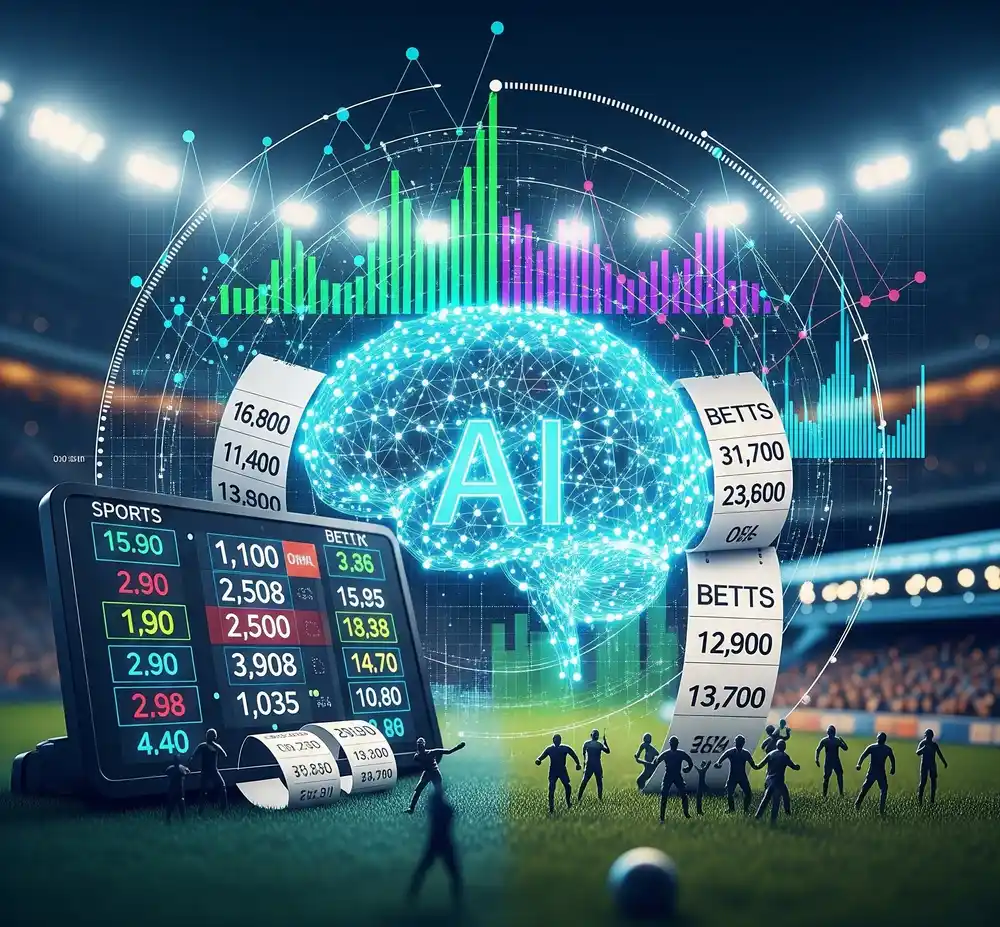
Artificial intelligence (AI) is rapidly transforming the sports betting landscape, evolving from a supplementary tool to a foundational element that influences nearly every aspect of the industry.
This technological revolution extends far beyond simple prediction, reshaping how odds are set, how platforms interact with users, and how the integrity of wagering is maintained.
AI’s unparalleled capacity to process vast datasets, identify intricate patterns, and execute real-time adjustments is fundamentally altering the engagement dynamics for both sportsbook operators and individual bettors.
This comprehensive guide aims to illuminate the profound impact of AI on sports betting. It will meticulously detail the core AI technologies driving this paradigm shift, explore their revolutionary applications across key areas of sports wagering, and analyze the significant market growth observed in the United States.
Furthermore, the discussion will critically examine the inherent challenges and ethical considerations that accompany this technological integration.
For bettors seeking a strategic advantage, this report offers actionable insights on leveraging AI tools.
Finally, it provides a forward-looking perspective on the future trajectory of this dynamic and rapidly evolving industry.
The Evolution of Sports Betting: From Gut Instinct to Algorithmic Edge
The journey of sports betting has always been characterized by a relentless pursuit of advantage, evolving from rudimentary observations to sophisticated data-driven strategies. Historically, the quest for an “edge” was limited by human processing power and static information.
Historical Context of Sports Analytics
Sports analytics boasts a rich history, with baseball often recognized as an early pioneer in the systematic application of data. Figures like Earnshaw Cook, whose “Percentage Baseball” in 1964 garnered national media attention, and Bill James, who helped bring the Society for American Baseball Research (SABR) to prominence in 1981, were instrumental in transforming how teams and fans approached the game through statistical analysis.
Early advocates within professional sports, such as New York Mets manager Davey Johnson in 1984, actively pushed for the integration of computer simulations and advanced statistical models to optimize lineups and gain a deeper understanding of opponents’ capabilities and tendencies. By the close of the 20th century, Major League Baseball clubs, notably the Oakland A’s, Boston Red Sox, and Cleveland Indians, had significantly embraced advanced metrics.
This trend later extended to the NBA, with figures like Daryl Morey of the Houston Rockets implementing advanced metrics as a key aspect of player evaluation and strategic decision-making.
Also read: Online Casino No Deposit Bonuses
Why Traditional Methods Fall Short in the Modern Betting Landscape
Despite these historical advancements, traditional analytical methods face significant limitations in today’s fast-paced betting environment. Older algorithms were primarily designed to process structured datasets, such as win-loss ratios, historical performance, and basic betting behaviors.
While helpful, these methods often lacked the nuance required to capture the full complexity of real-world scenarios in sports. Similarly, static models, which were historically prevalent for analysis, are inherently incapable of processing real-time data or dynamically adjusting to the rapidly changing circumstances that unfold during a live sporting event.
The sheer volume and velocity of modern sports data have overwhelmed human capabilities. Human traders, relying on manual processes, simply cannot analyze, interpret, and adjust odds quickly enough to keep pace with the overwhelming flow of live events and intricate betting patterns.
This inability to process information at scale and with the necessary speed created a significant bottleneck in the pursuit of a competitive advantage. The limitations of human processing and static data models meant that the “edge” in sports betting was often constrained, highlighting a critical need for a more advanced solution.
The continuous drive to gain an advantage through data, evident from the earliest days of sports analytics, finds its latest and most powerful expression in artificial intelligence.
AI represents a fundamental evolution in the nature of this competitive advantage, making it increasingly dependent on real-time data processing and sophisticated analytical capabilities. The immense volume and speed of contemporary sports data created a pressing demand for a technological solution that could overcome human cognitive and processing limitations.
AI’s ability to process vast amounts of information at incredible speeds and adjust odds in milliseconds directly addresses these challenges, transforming what was once a barrier into a significant competitive differentiator.
This progression demonstrates that AI is not merely enhancing existing processes but enabling entirely new capabilities previously beyond human reach.

Decoding the Tech: Core AI Technologies Powering Sports Betting
The transformative impact of AI on sports betting is underpinned by several sophisticated technologies working in concert. These core AI components enable the industry to move beyond traditional limitations, offering unprecedented levels of prediction, personalization, and operational efficiency.
Machine Learning (ML) and Deep Learning (DL): Pattern Recognition and Predictive Modeling
Machine Learning (ML) is widely adopted by sports betting companies to connect disparate data points, leading to smarter predictions, improved user engagement, and greater operational efficiency. ML models meticulously analyze extensive datasets, including historical performance data, injury reports, player fatigue levels, and recent gameplay trends, to accurately predict the likelihood of specific outcomes and subsequently offer tailored odds.
Deep Learning (DL), a more advanced subset of ML, is particularly powerful. Techniques within DL, such as neural networks (e.g., Multilayer Perceptrons or MLPs), are designed to perform complex calculations and process intricate relationships within data, effectively mimicking the problem-solving processes of the human brain. Academic research has demonstrated the remarkable efficacy of DL; for instance, a novel approach integrating deep learning with portfolio optimization achieved profits of 135.8% relative to initial wealth during the latter half of the 2020/21 English Premier League season.
AI-driven predictive models leverage these capabilities to analyze vast quantities of data—including historical records, real-time sports events, detailed player statistics, and external conditions like weather—to generate highly accurate sports predictions. These models are the backbone of modern betting analysis, moving beyond simple trends to anticipate future outcomes.
Play Now: Lucky Vegas Roulette
Natural Language Processing (NLP): Sentiment Analysis and Unstructured Data Insights
Natural Language Processing (NLP) plays a crucial role in extracting valuable information from qualitative sources. This technology analyzes unstructured text data from diverse origins such as social media chatter, news articles, and player interviews to gauge sentiment and incorporate these insights into predictive models. NLP also facilitates user interaction with Generative AI tools, like GPTs, allowing users to engage in their native language.
This capability is particularly beneficial for analyzing qualitative inputs that extend beyond mere numerical data, providing a more holistic view of factors influencing game outcomes. Beyond understanding crowd psychology and uncovering hidden insights that numerical data alone might miss, NLP also empowers the development of AI-driven chatbots and virtual assistants that can comprehend and respond to user queries in natural language, enhancing customer support and user experience.
Reinforcement Learning (RL): Adaptive Strategies and Continuous Improvement
Reinforcement Learning (RL) stands apart from other AI methods due to its adaptive nature. RL algorithms continuously improve by receiving feedback on their performance and then dynamically adjusting their strategies. This iterative learning process allows RL to refine betting strategies based on historical results and to tune sportsbook odds in real-time.
The effectiveness of RL has been demonstrated in other high-stakes domains, such as crypto and stock trading, where it has been successfully applied to learn optimal portfolio allocations and trading actions, yielding significant returns. This success highlights RL’s substantial potential for developing continuously improving and highly responsive betting models in the sports wagering industry.
Big Data Analytics: The Foundation of AI-Driven Insights
Big Data Analytics forms the essential foundation upon which all AI-driven insights in sports betting are built. This practice involves the systematic collection, analysis, and interpretation of exceptionally large datasets to uncover patterns and derive actionable insights for informed predictions and decisions.
AI systems are uniquely equipped to process both structured data (like historical scores and player statistics) and unstructured data (such as social media activity, real-time game conditions, and weather patterns) at an unprecedented scale. The principle is straightforward: the more data that is processed, the more patterns can be spotted, and the more profound insights can be extracted, leading to significantly more accurate predictions and a comprehensive understanding of complex scenarios.
This extensive data processing capability ensures that AI models have the rich information necessary to power their sophisticated analyses and predictions.
The most advanced AI betting solutions leverage the synergistic power of these integrated technologies. For instance, machine learning models, which are adept at making predictions, can be significantly enhanced by sentiment data derived from Natural Language Processing. Similarly, Reinforcement Learning can optimize betting strategies based on the probabilistic forecasts generated by ML models.
This interconnectedness creates a more robust, nuanced, and continuously improving AI system, far surpassing the capabilities of any single technology in isolation. This integration is crucial for deep analysis.
Furthermore, AI demonstrates a unique ability to quantify elements often considered “unquantifiable” in sports. While traditional algorithms were confined to structured datasets, often missing the subtle nuances of human performance and external influences, NLP bridges this gap. By analyzing unstructured text from social media, news, and live commentary, AI can gauge sentiment and incorporate it into predictions.
This means AI is moving beyond purely objective statistics to include subjective, yet influential, factors like team morale or public perception, leading to more holistic and potentially more accurate predictions that were previously impossible to capture.
Play Now: Las Vegas Roulette
AI in Action: Revolutionizing Key Aspects of Sports Betting
The integration of AI has fundamentally reshaped numerous operational and strategic facets of sports betting, delivering tangible benefits for both operators and bettors. From enhancing predictive accuracy to fortifying platform integrity, AI is setting new industry standards.
Precision Predictions: Enhancing Accuracy for Game Outcomes and Player Props
AI models are at the forefront of delivering data-backed predictions for various bet types, including Moneyline, Spread, and Over/Under bets, effectively eliminating guesswork and human bias from the equation.
These sophisticated models meticulously analyze a vast array of factors, such as team history, individual player performance, and external conditions like weather, to significantly improve prediction accuracy. They can even delve into granular player statistics to identify high-value prop bets.
AI systems possess the unique capability to process historical data, current player statistics, and real-time updates, dynamically adjusting their predictions as new information emerges. This dynamic capability allows AI to consistently outperform traditional analytical models and often human intuition in predicting sports outcomes.
Dynamic Odds Management: Real-Time Adjustments and Arbitrage Opportunities
One of AI’s most impactful applications is in odds automation, which has transformed the labor-intensive process of setting prices into an intelligent, data-driven system capable of making live adjustments. AI systems continuously consume real-time data—such as player substitutions, goals scored, or red cards issued—to recalibrate odds dynamically, ensuring that the betting lines accurately reflect the evolving reality of the game.
This real-time precision is crucial for sportsbooks, enabling them to stay ahead of sharp bettors and significantly reducing the risk of arbitrage opportunities, which arise from discrepancies in odds across different platforms. The ability to adjust odds within milliseconds ensures competitive pricing and maintains the operator’s edge.
Hyper-Personalization: Tailoring User Experiences and Engagement
AI is redefining user experience through hyper-personalization, creating dynamic and customized betting environments by analyzing individual user behavior, preferences, and historical data. This includes tailoring the sign-up process, personalizing onboarding experiences, providing behavioral insights, delivering proactive engagement nudges, and offering customized promotions and recommendations. Research consistently indicates that a significant majority of customers—around 80%—find personalized sports betting offers highly valuable, which directly translates into boosted engagement and improved customer retention rates.
Fortifying Integrity: Advanced Fraud Detection and Robust Risk Management
AI-driven risk management systems are essential for tracking betting patterns in real-time and identifying irregularities that could indicate fraudulent activities, match-fixing, or attempts to exploit odds discrepancies. These anomaly detection tools swiftly alert operators to suspicious activity, allowing investigations to commence before potential threats escalate into costly liabilities. Beyond detection, AI enables sportsbooks to segment bettors based on their activity, impose tailored restrictions on high-risk accounts, or even trigger market suspensions to effectively control financial exposure.
Play Now: Lucky Vegas Blackjack
Operational Efficiency: Streamlining Processes for Sportsbook Operators
AI significantly enhances operational efficiency by automating routine tasks, thereby allowing trading teams to shift their focus to strategic oversight rather than manual adjustments. This automation leads to fewer human errors and more informed decisions. AI models enable bookmakers to scale their businesses without compromising on speed or accuracy, even as data volumes increase exponentially.
Automated bet settlement, powered by Natural Language Processing and advanced data validation models, reduces disputes, accelerates payout processes, and ultimately builds greater customer trust. Furthermore, AI-driven chatbots and virtual assistants efficiently handle routine customer inquiries, freeing human agents to address more complex issues that require nuanced human intervention.
The dynamic between AI-powered operators and bettors has created a continuous “arms race” in the sports betting landscape. While AI’s ability to adjust odds in milliseconds and minimize arbitrage opportunities directly benefits operators, AI-powered tools also empower bettors to identify the best-value bets and positive expected value (EV+) opportunities.
This creates a feedback loop: as operators deploy increasingly sophisticated AI to maintain their competitive advantage, bettors are compelled to adopt their own AI tools to find value, leading to a constant escalation of technological sophistication on both sides. This signifies that the competitive landscape of sports betting is increasingly becoming a battle of algorithms.
Moreover, the impact of personalization, while largely beneficial, presents a dual-edged sword. Personalization is widely lauded for significantly boosting user engagement and satisfaction. However, the same technology that tailors experiences can also subtly encourage users to place more bets, and if unregulated, AI systems could potentially exploit vulnerable individuals.
This highlights a critical tension: the powerful tool designed to enhance user experience can, without proper oversight, contribute to increased gambling-related harm. This underscores the importance of robust responsible gambling measures and stringent regulatory oversight to ensure that personalization serves as a positive force for engagement rather than a pathway to exploitation.
Below is a summary of the benefits of AI in sports betting for both operators and bettors:
| Area of Impact | Benefit for Operators | Benefit for Bettors |
|---|---|---|
| Precision Predictions | Increased Margins, Scalable Pricing | More Accurate Predictions, Better Value Bets |
| Dynamic Odds Management | Reduced Arbitrage, Enhanced Customer Retention | Better Value Bets, Informed Decisions |
| Hyper-Personalization | Enhanced Customer Retention, Increased Engagement | Tailored Recommendations, Enhanced Engagement |
| Fraud Detection & Risk Management | Improved Security, Regulatory Compliance | Safer Betting Environment, Increased Trust |
| Operational Efficiency | Reduced Manual Work, Scalable Operations | Faster Payouts, Improved Customer Service |
The Booming Market: Growth, Trends, and Future Projections in the US
The sports betting market, particularly in the United States, is experiencing an unprecedented surge, largely propelled by the pervasive integration of artificial intelligence and related digital advancements.
Current Market Size and Projected Growth (CAGR)
The global market for AI in sports betting demonstrates robust growth. It was valued at $2.2 billion in 2022, with analysts projecting a substantial increase at a Compound Annual Growth Rate (CAGR) of 30.1% between 2023 and 2032, ultimately reaching an estimated $29.7 billion. Complementary reports corroborate this trend, indicating the Global Artificial Intelligence in Sports Market was valued at $2.55 billion in 2023 and is poised to grow to $27.42 billion by 2032, exhibiting a similar CAGR of 30.2% from 2025 to 2032. Looking further ahead, the broader AI in Sports Market is projected to reach an impressive $60.78 billion by 2034, expanding at a CAGR of 21.14% from 2025. Notably, North America held the largest market share, accounting for 35% in 2024. The overall global sports betting market itself is estimated to expand by $221.1 billion from 2025-2029, with a CAGR of 12.6%, a growth primarily driven by the ongoing digital revolution and the increasing prominence of machine learning.

Key Drivers of AI Adoption in US Sports Betting
Several factors are fueling the accelerated adoption of AI within the US sports betting sector. A primary driver is the escalating demand for sophisticated player data tracking, responsive chatbots, and real-time insights that AI can uniquely provide. The revolution in the iGaming industry is also significantly influenced by AI’s capacity for enhanced personalization, real-time fraud detection, and improved operational efficiency.
Broader technological advancements, encompassing blockchain, virtual reality, and AI itself, are fundamentally pushing market growth. The increasing popularity of mobile devices, the widespread adoption of cashless transactions, and pervasive internet and smartphone penetration are collectively creating an exceptionally conducive environment for the expansion of online sports betting. Furthermore, the development of favorable regulatory frameworks in mature markets like the US is also playing a crucial role in fostering this growth.
Emerging Technologies: Quantum Computing and Blockchain’s Potential
Beyond current AI applications, several emerging technologies hold significant promise for the future of sports betting:
- Quantum Computing: This groundbreaking technology possesses the potential to revolutionize betting by processing massive datasets at speeds currently unimaginable for classical computers. This capability could lead to even more accurate odds, significantly improved security through quantum encryption, and smarter predictions. Quantum computing could refine predictive models and optimize betting strategies by enabling faster and more precise Monte Carlo simulations, uncovering hidden patterns in betting data.
- Blockchain Technology: Blockchain offers a pathway to creating transparent and tamper-proof records of betting transactions. This inherent immutability could substantially reduce the risk of fraud and match-fixing, thereby enhancing trust within the betting ecosystem. When paired with AI, blockchain can further automate and secure betting systems, providing a robust and verifiable framework for all transactions.
- Augmented/Virtual Reality (AR/VR): The integration of AR and VR promises to deliver fully immersive betting experiences. Users could potentially watch games in virtual stadiums and place bets through intuitive gesture-based controls or directly within VR interfaces, creating a more engaging and interactive environment.
AI is undeniably the accelerator of the digital betting revolution. The significant market growth observed, often attributed to the “digital revolution” and increasing mobile adoption, is fundamentally enabled by AI’s capabilities. AI provides the real-time data processing, hyper-personalization, and operational efficiencies that define the modern digital betting experience. This dynamic illustrates that the digital platform provides the infrastructure, while AI supplies the intelligence that maximizes its potential, driving exponential growth. This makes AI indispensable for sustained growth and maintaining competitiveness in the increasingly digitalized sports betting market.
Furthermore, future technologies like quantum computing and blockchain are poised to address current AI limitations and ethical concerns.
While AI is powerful, challenges such as data privacy and transparency persist. Quantum computing promises to enhance AI’s processing power, leading to even more precise predictions. Simultaneously, blockchain offers a robust solution for transparency and security in transactions. This indicates a forward-looking trend where technological advancements are not solely focused on increased power but also on mitigating the inherent limitations and ethical dilemmas of current AI implementations, potentially leading to a more trustworthy and resilient betting ecosystem.
Here is a summary of the US AI in Sports Betting Market Projections and Key Drivers:
| Metric | Value |
|---|---|
| Global AI in Sports Betting Market Size (2022) | $2.2 Billion |
| Projected Global AI in Sports Betting Market Size (2032) | $29.7 Billion |
| CAGR (2023-2032) | 30.1% |
| Global AI in Sports Market Size (2023) | $2.55 Billion |
| Projected Global AI in Sports Market Size (2032) | $27.42 Billion |
| CAGR (2025-2032) | 30.2% |
| Projected Broader AI in Sports Market Size (2034) | $60.78 Billion |
| CAGR (2025-2034) | 21.14% |
| North America Market Share (2024) | 35% (Largest Share) |
| Overall Global Sports Betting Market Growth (2025-2029) | $221.1 Billion |
| Overall Global Sports Betting Market CAGR (2025-2029) | 12.6% |
Key Drivers:
- Demand for player data tracking, chatbots, and real-time insights
- Enhanced personalization, real-time fraud detection, operational efficiency
- Technological advancements (blockchain, VR, AI)
- Increasing popularity of mobile devices and cashless transactions
- Favorable regulatory frameworks
- Emerging technologies: Quantum Computing, Blockchain, AR/VR
Play Now: Poker with Friends
Navigating the Complexities: Challenges and Ethical Considerations
While AI offers unprecedented opportunities in sports betting, its integration is not without significant complexities and ethical dilemmas that demand careful navigation.
The Inherent Unpredictability of Sports: AI’s Limitations
Despite the advanced capabilities of AI, it cannot entirely overcome the inherent unpredictability of sporting events. While AI models offer substantial advantages in prediction, they cannot fully account for random occurrences such as sudden player injuries, unexpected weather changes, or controversial referee decisions, all of which can drastically alter game outcomes and render predictions less reliable. AI is not a magical solution; it cannot accurately predict complex human behavior, and the uncertainty embedded in sports is immense. Its output is fundamentally limited by the quality and scope of the data it receives.
Data Quality, Bias, and Transparency: Ensuring Fair Algorithms
The effectiveness of AI models is heavily dependent on the quality and comprehensiveness of their training data. Incomplete or biased datasets can lead to skewed results and significantly reduce the reliability of AI predictions. A critical concern is the potential for AI to unintentionally reinforce pre-existing biases if the training data is not representative of a diverse range of athletes or situations.
Furthermore, many advanced AI models, particularly deep learning algorithms, are often perceived as “black boxes.” This refers to their opaque nature, where it is difficult, if not impossible, to trace the exact thought process or reasoning that led to a specific prediction or decision. This lack of transparency can foster blind trust in AI predictions, potentially misleading bettors with data that might be biased or incomplete. Ensuring the fairness of these algorithms themselves remains a significant ethical concern.
Protecting Players: Data Privacy and Responsible Gambling Initiatives
The extensive collection and analysis of personal and biometric data by AI systems raise serious data privacy concerns. This increased data handling heightens the risks of misuse and unauthorized disclosure, especially if sensitive information, such as athletes’ health status or private lives, is not adequately protected.
A particularly concerning ethical issue is the potential for AI systems, which are designed to optimize profit, to identify and target players susceptible to addiction, inadvertently pushing them deeper into harmful behaviors. The very personalization features that enhance user experience can, if unchecked, exacerbate gambling-related harm by incentivizing vulnerable customers to gamble more frequently or beyond their financial means.
Conversely, AI also offers powerful tools for promoting responsible gambling (RG). By analyzing user patterns, AI can detect early signs of problem gambling behaviors—such as sudden increases in deposits, prolonged gaming sessions, or erratic betting habits—and trigger timely interventions. Solutions like Mindway AI’s GameScanner, which combines neuroscience, AI, and human expert assessment, exemplify how technology can be leveraged for the early detection of at-risk players, allowing operators to proactively offer support and resources.
Also read: Crypto Trading vs. Part-Time Job: Exploring Trading Strategies for Students
The Evolving US Regulatory Landscape: State-by-State Approaches and Future Legislation
The regulatory environment for sports betting in the US is complex and continuously evolving. Currently, 38 states, along with Washington, D.C., and Puerto Rico, offer some form of legal sports betting, with 30 states allowing online wagering via apps or websites. This state-by-state approach emerged after the Supreme Court’s 2018 decision struck down the federal ban on single-game wagering, empowering individual states to determine their own legalization policies.
However, specific regulations governing the use of AI in gambling are still nascent. Few comprehensive frameworks exist in the U.S. or abroad, and broader guidelines like the US Blueprint for an AI Bill of Rights are not industry-specific. Recognizing this gap, lawmakers in states like Missouri are beginning to examine protocols that would require AI models to explain major betting decisions and odds movements, aiming to ensure transparency and protect consumers from algorithmic bias.
Federal legislative efforts are also emerging; the SAFE Bet Act, introduced in September 2024, specifically addresses affordability, advertising, and AI within the industry, and proposes a ban on prop betting on college sports. Furthermore, the International Gaming Standards Association’s Ethical AI Standards Committee is actively developing a best practices framework to help gambling regulators better understand AI’s role in the industry.
The “black box” problem, where AI models’ decision-making processes are opaque, presents a fundamental barrier to trust and effective regulation. This inherent lack of transparency directly impedes efforts to ensure algorithmic fairness and explainability, which are crucial for maintaining integrity in the industry. If the decision-making process remains obscure, it becomes exceedingly difficult to verify for bias or to hold operators accountable, thereby posing a significant regulatory challenge. Without addressing this transparency deficit, public trust and comprehensive regulation will likely remain elusive.
The rapid adoption of AI in sports betting is occurring faster than the development of comprehensive regulations, creating a significant regulatory lag. This situation means AI can serve as a powerful tool for consumer protection, but it also carries the risk of exploitation. The absence of clear, industry-specific guidelines leaves operators to navigate AI implementation on their own, which can lead to inconsistent practices and heightened risks for vulnerable players. Proactive, industry-specific regulation is not merely about control; it is essential for fostering ethical innovation and preventing a backlash that could ultimately stifle the very growth and technological advancement it seeks to manage.
Here is a summary of the ethical and regulatory challenges in AI sports betting:
| Challenge Area | Specific Issue/Risk | Implication |
|---|---|---|
| Inherent Unpredictability | Random events (injuries, weather, referee decisions) | Less Reliable Predictions, AI not a “magic” solution |
| Data Quality & Bias | Incomplete or biased training data | Skewed Results, Unintentional reinforcement of biases |
| Transparency | “Black Box” algorithms, difficulty tracing decisions | Reduced Trust, Blind trust in AI predictions, Potential for misleading bettors |
| Data Privacy | Misuse/unauthorized disclosure of personal/biometric data | Serious ethical issues, Increased risk of data leakage |
| Responsible Gambling | Exploitation of vulnerable players, personalized incentives leading to harm | Exacerbated gambling-related harm, Ethical burden on operators |
| Regulatory Lag | Inconsistent state laws, lack of industry-specific standards | Legal & Compliance Risks, Potential for dual outcomes (protection vs. exploitation), Stifled innovation |
Empowering the Bettor: Leveraging AI Tools for a Strategic Advantage
For the modern bettor, AI tools offer an unprecedented opportunity to move beyond traditional guesswork and adopt a more strategic, data-driven approach. However, the effective utilization of these tools requires a nuanced understanding of their capabilities and limitations.
Combining AI Insights with Human Acumen and Intuition
AI is most effectively employed as a decision-support tool, designed to enhance a bettor’s strategy rather than to guarantee wins. The crucial understanding is to treat AI as a powerful analytical instrument, not a fortune teller. Optimal results are achieved by combining AI-generated insights with real sportsbook data and common sense. A balanced approach that integrates AI’s analytical power with human intuition is widely considered the most effective betting strategy. This is because AI, despite its sophistication, cannot fully account for all random events in sports or interpret the complex emotional and psychological factors that can influence players and teams. Human judgment remains vital for contextualizing AI’s predictions and making informed decisions.
Understanding and Utilizing AI-Powered Platforms
The market now offers a variety of AI-powered platforms designed to assist bettors:
- Rithmm: This AI-powered predictive analytics application empowers users to build their own custom models. It provides AI prop predictions, predicted scores, win probabilities, and “Difference to Market” (DTM) insights, which highlight discrepancies between Rithmm’s line and the sportsbook’s. Features like backtesting against historical data and “Green Stars” (indicating high profitability) or “Caution Flags” (suggesting caution) help users refine their strategies and track model performance.
- Leans.ai: This platform utilizes an AI named “Remi,” which analyzes thousands of data points to identify strong “leans” (picks) and assigns “units” to each pick based on its calculated cover probability. Remi continuously refines and improves its accuracy through a method called Reinforced Recursive Machine Learning.
- Sports-AI.dev: This platform offers daily predictions and “value bets” across a range of sports, including football, tennis, and basketball. Its predictions are generated using machine learning algorithms and advanced sports data, aiming for high accuracy and profitability.
- BetSmartAI: This application leverages sophisticated AI models, developed by PhD data scientists and sports analytics experts, to provide precise predictions and real-time data analysis. It specifically helps users identify Expected Value Positive (EV+) betting opportunities, which are designed for long-term profitability.
- Outlier.bet: Serving as a comprehensive sports betting research platform, Outlier.bet integrates with major sportsbooks. It offers trending picks, extensive market exploration, and tools for opportunity evaluation. Users can analyze performance trends, injuries, matchup data, public sentiment, and line movement. Its “Outlier Pro” premium offering provides a live feed of Positive EV bets and identifies arbitrage opportunities.
Strategic Bankroll Management in the AI Era
Even with the aid of AI, sound bankroll management remains a cornerstone of successful sports betting. AI can significantly assist in this area, for instance, by calculating optimal bet sizes using frameworks like the Kelly Criterion.
This has been demonstrated by AI agents that have placed real bets with notable returns, such as one system that generated a $3500 profit with a 68% win rate by calculating optimal bet sizes. However, while AI provides powerful insights, bettors must still adhere to a disciplined strategy for managing their bankroll, balancing patience, discipline, and meticulous financial planning to ensure long-term sustainability.
The advent of AI in sports betting represents a significant democratization of advanced betting analytics. Historically, sophisticated predictive models were largely inaccessible to everyday bettors, primarily available only to professional sports bettors or those with extensive data science expertise.
However, platforms like Rithmm, Leans.ai, and BetSmartAI are explicitly designed to make complex modeling fast, easy, and accessible to bettors of all experience levels. This development means that the competitive advantage in sports betting is no longer solely dependent on having a dedicated team of data scientists but rather on effectively utilizing these readily available AI-powered platforms. This shift has the potential to create a more informed and competitive betting public.
Furthermore, AI is fundamentally shifting sports betting from a reliance on “gut instinct” to a “data-driven strategy.” The emphasis on moving away from guesswork and intuition towards strategies rooted in concrete data is a direct consequence of AI’s capabilities.
AI’s ability to process massive amounts of data in milliseconds and identify subtle pattern shifts is the primary factor driving this transformation. This implies that successful betting in the AI era increasingly demands a blend of technological literacy and strategic thinking, rather than just deep sports knowledge or subjective feelings. This evolution also suggests that traditional betting “pitfalls,” often associated with emotional or uninformed decisions, may change as bettors adapt to AI’s pervasive influence.
Also read: The Next Gaming Gold Rush? Exploring the Top 5 Emerging Web3 Game Platforms to Watch Now
The Road Ahead: The Future of AI in Sports Betting
The trajectory of AI in sports betting points towards continuous innovation, with a strong emphasis on refining existing capabilities and addressing emerging challenges. The future landscape will be characterized by more sophisticated AI models, immersive user experiences, and an increasing focus on responsible innovation within a dynamic regulatory environment.
Advanced AI Models and Explainable AI (XAI)
Future developments in AI for sports betting will primarily concentrate on refining predictive models to enhance accuracy and account for unforeseen variables with greater precision. A critical area of advancement is the emergence of Explainable AI (XAI), particularly Cognitive Explainable-AI (CXAI) algorithms based on Concept-Learning.
These algorithms offer significant advantages over traditional deep learning and Large Language Models (LLMs) by promising greater transparency in their decision-making processes. Addressing the “black box” problem, where many AI models operate opaquely, will be crucial for building trust and ensuring accountability within the industry. XAI is therefore not just an enhancement but a vital area of development to foster greater understanding and confidence in AI-driven predictions.
Immersive Betting Experiences (VR/AR)
The future of sports betting will also be shaped by increasingly immersive user experiences. Augmented Reality (AR) and Virtual Reality (VR) integrations are set to allow sports fans to experience fully immersive environments, enabling them to watch games in virtual stadiums and place bets through intuitive gesture-based controls or directly within VR interfaces. Beyond visual immersion, AI-powered live dealers and hosts could create more responsive and engaging gaming experiences, capable of learning player preferences and adapting their interactions and banter in real-time.
Balancing Innovation with Regulation and Player Protection
As AI technologies mature and become more deeply embedded in sports betting, regulators will continue to scrutinize the industry closely. Key concerns such as transparency, data privacy, and algorithmic fairness will remain prominent topics of discussion and legislative focus. Ongoing research and the development of robust regulations are essential as AI evolves.
Without clear guidelines, ethical controversies and potential backlash against unregulated practices could lead to more restrictive policies, inadvertently hindering the very innovation they aim to manage. The industry’s long-term success will hinge on its ability to strike a delicate balance between leveraging the transformative opportunities offered by AI and upholding its responsibility to protect consumers and ensure fair play.
The repeated concern regarding AI’s “black box” nature and the explicit mention of Explainable AI (XAI) indicate a critical emerging trend. As AI becomes more pervasive, the demand for transparency from regulators and users will inevitably increase. XAI is the direct technical solution to this challenge, and its adoption is not merely an enhancement but a necessity for the industry to gain and maintain legitimacy and trust, thereby avoiding more restrictive policies.
The future of betting is envisioned as a holistic, immersive, and thoroughly regulated experience. Future trends include advanced immersive VR/AR experiences and increasingly sophisticated AI. However, these technological advancements are juxtaposed with a growing emphasis on regulation, data privacy, and responsible gambling.
This broader outlook suggests that the future of AI in sports betting is not solely about isolated technological leaps, but about creating an integrated ecosystem where cutting-edge engagement is seamlessly combined with robust ethical safeguards and clear regulatory frameworks. The industry’s sustained success will ultimately depend on its ability to navigate and maintain this delicate balance.
Also read: Psychedelics & Gambling: Therapy, Brain, Risks
Conclusion: A Smarter, Safer, and More Engaging Future
Artificial intelligence has fundamentally reshaped the landscape of sports betting, transforming it from an intuitive pastime into a sophisticated, data-driven science. Its diverse applications, ranging from precision predictions and dynamic odds management to hyper-personalization and robust fraud detection, have introduced unprecedented levels of efficiency and engagement for both sportsbook operators and individual bettors.
The industry is experiencing remarkable growth, particularly in the US, driven by AI’s capacity to process vast amounts of data, adapt to real-time changes, and offer tailored experiences.
While the growth trajectory of AI in US sports betting is undeniable, the industry’s sustained success hinges on a steadfast commitment to responsible innovation. Addressing critical challenges such as ensuring data quality, mitigating algorithmic bias, enhancing transparency, and prioritizing player protection through robust practices and evolving regulatory frameworks will be paramount.
The future promises even more immersive and intelligent betting experiences, with emerging technologies like quantum computing and blockchain poised to further enhance capabilities and address existing limitations. However, these advancements must be built upon a foundation of fairness, privacy, and responsible gaming to ensure a trustworthy and sustainable ecosystem for all stakeholders.
FAQs
AI models analyze vast datasets and have demonstrated the ability to outperform traditional models and even human intuition in many scenarios. Their accuracy can range from 61% to 75% depending on the specific sport and the sophistication of the model. However, it is important to note that AI predictions still carry probabilistic uncertainty and cannot account for all random events that may occur during a game.
Yes, AI is increasingly being deployed to promote responsible gambling practices. By analyzing user patterns, AI systems can detect early signs of compulsive behavior, such as sudden increases in deposits or prolonged betting sessions. Upon detection, these systems can trigger interventions, recommend timeouts, or issue alerts to encourage safer gaming habits.
The use of AI for sports betting picks and analytical tools is generally considered legal, as these are primarily data processing and prediction aids. However, the broader legality of sports betting itself is determined at the state level in the US. Currently, 38 states, along with Washington, D.C., and Puerto Rico, offer some form of legal sports betting. Regulations specifically addressing AI’s role and use within the gambling industry are still evolving and are subject to ongoing development by regulatory bodies.
AI betting platforms generate revenue through several mechanisms. They utilize dynamic odds management with built-in margins (often referred to as “vig” or “juice”) to ensure profitability on every bet. Personalized betting suggestions, driven by AI, boost user engagement and increase overall betting volume. Many platforms also offer premium subscriptions for advanced analytics or expert picks, generate revenue from affiliate partnerships, and implement loyalty programs to enhance player lifetime value.
Key limitations of AI in sports betting include the inherent unpredictability of sports, where random events like injuries, unexpected weather changes, or controversial referee decisions can significantly impact outcomes. AI models also heavily rely on high-quality and unbiased data; incomplete or skewed datasets can lead to less reliable predictions. Furthermore, AI struggles to interpret complex emotional and psychological factors influencing players and teams. Finally, many advanced AI models face a “black box” problem, where their decision-making processes lack transparency, making it difficult to understand how specific predictions are derived.
 How Offshore Sportsbooks Differ from Regulated Betting Sites (And Which is Better?)
 How Crypto is Transforming the World of Sports Betting
 The Evolution of Live Betting in Europe: Technology Meets Tradition
 Cross-Sport Player Comparisons
 Master the Odds: Unconventional Strategies at Top Online Sportsbooks
 What Influences Odds Movement? Inside Look at the Market Behind the Lines
 Why Regulations Around Sports Betting Are Changing Fast — And What It Means for You
 Navigating South Korea’s Sports Betting Scene: A Guide to Safe and Enjoyable Wagering
 Is Sports Betting Legal in Your State? The 2025 U.S. Legal Landscape Explained
 Betting Without Breaking the Bank: How to Budget and Stick to It in Sports Gambling
 How Moneyline Betting Works?
 Top Brazilian Online Casinos & Sports Betting Platforms (2025)