Are we treating a “public health emergency,” or just punishing teenagers for our failure to build a safer internet?
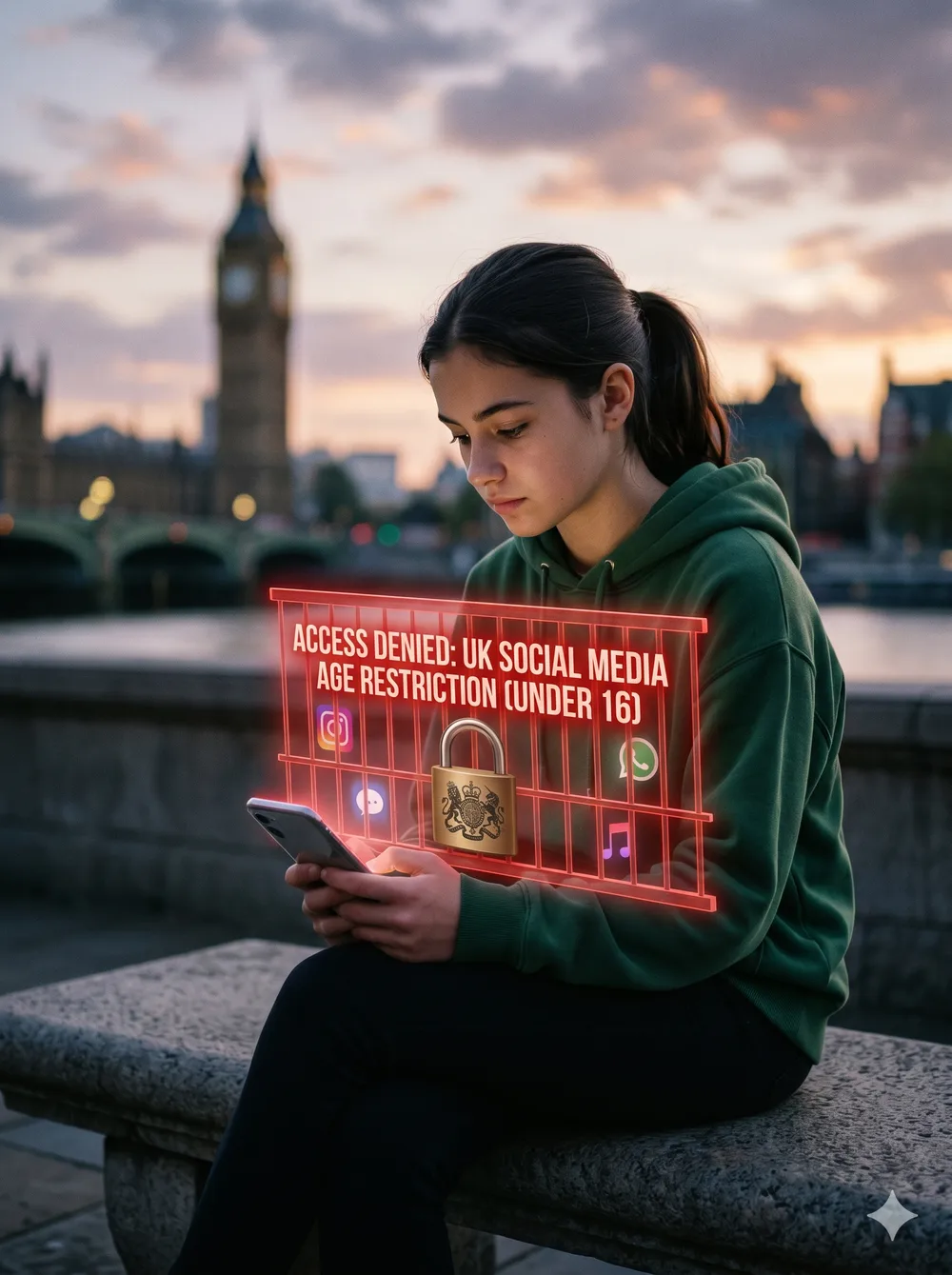
The year 2026 might be remembered as the moment the digital frontier finally closed for teenagers. Ever since Australia shocked the tech world by implementing a nationwide social media ban for under-16s in December 2025, a domino effect has been rippling across the globe. Now, the UK stands at the edge of the exact same cliff.
Following the closure of the government’s highly anticipated “Growing up in the online world” consultation in May 2026, UK policymakers are preparing to make a landmark decision by the end of the year. But what sounds like a straightforward win for child safety has ignited a fierce, deeply polarizing debate among doctors, tech giants, academics, and youth workers.
Here is a deep dive into the forces colliding over the UK’s potential under-16 social media ban.
A “Public Health Emergency” Akin to Smoking
For many medical professionals, the debate ended long ago. The Academy of Medical Royal Colleges (AMRC) has officially likened the youth mental health crisis driven by social media to a public health emergency, explicitly comparing the need for tech regulation to the fight against smoking and the mandatory use of seatbelts (Rimmer, n.d.).
Doctors warn that the sheer volume of traumatic content, coupled with infinite scrolls and algorithm-driven loops, presents immediate dangers that parents simply cannot out-parent. This medical consensus is bolstered by judicial momentum; a recent landmark ruling in the US found tech giants like Meta and Google legally liable for actively harming children’s mental health through deliberately addictive platform designs (Iacobucci, n.d.).
Parliamentary Ping-Pong and Tech Denials
Unsurprisingly, the political arena has turned into a battleground. In March 2026, the House of Lords overwhelmingly backed an amendment to the Children’s Wellbeing and Schools Bill that would have outright banned social media for anyone under 16 by a 64% majority (O’Dowd, n.d.).
However, Members of Parliament (MPs) ultimately rejected this blanket prohibition in a 307 to 173 vote (O’Dowd, n.d.). Rather than killing the concept, MPs preferred to wait for the results of the Department for Science, Innovation, and Technology’s consultation to craft a more flexible and enforceable framework. (The same bill did, however, succeed in banning smartphones within English schools).
Meanwhile, tech executives are firmly holding their ground. During an April 2026 Commons Education Committee hearing, representatives from TikTok, Meta, and Roblox completely rejected the premise that their platforms are inherently addictive, arguing instead that they provide parents with adequate tools to monitor their children’s usage (Iacobucci, n.d.).
The Counter-Movement: Are We Punishing the Kids?
While “ban it all” makes for a great political soundbite, a growing coalition of academic researchers, youth workers, and digital rights advocates argue that a hardline prohibition is the wrong tool for the job.
Researchers from the Minderoo Centre for Technology and Democracy at the University of Cambridge argue that entirely cutting off access punishes teenagers for society’s failure to design safe digital environments (Freeman, n.d.). By focusing solely on risk, we erase the immense benefits the internet provides for youth: community building, education, and digital citizenship. Media portrayals often frame this as a “moral panic,” unfairly depicting young people as either passive victims or reckless deviants (Prendergast, n.d.).
Furthermore, outright bans are historically fragile. Studies indicate that tech-savvy adolescents will likely circumvent age verification systems using Virtual Private Networks (VPNs) and other tools (McNamara, n.d.; Nansen, n.d.). This doesn’t stop social media use; it merely drives it underground. It forces young people to hide their digital lives from their parents, creating a vulnerable, unmonitored cohort of users who have nowhere to turn if they encounter abuse online.
There is also the reality of legal blowback. Similar rapid-fire, techno-solutionist laws passed in US states like Utah and Florida have frequently been delayed or blocked in federal courts for infringing on free speech rights (Schneiders, n.d.).
What Comes Next?
The UK is at a crossroads. By the end of 2026, Technology Secretary Liz Kendall has promised decisive action. The government must choose between the absolute protectionism of the Australian model—a total under-16 ban—or a structural regulatory approach that forces tech companies to build “safety by design” (such as legally outlawing infinite scroll, auto-play, and algorithmic targeting for minors).
Whatever the UK decides, it will permanently alter how the next generation experiences the internet.
Author & Outlet Report: This article draws upon the research and reporting of academics and medical professionals including Rimmer, Freeman, O’Dowd, Iacobucci, McNamara, Prendergast, Nansen, and Schneiders, referencing reputable publications such as The BMJ, Cambridge’s Minderoo Centre, arXiv, and Taylor & Francis.

Leo Falsafi is a digital marketing veteran and senior journalist at Virlan.co, where he covers the intersection of digital marketing, gaming, and breaking US trending news. With nearly two decades of hands-on experience in SEO and digital strategy, Leo has consulted for and scaled hundreds of companies. His deep industry roots allow him to deliver sharp, fact-checked insights and analysis on the trends shaping today’s digital landscape.