
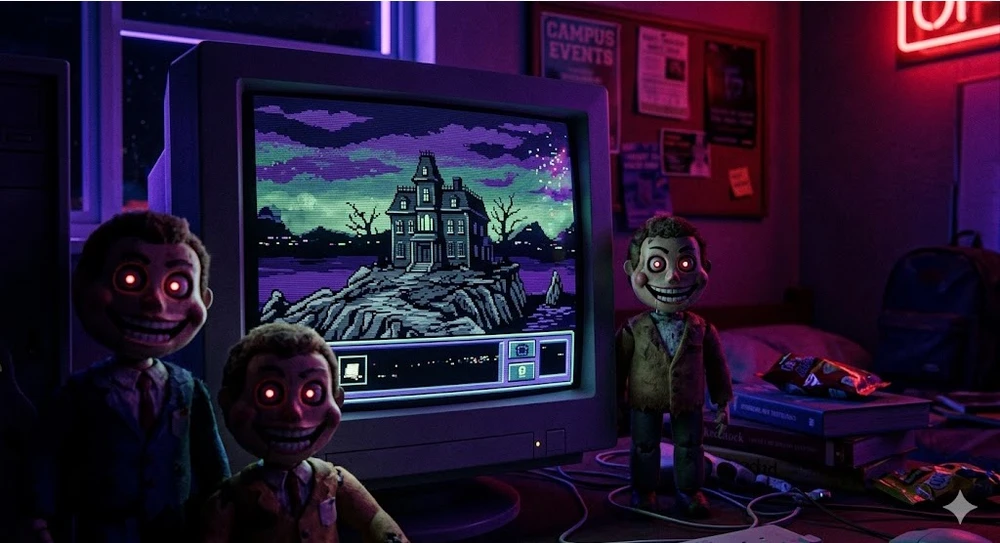
A macabre digital phenomenon, the game known as ‘Five Nights at Epstein’s’ has exploded across US school campuses, transforming a notorious real-world scandal into a disturbing online parody that blends dark humor with unsettling themes, sparking widespread alarm among educators and parents as its virality shows no signs of abating by early 2026.
The Unsettling Rise of Five Nights at Epstein’s Game
The digital landscape has once again blurred the lines between satire and outrage with the sudden, disturbing emergence of the ‘Five Nights at Epstein’s’ game. Drawing heavily from the mechanics of the popular “Five Nights at Freddy’s” horror franchise, this grim parody transplants players to a digital rendition of Jeffrey Epstein’s infamous island, where animatronic versions of controversial figures and victims lurk. Its premise, which trivializes the horrific real-world crimes of Epstein, has struck a raw nerve, yet its dark allure has propelled it into a viral sensation across US school campuses by early 2026, making it an undeniable, albeit unsettling, cultural talking point.
Navigating the Five Nights at Epstein’s Game Website: A Digital Rabbit Hole
Accessing the ‘Five Nights at Epstein’s’ experience often begins with a visit to a nebulous, unofficial game website. Unlike professionally developed titles, there’s no single, authoritative portal; instead, players often discover it through shared links on social media, private Discord servers, or obscure gaming forums. These sites typically host rudimentary browser-based versions or downloadable files, lacking formal age restrictions or content warnings. This decentralized distribution makes monitoring and control extremely difficult for authorities and parents, effectively creating a digital “wild west” where controversial content proliferates unchecked and readily available.
The Viral Spread of Five Nights at Epstein’s Online
The explosive spread of ‘Five Nights at Epstein’s’ is a textbook example of how quickly content can go viral online, particularly among younger demographics. Platforms like TikTok, Reddit, and various encrypted messaging apps have served as fertile ground, with clips, memes, and gameplay videos racking up millions of views. The game’s inherent shock value, coupled with a rebellious youth culture often drawn to taboo subjects, fuels its rapid dissemination. This organic, user-driven virality bypasses traditional media gatekeepers, ensuring its reach extends into countless digital spaces where oversight is minimal, sparking both fascination and condemnation.
Campus Culture Clash: Why This Game Resonates (And Repulses)
The phenomenon of ‘Five Nights at Epstein’s’ highlights a significant generational and cultural chasm. For many, particularly within a segment of the youth demographic, the game is perceived as edgy, dark humor—a way to engage with a notorious scandal through irreverent parody. It taps into a fascination with true crime and conspiracy theories, blended with a desire to push boundaries. However, for parents, educators, and a substantial portion of students, the game is a gross trivialization of child exploitation and abuse, deemed deeply offensive and insensitive, creating heated debates within school hallways and homes about the limits of satire.
The Legal and Ethical Maze: Who Is Accountable?
The murky origins and distributed nature of ‘Five Nights at Epstein’s’ present a complex legal and ethical quandary. With no single, identifiable developer or publisher, enforcing intellectual property rights or pursuing legal action for content deemed harmful becomes incredibly challenging. The game exists in a legal grey area, straddling the line between protected parody and potentially exploitative material. Ethical concerns abound regarding the trivialization of horrific crimes, the potential desensitization of young players, and the responsibility of platforms that unwittingly facilitate its spread, raising urgent questions about digital accountability in the age of viral content.
Beyond the Screen: Parental Fears and School Responses
The rapid virality of ‘Five Nights at Epstein’s’ has sent ripples of concern through parental communities and educational institutions nationwide. Parents express profound distress over their children’s exposure to content that trivializes sexual abuse, fearing its impact on their understanding of such grave issues. Schools are caught between safeguarding students and respecting digital freedoms, struggling to implement effective policies to curb its spread. Responses range from issuing stern warnings and blocking access on school networks to initiating difficult conversations about digital literacy and ethical consumption of media, underscoring the ongoing challenge of managing online content in educational environments.
‘Five Nights at Epstein’s’ is an unofficial parody game, drawing inspiration from the ‘Five Nights at Freddy’s’ horror genre. It places players on a digital recreation of Jeffrey Epstein’s infamous island, featuring animatronic-like characters representing figures linked to the scandal. The game is highly controversial due to its trivialization of serious criminal acts.
The game is highly controversial because it uses the real-world horrors of Jeffrey Epstein’s child sex trafficking ring as a basis for dark humor and entertainment. Critics argue it trivializes serious crimes, desensitizes players to abuse, and is deeply insensitive to victims, sparking moral outrage among parents, educators, and the public.
The game’s virality is largely driven by its shock value, dark humor, and its distribution through online youth communities on platforms like TikTok, Discord, and Reddit. Its unofficial nature and the ease with which content can be shared online allowed it to spread rapidly among students across US campuses, becoming a significant talking point.
Schools and parents are responding with alarm. Measures include blocking access to the game on school networks, issuing warnings, and engaging in discussions with students about digital literacy and the ethical consumption of online content. Parents are expressing deep concerns about their children’s exposure to such disturbing material.
No, ‘Five Nights at Epstein’s’ is not an officially released or licensed game. It is an independently developed, unofficial parody distributed through various informal online channels, often via fan-made websites or file-sharing platforms. This lack of official status contributes to the difficulty in regulating its content and spread.