
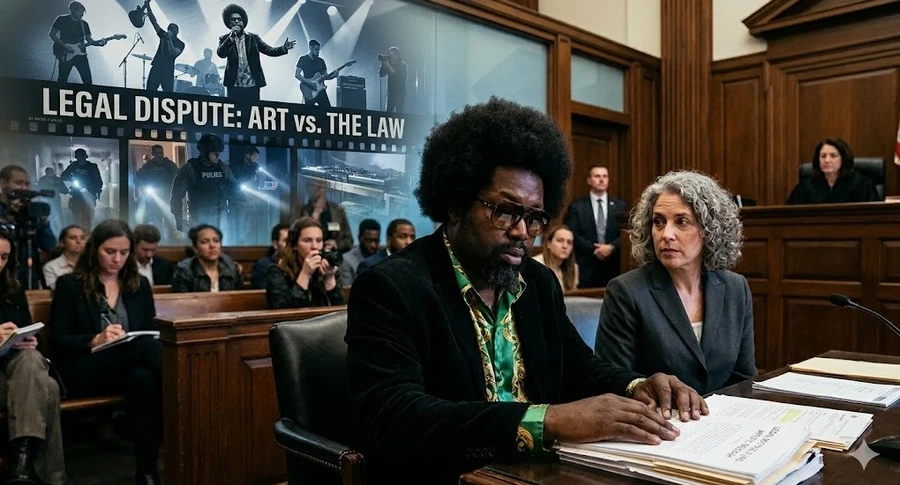
Grammy-nominated rapper Afroman, known for his hit “Because I Got High,” is currently embroiled in a high-stakes legal battle in Adams County, Ohio, defending his controversial music videos that depict a 2022 police raid on his home. Sued by Ohio deputies who claim the footage depicts them negatively, Afroman firmly asserts his constitutional right to freedom of speech, turning a personal experience into a public forum on artistic expression and accountability.
Afroman in Court: The “Because I Got High” Rapper Faces Off Against Ohio Deputies
Joseph Foreman, better known as Afroman, finds himself under an intense spotlight, not for a new chart-topper, but for a courtroom drama playing out in Adams County, Ohio. The rapper, whose unique blend of humor and social commentary has earned him millions of fans, is currently defending his decision to use real footage of a 2022 police raid on his home in several music videos. This isn’t just a local dispute; it’s a significant legal challenge that pits artistic freedom against the perceived privacy and reputation of law enforcement officers.
The Afroman Lawsuit: A Raid, a Camera, and a Controversial Narrative
The genesis of the current Afroman lawsuit dates back to August 2022, when Adams County deputies executed a search warrant at his Winchester residence. The raid, reportedly for drugs and paraphernalia, ultimately yielded no illicit substances or arrests. However, what it did yield was raw, unedited footage captured by Afroman’s home security system. Seizing the opportunity, Afroman integrated this footage into his music videos, most notably for tracks like “Lemon Pound Cake” and “Will You Help Me Clean Up This Weed.” The videos quickly went viral, showing officers searching his property, often in less-than-flattering lights, sparking a public debate about police conduct and the right to document such events.
“Lemon Pound Cake Afroman”: When Viral Hits Become Legal Exhibits
The track “Lemon Pound Cake Afroman” became a focal point of the controversy, with its visuals directly showcasing moments from the raid. While Afroman saw this as a legitimate artistic response and a way to share his experience, the deputies involved viewed it as an invasion of privacy and a defamation of character. They allege that Afroman used their images without permission, portraying them in a negative and misleading light, leading to public ridicule and harassment. This creative repurposing of raid footage has transformed what was initially a private police action into a globally viewed, legally contentious piece of art, underscoring the power of viral content in the digital age.
Adams County Ohio: The Stage for a Landmark Free Speech Trial
The trial is unfolding in Adams County, Ohio, placing this rural region at the center of a national discussion about constitutional rights. Afroman’s defense hinges squarely on the First Amendment, arguing that his videos are a form of political speech and satire, protected under the umbrella of artistic expression. His legal team contends that public figures, which law enforcement officers often are, have a diminished expectation of privacy, especially when performing their duties. The outcome here in Adams County could set a precedent for how far artists can go in using real-world events, particularly those involving public officials, in their creative works, and how deeply personal experiences can become public statements.
Key Players: Afroman, Lisa Phillips, and Randy Walters
At the heart of the proceedings are several key figures. Naturally, Joseph Foreman, Afroman himself, is a constant presence, defending his work with passion. The lawsuit names several deputies, including Lisa Phillips, who are seeking damages for defamation, invasion of privacy, and emotional distress. Representing Afroman is his legal counsel, including attorney Randy Walters, who has been instrumental in articulating the rapper’s free speech defense. The interplay between these individuals — the artist, the officers, and the legal teams — forms the crux of the trial, each presenting their narrative of events and the subsequent impact of the viral videos.
Why Is Afroman On Trial and What’s at Stake?
Afroman is on trial because the Adams County deputies believe his music videos crossed a line from documentation to defamation and exploitation. They argue that their images were used without consent, leading to harm to their reputations and personal lives. For Afroman, however, the stakes are far higher than monetary damages. This trial is about validating his right to recount a traumatic experience through his art, questioning police transparency, and asserting the boundaries of free speech in an era where nearly everything is captured on camera. A verdict against him could chillingly impact other artists and citizens documenting public officials, potentially stifling creative and critical expression.
Afroman Trial Verdict: Anticipating the Impact
As the Afroman trial approaches its conclusion, the anticipation for a verdict is palpable. A ruling in favor of the deputies could signal a tightening of restrictions on how individuals, particularly artists, can utilize footage of public officials, even when those officials are engaged in their duties. Conversely, a victory for Afroman would be hailed as a win for free speech and artistic liberty, affirming the right to comment critically on law enforcement actions through creative means. Regardless of the outcome, this trial has already amplified the conversation surrounding police accountability, artistic expression, and the complex legal landscape of digital content, proving that sometimes, the most potent statements are made not just on a record, but in a courtroom.
Afroman is being sued by several Adams County, Ohio deputies for using footage of a 2022 police raid on his home in his music videos. The deputies allege defamation, invasion of privacy, and emotional distress, claiming his videos portray them negatively and without consent.
Afroman’s primary defense is rooted in the First Amendment, asserting his constitutional right to freedom of speech and artistic expression. He argues that his music videos, which incorporate the raid footage, are a form of political satire and commentary on law enforcement actions.
“Lemon Pound Cake Afroman” refers to one of the specific music videos created by Afroman that prominently features the contested footage from the 2022 police raid. This video, along with “Will You Help Me Clean Up This Weed,” became central to the deputies’ lawsuit.
The Afroman trial is taking place in Adams County, Ohio, which is the location of the 2022 police raid on his home and where the plaintiff deputies are based.
Lisa Phillips is one of the Adams County deputies who are plaintiffs in the lawsuit against Afroman. Randy Walters is Afroman’s attorney, representing him in court and leading his free speech defense.