
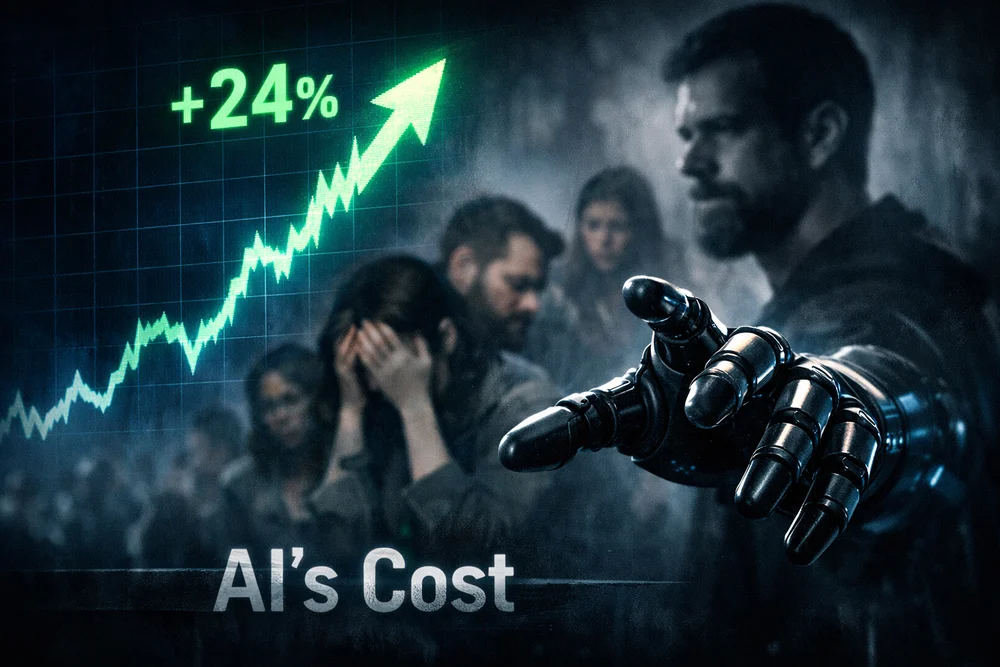
Block, the financial technology giant formerly known as Square, has laid off nearly half its global workforce in a dramatic restructuring driven by advanced AI automation, a move that shockingly propelled its stock to a 24% surge as CEO Jack Dorsey declared this mass displacement a grim preview for companies worldwide.
The email landed in inboxes like a digital guillotine, severing careers and livelihoods. “I’m a data analyst who survived 3 rounds of layoffs at Block,” a former employee shared, their voice echoing the collective dread across the tech world. “I saw how AI was automating my work — it cost me my job.” This sentiment cuts to the heart of a seismic shift at Block, where nearly half the staff were purged, not due to market downturns, but a cold, calculated embrace of artificial intelligence.
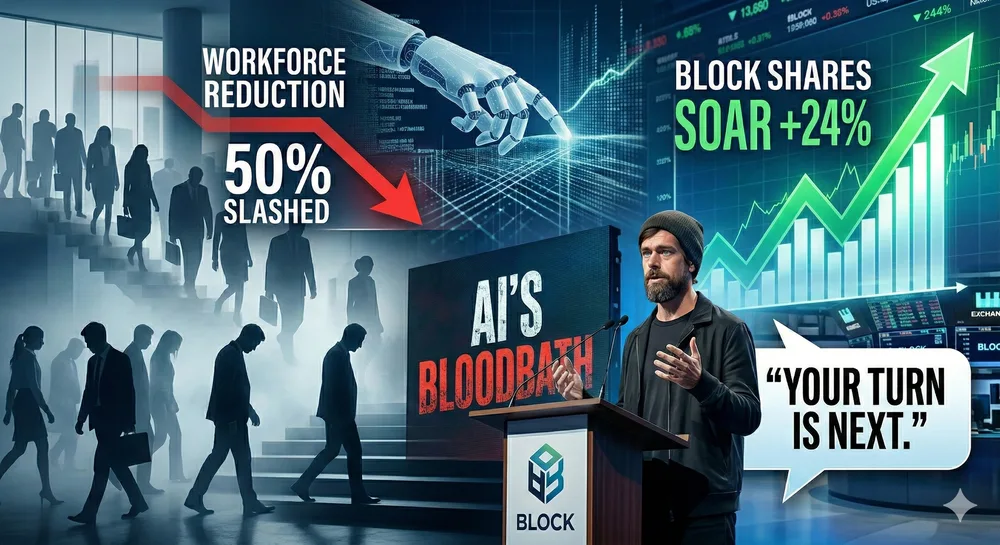
The aftermath? Block shares didn’t just hold steady; they soared an astounding 24%, a brutal testament to how Wall Street values efficiency, even at the cost of human employment. CEO Jack Dorsey, never one to shy from controversy, issued a chilling pronouncement: most companies will soon follow suit. This isn’t just Block’s story; it’s a stark warning for every industry grappling with the unstoppable march of AI.
Block Layoffs: The Cold Hard Numbers
The scale of the recent Block layoffs is staggering. Nearly 50% of the company’s global staff received pink slips, a move described by internal communications as a necessary evolution to leverage AI and streamline operations. For those impacted, the numbers represent shattered careers, disrupted lives, and an unsettling confrontation with technology’s dark side. Yet, for investors, these cuts translated directly into perceived cost savings and increased future profitability. The immediate market reaction—a 24% jump in block stock—underscores a ruthless capitalist calculus: shedding human overhead for AI-driven efficiency is rewarded, regardless of the human toll.
Jack Dorsey’s Grim Prophecy for the Global Workforce
Block CEO Jack Dorsey, a figure synonymous with tech innovation, has once again positioned himself at the vanguard of a disruptive trend. His assertion that “most companies will do the same” isn’t a casual observation; it’s a stark forecast from a leader actively shaping that future. Dorsey’s vision for Block involves a leaner, more agile organization where AI handles tasks previously performed by human employees, from data analysis to customer support. His public stance suggests that Block is not an outlier, but a pioneer in a new, AI-first corporate paradigm that prioritizes technological leverage over human capital, setting a unsettling precedent for global employment.
Block Stock Rockets: The Paradox of Painful Cuts
The immediate 24% surge in block stock following the mass layoffs reveals a disturbing market truth: investors are heavily incentivized by cost-cutting measures, especially those driven by advanced technology. This dramatic increase in `block company stock` wasn’t just a fleeting spike; it reflected a strong investor belief that AI integration would lead to sustained higher margins and operational efficiency. The paradox is stark: human suffering on one side, market euphoria on the other. It poses critical questions about the ethics of market valuation and the societal responsibility of corporations pioneering AI-driven workforce transformations.
Block Inc. and the AI Revolution: A Company Reborn?
As `Block Inc.` navigates this radical transformation, it aims to redefine itself as an AI-powered financial technology powerhouse. This isn’t merely about replacing tasks; it’s about fundamentally rethinking how the company operates, develops products, and interacts with its vast user base. From optimizing Cash App’s algorithms to enhancing Square’s merchant services, AI is being woven into the very fabric of Block’s core offerings. This aggressive pivot marks a new chapter for the company, one where human ingenuity is increasingly augmented—or entirely replaced—by machine intelligence.
Square’s Legacy: Paving the Way for Block’s Bold Move
The journey of Block Inc. began with Square, a company built on democratizing financial services for small businesses. While the brand `Square` still exists, the broader entity’s transformation reflects an evolution driven by broader technological shifts. This legacy of innovation, however, now includes a controversial stride into AI-driven workforce reduction. Past `square layoffs` may have occurred for different reasons, but the current wave under the Block Inc. banner signifies a more profound, technologically-driven restructuring that challenges the traditional employment model in a way never seen before.
What Does Block Company Do? Understanding the AI Battlefield
To fully grasp the impact of these layoffs, it’s crucial to understand `what does block company do`. Block’s ecosystem is vast, encompassing the popular peer-to-peer payment platform Cash App, the merchant services provider Square, music streaming service Tidal, and various Bitcoin-focused initiatives. AI’s pervasive integration means automation is now touching every aspect: from fraud detection and customer service chatbots to algorithmic trading and internal data analysis. The roles eliminated were not peripheral; they were integral parts of its diverse operations, making the shift even more impactful for the remaining workforce and the wider industry.
Block Layoffs 2026: A Blueprint for the Future
The `block layoffs 2026` are more than just a single corporate event; they are being cited by experts as a potential blueprint for how other major companies will adapt to the rapid advancements in AI. This strategic move by a prominent fintech player sends a clear signal that the future of work will involve fewer human employees in roles deemed automatable. The year 2026 may well be remembered as a turning point, where a major corporation demonstrated that shedding human capital for AI efficiency is not just viable, but highly profitable, ushering in a new era of workforce management.
Block Layoffs Reddit: The Digital Outcry
In the immediate aftermath, platforms like Reddit became a digital town square for former Block employees and concerned citizens alike. Discussions under topics like `block layoffs reddit` quickly filled with stories of shock, frustration, and solidarity. Many expressed a profound sense of betrayal, questioning the ethics of a company prioritizing stock gains over the livelihoods of its workforce. The online dialogue provides a raw, unfiltered look at the human dimension of this technological shift, highlighting the emotional toll and the widespread anxiety about AI’s accelerating impact on job security across industries.
Block Company: A New Era Defined by AI
The recent upheaval defines a new era for the `block company`, one where artificial intelligence is not just a tool but a foundational pillar of its operational strategy. This shift is expected to enhance efficiency, reduce costs, and potentially accelerate innovation in ways previously unimaginable. However, it also raises significant societal questions about the future of employment, the role of human workers, and the ethical responsibilities of corporations wielding such transformative technology. Block’s bold, albeit controversial, move will undoubtedly serve as a case study for years to come.
Sources
Block’s mass layoffs were primarily driven by the company’s aggressive adoption of AI automation, aiming to streamline operations and enhance efficiency. CEO Jack Dorsey indicated this strategic shift is intended to position Block for future growth.
In a controversial market reaction, Block’s stock (block stock) soared by 24% immediately after the announcement of the layoffs, signaling investor approval for the company’s cost-cutting and AI integration strategy.
Jack Dorsey, CEO of Block, stated that the company’s significant layoffs due to AI are a precursor to a wider industry trend, suggesting that most other companies will eventually implement similar workforce reductions.
While specific roles were not exclusively identified, the layoffs targeted positions that Block determined could be automated or made more efficient through AI, including roles like data analysts, as described by a former employee.
Block Inc. (formerly Square) is a financial technology company that operates various businesses, including the Cash App for peer-to-peer payments, Square for merchant services, Tidal for music streaming, and focuses on Bitcoin-related initiatives.
While the current AI-driven layoffs are unprecedented in scale and reason, companies, including Square (now Block), have historically undergone workforce adjustments due to various market and operational factors, sometimes referred to as ‘square layoffs’.