
Solitaire is not a single game, but a large family of single‑player card games enjoyed by millions of players worldwide. While many people associate solitaire with the classic version found on computers, the truth is that there are dozens of well‑defined solitaire variants, each offering different rules, difficulty levels, and styles of play.
What Is Solitaire?
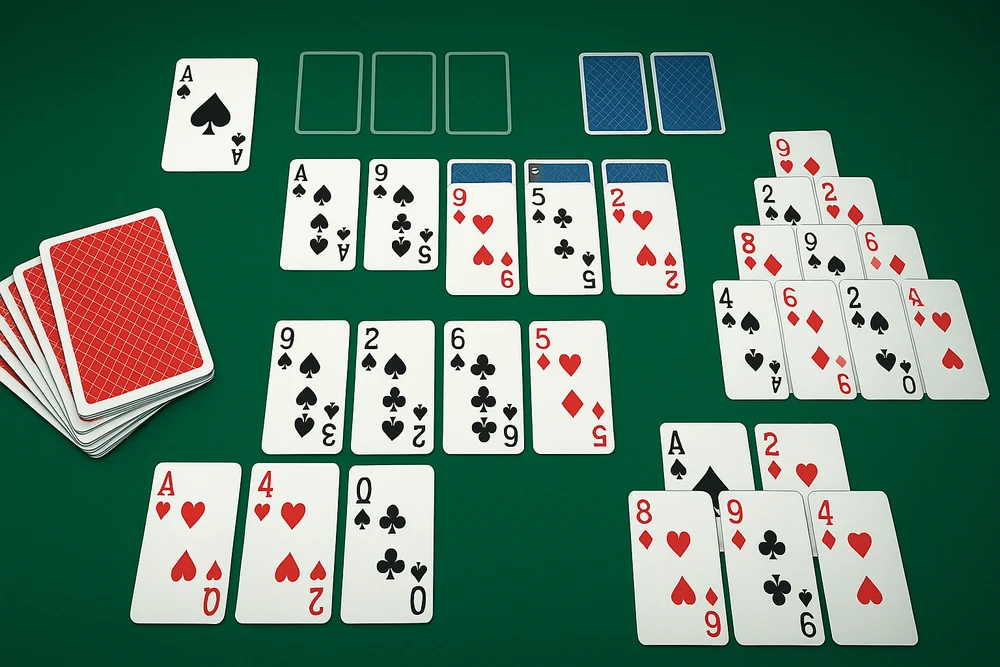
Solitaire—also known as Patience in many parts of the world—is a category of card games designed primarily for one player. The objective typically involves organizing cards into ordered sequences, most often building foundations from Ace to King by suit.
Common elements found across most solitaire games include:
- A tableau, where most gameplay occurs
- One or more foundation piles
- A stock or draw pile (not present in all variants)
- Strategic movement rules that limit how cards can be placed
Although luck plays a role in some variants, many solitaire games emphasize logic, planning, and long‑term strategy, making them appealing to casual and advanced players alike.
Solitaire games are part of the broader world of casual and browser-based experiences often explored alongside IO Games, which focus on quick gameplay, accessibility, and skill-based challenges for players of all levels.
Types of Solitaire Games
Solitaire games can be grouped by their gameplay style, complexity, and pace. Below are the most widely recognized and played variants.
Classic and Most Popular Solitaire Games
Klondike Solitaire
Klondike Solitaire is the most famous solitaire game and the version most people simply call “Solitaire.” It is traditionally played with one deck of cards and features seven tableau columns.
Players build cards in descending order with alternating colors while gradually revealing face‑down cards. Foundations are built by suit from Ace to King.
Klondike is considered beginner‑friendly, yet it still rewards careful planning and smart sequencing. Its balanced mix of luck and strategy makes it the most accessible solitaire variant.
Spider Solitaire
Spider Solitaire is a more advanced variant that uses two decks of cards. The goal is to build complete descending sequences from King to Ace within the tableau.
Spider is commonly played in three difficulty modes:
- One‑suit (easiest)
- Two‑suit (intermediate)
- Four‑suit (advanced)
This game requires deep strategic thinking and forward planning, making it a favorite among experienced solitaire players.
FreeCell Solitaire
FreeCell Solitaire is a highly strategic game where nearly every deal is solvable. All cards are dealt face‑up, removing hidden information and emphasizing logic over luck.
The defining feature of FreeCell is the four “free cells,” which allow temporary storage of cards. Proper use of these cells is essential to winning.
FreeCell is widely regarded as one of the most skill‑based solitaire games.
Casual and Fast‑Play Solitaire Games
Pyramid Solitaire
Pyramid Solitaire focuses on pairing cards that add up to thirteen. Cards are arranged in a pyramid shape, and players remove exposed pairs strategically.
This game is fast, simple to learn, and ideal for short play sessions. Pyramid Solitaire appeals strongly to casual players and mobile users.
TriPeaks Solitaire
TriPeaks Solitaire features three overlapping peaks of cards. Players remove cards that are one rank higher or lower than the current card.
With its smooth flow and quick decision‑making, TriPeaks is popular in modern digital solitaire collections and offers a more arcade‑style experience.
Golf Solitaire
Golf Solitaire is a minimalist variant focused on clearing the tableau as efficiently as possible. Cards are removed by rank adjacency without concern for suits.
It offers extremely fast gameplay and minimal setup, making it ideal for relaxed, low‑pressure play.
Strategic and Challenging Solitaire Games
Yukon Solitaire
Yukon Solitaire resembles Klondike but removes the stock pile entirely. Players can move entire stacks of cards regardless of sequence order.
This increased freedom creates complex strategic decisions and allows skilled players to recover from difficult positions.
Forty Thieves Solitaire
Forty Thieves Solitaire is one of the most challenging traditional solitaire games. It uses two decks and enforces strict movement rules.
With a relatively low win rate, this variant rewards patience, careful planning, and experience.
Canfield Solitaire
Canfield Solitaire is known for its difficulty and randomness. A reserve pile and automatically chosen foundation base card add unpredictability.
This game is popular among players who enjoy high‑risk, high‑reward gameplay.
Scorpion Solitaire
Scorpion Solitaire is a demanding variant related to Spider Solitaire. It allows limited reorganization of cards and offers few recovery options.
Success in Scorpion depends heavily on foresight and precise sequencing.
Solitaire Strategy Principles
While each solitaire game has unique rules, several universal strategies apply across most variants:
- Prioritize uncovering face‑down cards early
- Avoid blocking key columns or free cells
- Plan multiple moves ahead rather than reacting immediately
- Preserve flexibility in the tableau whenever possible
Mastering these principles improves win rates across nearly all solitaire games.
Choosing the Best Solitaire Game
The best solitaire game depends on player goals:
- Beginners: Klondike, Golf, Pyramid
- Strategic players: FreeCell, Yukon
- Advanced challenge seekers: Spider (4‑suit), Forty Thieves, Scorpion
- Fast casual play: TriPeaks, Golf
Trying multiple variants is the best way to discover which solitaire style suits you best.
FAQ
Yes. “Patience” is the traditional European name for solitaire games.
Forty Thieves, Scorpion, and four‑suit Spider Solitaire are considered the most difficult.
FreeCell Solitaire relies primarily on skill, as almost all deals are solvable.